In every M&A cycle, a handful of transactions define investor priorities.
The announced acquisition of Element Solutions by Solstice is one of those transactions.
Beyond its headline value, the deal provides important insight into where capital continues flowing within the chemical industry and which business models investors consider capable of generating sustainable long-term returns.
For procurement professionals and market intelligence teams, the transaction reinforces a broader conclusion already emerging from several independent industry analyses: specialty chemistry continues attracting significantly stronger investor interest than commodity petrochemicals.
A Landmark Transaction Within the 2026 Market
According to PwC's published Chemicals M&A Midyear Outlook, global chemicals deal activity remained selective during the current market cycle, with transaction value concentrated in a relatively small number of major acquisitions.
Against that backdrop, the Solstice–Element Solutions transaction stands out as one of the year's largest announced chemical deals.
Its scale alone demonstrates that investors remain willing to commit substantial capital when acquiring businesses operating in attractive specialty markets with differentiated technologies and established customer relationships.
Why Element Solutions Fits the Premium Investment Thesis
Element Solutions operates in areas where chemistry creates technological differentiation rather than simply supplying commodity molecules.
Key characteristics include:
High-performance electronic materials.
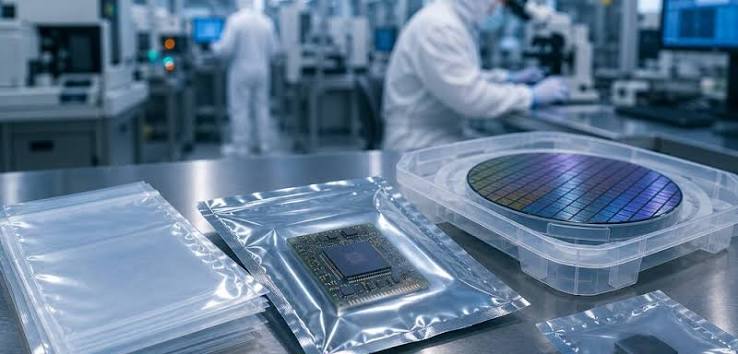
Semiconductor packaging technologies.
Surface treatment chemistry.
Customer-specific formulations.
Application engineering expertise.
Long-term customer qualification processes.
These characteristics create competitive advantages that are difficult to replicate quickly.
Rather than competing primarily on manufacturing scale, businesses of this type compete through technology, intellectual property and technical collaboration.
Semiconductor Materials Continue Attracting Capital
One of the strongest long-term themes within the chemical industry is the continued expansion of semiconductor manufacturing.
Growth drivers include:
Artificial intelligence infrastructure.
High-performance computing.
Data centres.
Advanced packaging technologies.
Automotive electronics.
Industrial automation.
Each of these sectors requires increasingly sophisticated specialty chemicals and process materials.
As a result, companies serving semiconductor manufacturing continue attracting considerable strategic interest from investors.
Technology Commands Higher Valuation Multiples
The transaction also reinforces a broader principle repeatedly observed across recent chemical industry acquisitions.
Businesses tend to achieve stronger valuations when they possess:
Proprietary technology.
High customer switching costs.
Strong intellectual property.
Technical service capability.
Attractive end markets.
Predictable recurring demand.
These characteristics generally support more resilient earnings than commodity businesses exposed primarily to feedstock costs and global capacity cycles.
Procurement Can Learn From Investor Behaviour
Investment decisions frequently provide useful signals for procurement professionals.
When multiple strategic buyers consistently pursue similar asset categories, they highlight areas where the industry itself expects long-term growth.
Current areas attracting sustained interest include:
Monitoring capital allocation trends therefore complements traditional supplier evaluation and market intelligence.
The Deal Reinforces Where the Industry Sees Future Growth
One of the clearest signals from recent chemicals M&A activity is that investors continue favouring businesses serving high-growth, technology-intensive markets.
Rather than pursuing scale for its own sake, strategic buyers are increasingly targeting companies with:
Proprietary process technologies.
Long-term customer relationships.
High technical barriers to entry.
Recurring specification-driven demand.
Strong innovation pipelines.
Exposure to expanding end markets.
These characteristics have become increasingly important in determining acquisition value.
What This Means for Procurement Professionals
Corporate acquisitions often provide valuable market intelligence beyond financial headlines.
When premium valuations consistently concentrate in similar business segments, procurement teams gain insight into where suppliers are likely to invest future capital.
Current investment priorities continue to include:
Electronic materials.
Semiconductor process chemistry.
Advanced materials.
Water treatment technologies.
Performance coatings.
Formulation-intensive specialty chemicals.
These sectors are likely to remain important sources of innovation and manufacturing investment over the coming years.
M&A Trends Also Indicate Supplier Stability
Companies operating in attractive specialty markets often benefit from:
Stronger access to investment capital.
Higher research and development spending.
Greater customer retention.
More resilient operating margins.
Increased acquisition interest.
For procurement organisations, these characteristics may support long-term supplier stability, although each supplier should still be evaluated individually based on operational performance, financial strength and manufacturing capability.
Commodity and Specialty Valuations Continue Diverging
Recent transactions further reinforce the widening valuation gap between commodity petrochemical assets and technology-driven specialty chemical businesses.
Current market observations indicate:
Commodity businesses generally face:
Greater earnings cyclicality.
Margin pressure.
Higher exposure to feedstock costs.
Continued portfolio restructuring.
Specialty businesses generally benefit from:
Technology differentiation.
Higher customer switching costs.
More stable demand.
Greater pricing power.
Strong investor interest.
Understanding this distinction helps procurement teams interpret supplier investment strategies and long-term competitive positioning.
Looking Ahead to H2 2026
The Solstice–Element Solutions transaction illustrates that, even during a challenging period for much of the chemical industry, investors remain prepared to commit significant capital to businesses with differentiated technologies and attractive long-term growth prospects. The transaction aligns closely with broader M&A themes identified across the sector, where technology-driven specialty chemicals continue attracting stronger valuations than commodity petrochemical assets.
For procurement professionals, the deal provides more than an acquisition headline—it offers insight into the industry's future direction. Capital continues flowing toward semiconductor materials, advanced manufacturing technologies and formulation-intensive specialty businesses because these segments combine technical differentiation with resilient customer demand. Monitoring where investment capital is concentrated can therefore complement traditional supplier evaluation by highlighting markets expected to experience continued innovation and expansion.
The key lesson for H2 2026 is that capital allocation remains one of the clearest indicators of strategic confidence. Procurement organisations that combine supplier financial analysis with M&A intelligence, investment trends and technology developments will gain a deeper understanding of future supplier capabilities and long-term market evolution. In today's market, following where investors allocate capital is increasingly as valuable as monitoring where products are manufactured.
Ready to source advanced specialty chemicals and electronic materials from verified global suppliers? Explore competitive offers on our platform today.