South Korea's S-Oil Locks In a Key Isomerization Technology License
South Korea's S-Oil Locks In a Key Isomerization Technology License
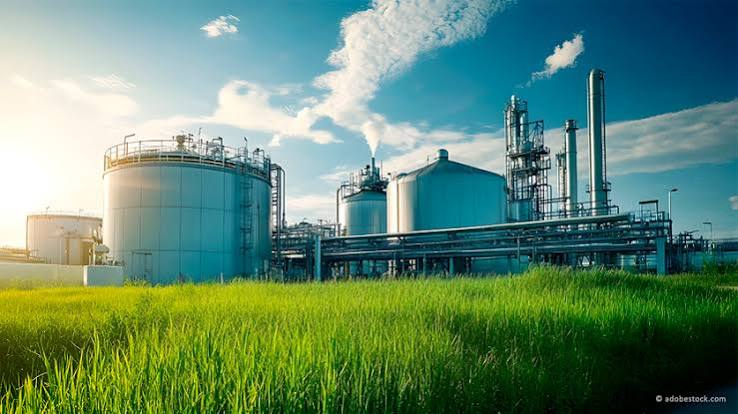
South Korean refiner S-Oil has reached Final Investment Decision (FID) on a project to implement Axens’ Liquid Phase Xylene Isomerization (LPI) technology at its Aromatics Complex #1, strengthening the refinery’s position in the paraxylene market while targeting lower energy consumption and emissions.
The project follows a technology license agreement signed between S-Oil and Axens in late 2024. The upgraded isomerization unit is scheduled to start up in Q2 2027, with Axens providing the technology license, process design package and technical services for project execution and start-up.
S-Oil Moves LPI Project Into Execution
Axens’ scope covers the complete technology package required for the new facility, including the LPI license, process design and technical support during execution and commissioning. The companies expect the technology to improve the overall performance of S-Oil’s aromatics complex.
The project is also aimed at strengthening S-Oil’s petrochemical competitiveness as demand for paraxylene continues to support investment in aromatics production.
How Liquid Phase Xylene Isomerization Works
Xylene isomerization is an important part of an aromatics complex because it helps convert less commercially valuable xylene isomers into a more useful mixture that can be further processed to recover para-xylene (PX).
Axens’ LPI technology uses a liquid-phase configuration that can be integrated with existing vapor-phase isomerization equipment.
According to Axens, optimizing the balance between liquid-phase and vapor-phase isomerization can generate substantial energy savings across the xylenes loop, while also improving overall complex economics.
Energy Efficiency Becomes a Major Driver
For S-Oil, the technology selection is not only about increasing petrochemical performance. Energy efficiency is also a major part of the project.
Aromatics complexes involve multiple energy-intensive separation and conversion steps. Improving the efficiency of the xylenes loop can therefore reduce the energy required to produce and recycle intermediate streams.
S-Oil and Axens expect the LPI project to contribute to lower energy consumption and reduced emissions, while improving the operating performance of the aromatics complex.
The focus on energy efficiency is particularly relevant for refiners and petrochemical producers facing high operating costs and increasing pressure to reduce the carbon intensity of their operations.
Paraxylene Demand Supports the Investment
Paraxylene is one of the most important products produced from aromatics complexes. It is a major feedstock for the manufacture of purified terephthalic acid (PTA) and polyester, which are widely used in plastics, fibers, textiles and packaging.
Improving the efficiency of the xylenes loop can therefore help producers maximize the value obtained from their aromatics feedstock.
For S-Oil, the new LPI installation is intended to support its aromatics operations while responding to the continuing market requirement for paraxylene.
Axens Technology Has a Global Track Record
The LPI technology is owned by ExxonMobil and licensed by Axens. It has already been implemented at several aromatics complexes around the world.
Axens says the technology has benefited from continuous improvements in catalyst performance and process optimization. This existing industrial track record was an important element behind its selection for S-Oil’s Aromatics Complex #1.
The technology also gives S-Oil access to an established process platform rather than relying on an unproven commercial configuration.
Long-Term Relationship Between S-Oil and Axens
The latest agreement builds on an established relationship between the two companies.
Axens has previously supplied technology and services to S-Oil, while the Korean refiner has continued to invest in upgrading its refining and petrochemical capabilities.
S-Oil has developed a large integrated refining and petrochemical platform, including its Residue Upgrading Complex and Olefin Downstream Complex. The company's RUC/ODC system converts refinery residues into higher-value products such as gasoline and propylene, while propylene is used to produce products including polypropylene and propylene oxide.
The company's broader strategy has increasingly focused on improving refinery efficiency and expanding higher-value petrochemical production.

What the New Unit Could Mean for S-Oil's Aromatics Business
The LPI project is expected to improve the efficiency of the aromatics complex by optimizing the relationship between liquid-phase and vapor-phase isomerization.
That could provide several operational benefits, including lower energy requirements, improved process economics and stronger competitiveness in aromatics production.
For S-Oil, the project also represents another step toward upgrading existing refinery infrastructure rather than relying solely on additional processing capacity.
Start-Up Targeted for Q2 2027
With the project now having reached FID, engineering and implementation activities can move forward toward the targeted Q2 2027 start-up.
Axens will remain involved through project execution and start-up, providing technical services alongside its process technology and design package.
The project will therefore combine S-Oil’s existing aromatics infrastructure with Axens’ liquid-phase isomerization technology, with the objective of improving the efficiency and competitiveness of one of South Korea’s major refining and petrochemical operations.
Sources:
Sorbitol Liquid (E420(ii))
Found this useful?