South Korea's Approved Yeosu Restructuring Reflects Government-Backed Industrial Policy
South Korea's Approved Yeosu Restructuring Reflects Government-Backed Industrial Policy
South Korea's government approval of petrochemical restructuring in the Yeosu industrial complex represents more than a localized response to weak operating conditions.
It reflects a broader policy shift toward active state involvement in managing industrial overcapacity, supporting corporate consolidation and protecting the long-term competitiveness of strategically important manufacturing sectors.
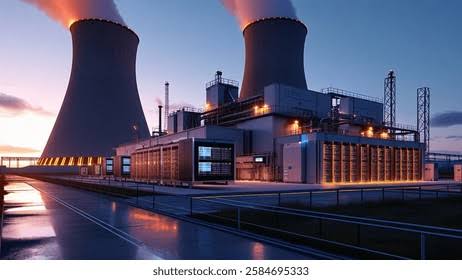
The Yeosu complex is one of South Korea's largest petrochemical production hubs.
Its steam crackers and downstream plants supply ethylene, propylene, aromatics, polymers and chemical intermediates to domestic and international customers.
Approving cracker closures signals that authorities recognize the sector's current difficulties cannot be resolved through temporary production cuts alone.
Persistent oversupply, low utilization rates and declining margins are forcing producers and policymakers to reconsider the structure of South Korea's petrochemical industry.
For procurement managers, distributors and chemical traders, the restructuring could affect regional supply availability, operating rates and pricing across several petrochemical value chains.
Why Yeosu Matters
Yeosu plays a central role in South Korea's industrial economy.
The complex contains interconnected facilities that convert naphtha and other feedstocks into basic petrochemicals used throughout manufacturing.
Products originating from Yeosu support sectors including:
Plastics and packaging
Automotive manufacturing
Electronics
Construction
Textiles
Consumer products
Industrial chemicals
Because the plants are highly integrated, the closure or consolidation of one cracker can affect several downstream production units.
The consequences may extend beyond the companies directly involved.
Feedstock suppliers, terminal operators, logistics providers and downstream converters can also experience changes in volumes and contract structures.
Steam Crackers Sit at the Center of the Problem
Steam crackers are the upstream foundation of many petrochemical value chains.
They process hydrocarbon feedstocks to produce olefins including:
Ethylene
Propylene
Butadiene
Pyrolysis gasoline
These products are then used to manufacture polyethylene, polypropylene, synthetic rubber, styrene-related products and numerous chemical intermediates.
Crackers require high capital investment and substantial energy consumption.
Their economics depend heavily on:
Feedstock costs
Operating rates
Product spreads
Energy efficiency
Regional demand
When utilization falls, fixed costs are distributed across lower production volumes, placing additional pressure on margins.
Overcapacity Has Become Structural
The challenge facing South Korea's petrochemical industry is not simply a temporary reduction in demand.
It reflects a structural imbalance between regional production capacity and consumption growth.
Large additions of petrochemical capacity in China have reduced the country's dependence on imports.
At the same time, producers in the Middle East and North America often benefit from competitively priced feedstocks.
South Korean naphtha-based crackers therefore face pressure from two directions:
Reduced export demand in key Asian markets
Lower-cost competition from alternative production regions
Operating more capacity does not solve the problem when demand is insufficient to absorb the output profitably.
China Has Changed Northeast Asian Trade Flows
For many years, South Korean producers benefited from strong chemical demand from China.
China's rapid industrial expansion created a large export market for Korean petrochemicals.
That relationship is changing.
China has invested heavily in domestic refining, cracking and downstream polymer capacity.
As local production increases, Chinese buyers require fewer imports for certain products.
Chinese producers may also export surplus material into nearby markets.
This creates additional competitive pressure on South Korean plants.
The market is moving from a model based on supplying Chinese growth toward one where Korean producers increasingly compete with Chinese exports.
Government Approval Changes the Restructuring Dynamic
Corporate restructuring can be difficult when several producers share infrastructure, customers and downstream relationships.
Individual companies may hesitate to close capacity because they risk surrendering market share while competitors continue operating.
Government approval can reduce this coordination problem.
State involvement may help establish:
A recognized restructuring framework
Competition-law clarity
Financial support mechanisms
Workforce transition measures
Infrastructure planning
Corporate coordination
This does not remove the commercial cost of closures.
It can make collective capacity rationalization more achievable.
Industrial Policy Is Returning
For several decades, industrial restructuring in advanced economies was often presented primarily as a market-driven process.
That approach is changing.
Governments are becoming more involved in sectors considered strategically important because of:
Supply-chain security
Energy transition requirements
Employment
Export competitiveness
National manufacturing capacity
South Korea's support for Yeosu restructuring fits this wider trend.
Authorities are not merely regulating chemical production.
They are helping shape the future structure of the industry.
Closure Approval Does Not Guarantee Immediate Supply Tightness
A reduction in nameplate capacity can appear bullish for chemical markets.
However, the near-term effect depends on how much of the affected capacity was already operating.
If crackers were running at low rates, formal closure may remove less actual production than headline capacity figures suggest.
Market participants need to distinguish between:
Nameplate capacity
Effective operating capacity
Actual production
Export availability
A closure may improve industry utilization without creating an immediate physical shortage.
The effect is more likely to emerge gradually as demand recovers or other plants undergo maintenance.
Downstream Plants Could Face Feedstock Changes
Cracker closures can alter the supply of ethylene, propylene and other co-products to nearby downstream facilities.
Integrated producers may respond by:
Importing feedstock
Purchasing from neighboring plants
Reducing downstream rates
Closing additional units
Reconfiguring production networks
The availability of pipeline connections and port infrastructure will influence which options are commercially viable.
Downstream assets that remain competitive may continue operating even after an associated cracker closes.
However, their feedstock costs could change.
Naphtha Demand Could Decline
South Korean crackers are significant consumers of naphtha.
Permanent capacity closures could reduce domestic naphtha demand.
This may affect:
Refinery sales
Regional cargo flows
Import requirements
Naphtha cracks
Shipping demand
Refiners that traditionally supplied Yeosu crackers may need to redirect volumes to other Asian markets or adjust product yields.
The restructuring therefore carries implications beyond petrochemical producers.
Employment Is a Major Policy Concern
Large petrochemical complexes support extensive employment networks.
Direct plant jobs represent only one part of the economic impact.
Additional employment exists in:
Maintenance
Engineering
Shipping
Storage
Construction
Industrial services
Local retail
Government involvement can help manage the social consequences of capacity reduction.
Possible measures may include retraining, redeployment and regional investment support.
Without such policies, restructuring could create significant economic pressure in communities dependent on heavy industry.
Financial Support Must Avoid Preserving Inefficient Capacity
State-backed restructuring creates an important policy challenge.
Government support can help companies absorb closure costs and invest in more competitive assets.
However, poorly designed assistance can delay necessary change.
Support that simply keeps uncompetitive crackers operating may prolong oversupply.
Effective industrial policy should encourage:
Permanent capacity reduction
Operational efficiency
Higher-value production
Energy modernization
Financial discipline
The objective should be transformation rather than indefinite protection.
Competition Law Remains Relevant
Coordinated plant closures among competitors can raise competition-law questions.
Authorities generally scrutinize arrangements that could reduce supply or influence prices.
Government approval may provide a formal framework for assessing whether restructuring serves a legitimate industrial objective without permitting unlawful market coordination.
Companies will still need clear boundaries around:
Pricing information
Customer allocation
Production plans
Market sharing
Capacity rationalization does not justify broader anticompetitive conduct.
Consolidation Could Strengthen Remaining Producers
As weaker assets close, surviving plants may benefit from higher utilization and improved pricing discipline.
Companies with advantages in scale, integration and energy efficiency are more likely to remain competitive.
Potential benefits include:
Lower unit costs
Improved operating rates
Greater investment capacity
Stronger export positioning
Reduced domestic competition
However, consolidation alone cannot eliminate global oversupply.
South Korean producers will still compete with large new facilities elsewhere in Asia and the Middle East.
The Industry May Shift Toward Specialty Products
Basic commodity petrochemicals face intense competition because products are widely available and pricing is highly transparent.
South Korean companies may increasingly prioritize higher-value materials including:
Engineering plastics
Electronic chemicals
Battery materials
High-performance polymers
Sustainable chemical products
These markets generally require greater technical capability and customer qualification.
They may provide better margins than undifferentiated commodity production.
Government policy could support this transition through research funding, tax incentives and infrastructure investment.
Decarbonization Could Shape Investment Decisions
Older crackers may face growing costs related to energy use and carbon emissions.
When companies evaluate which units to close, environmental performance may become an important factor.
Future investment may favor assets with:
Improved furnace efficiency
Electrification potential
Lower-carbon feedstocks
Heat integration
Carbon capture readiness
Restructuring provides an opportunity to align capacity reduction with South Korea's longer-term climate objectives.
However, low-carbon technologies remain capital intensive.
Government support may be necessary to accelerate commercial deployment.
Feedstock Flexibility Will Matter
South Korean crackers rely heavily on imported naphtha.
This creates exposure to crude oil prices, refinery economics and maritime logistics.
More flexible facilities may be able to process alternative feedstocks when market conditions change.
Feedstock flexibility can improve resilience, but technical retrofits require substantial investment.
Companies will need to compare the cost of modernization with the economic value of retaining older assets.
In some cases, closure may be more rational than conversion.
Procurement Teams Should Map Exposure
Buyers sourcing petrochemicals from Yeosu should identify which suppliers and products depend on the affected crackers.
Important questions include:
Is the product made at Yeosu?
Does the plant have another feedstock source?
Can production shift to a different site?
Could the supplier import replacement material?
Are contract volumes likely to change?
Direct communication with suppliers is essential.
General announcements about cracker closures may not explain the effect on individual grades or contracts.
Contract Structures May Change
Capacity consolidation can alter the balance of power between suppliers and customers.
Producers may seek:
Longer contract commitments
Revised price formulas
Higher minimum volumes
Greater freight flexibility
More restrictive allocation terms
Buyers should review whether existing agreements provide adequate protection during restructuring.
Important clauses may include notice periods, plant substitution, allocation rules and termination rights.
Distributors Could Gain a Larger Role
When domestic production becomes less predictable, distributors can help buyers access alternative supply.
They may source from:
Other Korean producers
China
Southeast Asia
The Middle East
North America
However, imported products can differ in specifications, packaging and delivery times.
Distributors with strong technical knowledge and logistics networks may become increasingly valuable.
Regional Trade Patterns Could Shift
If South Korea permanently reduces commodity capacity, regional trade flows may adjust.
Potential outcomes include:
Lower Korean exports
Higher Korean imports
Increased Chinese regional supply
Greater Middle Eastern market share
Changed vessel demand
The direction will vary by product.
South Korea may remain a net exporter in some value chains while becoming more import-dependent in others.
Price Effects Will Differ by Product
Cracker closures affect several co-products simultaneously, but their markets are not identical.
Ethylene is expensive to transport over long distances and often consumed locally through pipelines.
Propylene has more diverse production routes.
Butadiene and aromatics follow separate demand cycles.
The pricing effect of restructuring will therefore depend on:
Local balances
Import availability
Downstream operating rates
Storage capacity
Product transport economics
Market participants should avoid applying one broad conclusion across every petrochemical product.
Other Asian Governments May Watch the Outcome
South Korea is not the only country facing petrochemical overcapacity.
Other Asian markets may consider similar measures if margins remain weak.
Policy options could include:
Capacity closure incentives
Merger support
Financing restrictions
Energy-efficiency standards
Environmental requirements
If Yeosu's restructuring succeeds, it could provide a model for government-supported rationalization elsewhere.
If it fails to restore profitability, policymakers may become more cautious about intervening.
Investors Will Examine Execution
Government approval is only the beginning.
Investors will want clarity on:
Which assets will close
When closures will occur
How costs will be shared
Whether debt will be restructured
What support government will provide
How remaining assets will improve profitability
Delays or partial implementation could weaken the program's impact.
Credible execution requires permanent decisions rather than temporary operating reductions presented as restructuring.
State Support Could Trigger Trade Concerns
Government-backed industrial policy can attract scrutiny from international competitors.
Foreign producers may argue that financial support gives Korean companies an unfair advantage.
Trade tensions could arise if assistance lowers production costs or supports exports.
South Korean policymakers will need to structure support carefully to remain consistent with international trade obligations.
The distinction between financing closure and subsidizing continued output will be important.
The Broader Market Intelligence Lesson
The Yeosu restructuring reflects a change in how governments respond to chemical-industry overcapacity.
The traditional sequence was often:
Weak margins → producer operating cuts → market-led consolidation
The emerging model is:
Persistent overcapacity → government-approved restructuring → coordinated closures and industrial transformation
This approach recognizes that fragmented corporate decisions may not reduce capacity quickly enough when an entire strategic sector is under pressure.
It also places greater responsibility on government to ensure that intervention creates a more competitive industry rather than preserving uneconomic production.
Final Takeaway
South Korea's approval of Yeosu cracker closures demonstrates a clear move toward government-backed industrial policy as a response to structural petrochemical overcapacity.
The restructuring reflects pressure from expanding Chinese production, competitive international feedstocks and prolonged weakness in commodity chemical margins.
For producers, state support may make consolidation and permanent capacity reduction more achievable.
For procurement teams, the immediate priority is identifying product-level exposure, alternative supply options and potential contract changes.
For policymakers, the challenge is to support necessary industrial transformation without delaying closures or distorting competition.
The broader market signal is that petrochemical restructuring is becoming increasingly political as well as commercial. Governments are no longer simply observing overcapacity. They are beginning to decide which assets close, which companies consolidate and which parts of the chemical industry remain strategically important.
Ready to source Polyethylene from verified global suppliers? Explore competitive offers on our platform today.
Linear-Low Density Polyethylene (LLDPE)
Found this useful?