Specialty Chemicals in Renewable Energy: Emerging Applications and Opportunities
Renewable energy technologies depend on more than sunlight, wind and flowing water. Behind every solar panel, wind turbine and hydrogen electrolyzer, specialty chemicals help manufacturers improve material strength, protect equipment from environmental damage and maintain reliable performance throughout the operating life of energy systems.
Specialty chemicals in renewable energy represent an expanding area of opportunity for chemical manufacturers, distributors, importers and industrial procurement teams. As energy developers invest in cleaner electricity generation and storage, demand continues to create opportunities for advanced coatings, adhesives, resins, polymers, electrolytes and chemical processing materials.
For B2B chemical traders, this market offers a route beyond traditional industrial supply chains. Understanding how renewable energy equipment uses specialty chemicals can help buyers identify suitable products, assess supplier capabilities and build relationships with manufacturers serving the energy transition.
1. Why Specialty Chemicals Matter in Renewable Energy
Specialty chemicals are formulated to deliver specific performance characteristics in a particular application. Unlike basic chemicals that often serve as general-purpose industrial inputs, these products may require precise chemical composition, controlled physical properties and compatibility with demanding operating conditions.
Renewable energy equipment faces challenges that extend beyond electricity generation. Solar modules must withstand sunlight, moisture and temperature changes, while wind turbines operate under mechanical stress and exposure to rain, salt and airborne particles.
Specialty chemicals help address these challenges through several functions:
Protection and durability: Coatings, sealants and corrosion inhibitors help protect equipment from environmental exposure and premature deterioration.
Structural performance: Resins and adhesives support composite manufacturing, bonding and component assembly.
Energy conversion: Electrolyte materials, catalysts and membrane components support electrochemical processes in batteries, fuel cells and hydrogen production.
Thermal management: Heat-transfer fluids and specialised materials help equipment maintain suitable operating temperatures.
Manufacturing efficiency: Process chemicals support cleaning, surface preparation and controlled production conditions.
The commercial value of these products depends on how well they perform in the intended application. Buyers therefore need to evaluate technical specifications alongside price, availability and delivery reliability.
2. Solar Energy Creates Opportunities for Advanced Materials
Solar panel manufacturing combines semiconductor materials, protective polymers, adhesives and surface treatments.
Solar power represents an important application area for specialty chemicals because photovoltaic modules must convert sunlight into electricity while maintaining performance under outdoor conditions. Chemical materials support several stages of panel manufacturing, from the production of semiconductor components to module assembly and long-term environmental protection.
cefic+1
Encapsulants and bonding materials
Solar modules use encapsulating polymers to protect photovoltaic cells from moisture, mechanical stress and other environmental influences. Ethylene-vinyl acetate (EVA) and other suitable encapsulant materials help secure cells within the module structure.
Adhesives and sealants also support module assembly by creating reliable bonds and limiting the entry of moisture. Manufacturers must select formulations that maintain adhesion and material stability throughout repeated heating, cooling and outdoor exposure.
Protective and optical coatings
Specialised surface coatings can improve the performance and durability of solar equipment. Anti-reflective coatings help reduce light reflection from glass surfaces, allowing more sunlight to reach the photovoltaic cells, while protective coatings can help resist contamination and weathering.
Chemical suppliers can serve this market through materials designed for particular glass, polymer and module manufacturing processes. Buyers should confirm compatibility with production equipment, coating methods and required performance standards before placing bulk orders.
Procurement considerations for solar materials
Solar manufacturers generally need consistent quality across large production runs. A small variation in viscosity, purity, curing behaviour or adhesion can affect production efficiency and finished-module performance.
Procurement teams should prioritise technical documentation, batch consistency, product traceability and reliable delivery schedules. Suppliers that can maintain specifications across repeat orders may offer greater commercial value than suppliers competing on price alone.
3. Wind Power Depends on Resins, Coatings and Adhesives
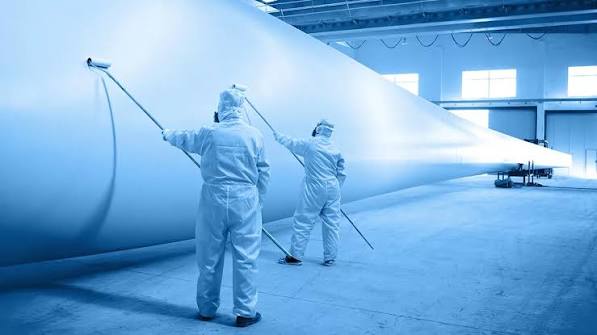
Wind turbines place substantial demands on structural materials because blades must remain lightweight while withstanding repeated mechanical loads. Specialty resins and composite materials help manufacturers achieve the strength and flexibility required for large turbine blades.
Epoxy resins serve as important building blocks for high-performance composite structures. Manufacturers combine suitable resin systems with reinforcing fibres to produce components that balance strength, weight and fatigue resistance.
Other chemical materials contribute to wind turbine durability and maintenance:
Protective coatings: These help shield blades, towers and metal components from moisture, ultraviolet radiation, abrasion and corrosion.
Adhesives and sealants: These support component bonding and help protect joints against environmental exposure.
Surface-treatment chemicals: These prepare materials for coating, bonding or other manufacturing processes.
Maintenance chemicals: Suitable cleaning and repair materials support inspection programmes and help operators maintain equipment.
Offshore wind installations create particularly demanding conditions because saltwater, humidity and strong winds can accelerate material degradation. Suppliers serving this segment need to understand the performance requirements associated with marine exposure and the long service lives expected from turbine components.
For chemical traders, the opportunity extends beyond initial turbine construction. Wind farms also require maintenance products, repair materials and replacement components throughout their operating lives, creating potential demand for recurring industrial supply contracts.
4. Energy Storage Expands the Specialty Chemicals Market
Renewable electricity generation can fluctuate with sunlight and wind conditions. Energy storage systems help balance supply and demand by storing electricity for later use, making battery materials and other energy-storage chemicals increasingly important to renewable energy infrastructure.
Battery performance depends on the interaction between several materials. Depending on the battery chemistry, manufacturers may require specialised electrolytes, electrode materials, conductive additives, binders, separators and protective coatings.
Battery electrolytes and functional additives
Electrolytes enable ions to move between battery electrodes during charging and discharging. Their composition influences conductivity, electrochemical stability and performance across different temperatures and operating conditions.
Specialty additives can help manufacturers manage specific performance requirements, including electrode stability and battery durability. However, suitable formulations depend on the battery chemistry and cell design, so buyers should not treat electrolyte products as interchangeable.
Polymers, binders and separator materials
Polymers play several roles in battery manufacturing. Binders help hold electrode materials together, while separator materials keep electrodes apart and allow the necessary movement of ions.
Suppliers must meet strict specifications for chemical purity, moisture content, thermal stability and compatibility with other battery components. Procurement teams should request detailed technical data and quality-control information before approving materials for production.
Thermal management and system reliability
Large battery installations also require effective thermal management to maintain safe operating conditions. Depending on system design, specialised fluids, insulating materials, sealants and protective coatings can support equipment reliability and reduce maintenance requirements.
Battery manufacturing offers opportunities for suppliers that combine technical expertise with dependable production capacity. Buyers should assess the manufacturer's qualification process, product consistency and ability to meet future demand as well as current purchasing needs.
5. Green Hydrogen and Fuel Cells Require Specialised Chemical Materials
Green hydrogen production uses renewable electricity to split water through electrolysis. The process creates demand for specialised materials that support electrochemical reactions, maintain system integrity and improve the performance of hydrogen production equipment.
Electrolyzers rely on components such as electrodes, catalysts, membranes, seals and other materials selected for specific operating conditions. The exact requirements vary by electrolyzer technology, including alkaline, proton exchange membrane and solid oxide systems.
Specialty chemicals can contribute to this market in several ways:
Catalyst materials: These help facilitate the reactions involved in electrolysis and fuel-cell operation.
Membrane and polymer materials: Suitable materials support ion transport while separating gases or reactants where the technology requires it.
Water-treatment chemicals: Treatment processes help control water quality and reduce contaminants that could interfere with equipment performance.
Sealing and corrosion-control materials: Appropriate materials help maintain system integrity under demanding chemical and operating conditions.
Hydrogen-related procurement requires close coordination between chemical suppliers, equipment manufacturers and project engineers. Buyers must understand compatibility, operating temperature, pressure requirements and material durability before selecting products.
Fuel cells also create opportunities for specialised catalysts, membrane materials and supporting chemical components. As manufacturers develop and scale hydrogen technologies, suppliers that can support qualification trials and maintain consistent specifications may gain access to longer-term industrial relationships.
6. Emerging Applications Beyond Solar and Wind
Renewable energy infrastructure extends beyond photovoltaic panels and wind turbines. Specialty chemicals also support geothermal systems, bioenergy production, renewable electricity conversion and industrial processes that use clean energy.
Several applications offer additional opportunities for chemical suppliers.
Geothermal energy: Geothermal facilities circulate fluids through underground formations and heat-exchange equipment. Depending on the project, operators may use corrosion inhibitors, scale-control chemicals, specialised sealants and treatment products to manage mineral deposits and protect equipment.
Bioenergy and biofuels: Chemical inputs support biomass processing, feedstock preparation, conversion reactions and fuel purification. Enzymes, catalysts, solvents and process additives may serve specific production routes, depending on the feedstock and conversion technology.
Concentrated solar thermal systems: These systems concentrate sunlight to generate heat for electricity production or industrial processes. Selected heat-transfer fluids, thermal-storage materials and specialised coatings can support heat collection, transfer and storage.
Renewable electricity-to-chemicals processes: Researchers and industrial developers are exploring electrochemical processes that use electricity to produce hydrogen and other chemical feedstocks. These processes create potential demand for catalysts, electrodes, membranes and specialised reactor materials.
For traders, these emerging segments require careful market selection. Established solar and wind supply chains may offer more familiar purchasing requirements, while newer technologies may create opportunities for suppliers willing to support technical trials and specialised customer requirements.
7. Supply Chain Challenges and Chemical Procurement Risks
Renewable energy projects often involve several manufacturers, component suppliers, engineering contractors and installation companies. This complex structure can make chemical procurement challenging, especially when a project depends on materials that require specific technical approval.
A product that meets a general industrial specification may not satisfy the requirements of a solar module manufacturer, battery producer or electrolyzer developer. Buyers should establish the intended application and approval criteria before comparing commercial offers.
Key procurement risks include:
Inconsistent product quality: Variations in purity, viscosity, moisture content or other critical properties can disrupt manufacturing and affect finished components.
Supply concentration: Dependence on a limited number of qualified producers can expose buyers to production interruptions, transport delays and unexpected price changes.
Long qualification cycles: New materials may require laboratory testing, pilot production and customer approval before manufacturers can use them commercially.
Storage and transport requirements: Certain chemical products require temperature control, moisture protection or specialised handling throughout the logistics chain.
Changing demand patterns: Renewable energy project schedules can shift because of financing, permitting, grid connections and equipment availability.
Procurement managers should consider the full cost of supply rather than focusing only on the quoted unit price. Freight, insurance, packaging, storage, quality inspection and the financial impact of delayed deliveries can materially affect total purchasing costs.
Building relationships with multiple qualified suppliers can also improve resilience. However, buyers should not replace an approved chemical with an alternative product without confirming its technical suitability and obtaining any necessary customer or engineering approval.
8. Sustainability, Compliance and Supplier Qualification
Renewable energy products help generate cleaner electricity, but the materials used to manufacture them still require responsible management. Chemical manufacturers and buyers increasingly need to consider product safety, resource consumption, emissions, waste generation and the environmental impact of manufacturing processes.
Sustainability assessments should examine the chemical's complete role in the application. A coating that extends the service life of a turbine component, for example, may reduce maintenance frequency, while a poorly selected formulation could create additional replacement or disposal requirements.
Procurement teams can strengthen supplier qualification by requesting:
Safety Data Sheets (SDS): These provide information on chemical hazards, safe handling, storage and emergency measures.
Technical Data Sheets (TDS): These describe relevant product properties, recommended applications and handling or processing conditions.
Certificates of Analysis (CoA): These document test results for the supplied batch against specified quality parameters.
Regulatory documentation: Buyers should confirm applicable chemical registration, classification, labelling, transport and import requirements in the destination market.
Environmental information: Where available, request relevant emissions data, lifecycle information and evidence supporting environmental claims.
Compliance requirements differ according to the chemical, its intended use and the countries involved in the transaction. Exporters and importers should confirm applicable rules before shipping, particularly when products fall under hazardous-material transport controls or market-specific chemical regulations.
Suppliers should also avoid broad environmental claims that they cannot substantiate. Clear documentation and traceable product information help buyers assess sustainability alongside technical performance and commercial value.
9. Market Outlook and Opportunities for Chemical Traders
The development of renewable energy technologies creates opportunities for chemical suppliers across established and emerging applications. Solar and wind manufacturing already use specialised materials, while energy storage and hydrogen technologies continue to develop new requirements for chemical formulations and advanced components.
For B2B distributors and international traders, the strongest approach is to identify specific customer requirements rather than treating renewable energy as a single market. A solar module producer, a wind turbine manufacturer and a battery developer may all purchase specialty chemicals, but their technical specifications, qualification procedures and supply arrangements can differ substantially.
Businesses looking to enter this market should focus on three priorities:
Build application knowledge. Understand how chemical properties influence equipment performance, durability and manufacturing efficiency in the target renewable energy segment.
Develop reliable supplier networks. Work with manufacturers that provide consistent specifications, appropriate documentation and dependable delivery schedules.
Target recurring industrial demand. Explore opportunities in maintenance chemicals, protective coatings, replacement materials and other products that customers may need throughout an installation's operating life.
Chemical manufacturers can also explore partnerships with engineering companies, component producers and renewable energy equipment suppliers. Early technical collaboration can help suppliers understand future material requirements and prepare products that meet customer specifications.
For procurement professionals, supplier selection should combine price competitiveness with quality assurance, logistics performance and technical support. A supplier that understands the application and responds quickly to changing requirements can provide more value than one that offers only a lower initial price.
What Buyers Should Do Now to Capture Renewable Energy Opportunities
Specialty chemicals are essential to the development, manufacturing and maintenance of many renewable energy technologies. Their roles span structural composites, protective coatings, solar module encapsulation, battery components, hydrogen production and specialised industrial processes.
For chemical traders and procurement teams, the opportunity lies in matching the right products to clearly defined applications. Buyers should evaluate technical specifications, confirm regulatory requirements, compare the full cost of supply and establish relationships with suppliers that can maintain quality as demand grows.

Sodium Metasilicate
Found this useful?