
States Continue Moving Ahead of Federal Government on PFAS and Food Dyes
U.S. food and chemical companies are increasingly facing a regulatory environment in which state-level requirements can move faster than federal policy.
PFAS and food dyes are two prominent examples. As individual states introduce restrictions, bans, disclosure requirements, or other measures, manufacturers and ingredient suppliers may need to respond even when federal requirements remain uncertain or develop more slowly.
For food ingredient companies operating across the United States, this creates an increasingly complex compliance landscape.

Why State-Level Regulation Matters
Food ingredient suppliers traditionally benefit from a relatively standardized national market. However, differences between state requirements can create additional compliance challenges.
Companies may need to manage:
Different ingredient restrictions
State-specific labeling requirements
Product reformulation
Disclosure obligations
Packaging changes
Customer-specific specifications
Regulatory monitoring
A product that can be sold under one state's requirements may face additional restrictions in another.
As manufacturers evaluate reformulation strategies, ingredients such as Citric Acid, Sodium Benzoate, Potassium Sorbate, Sorbitol, Xanthan Gum, and Glycerin can play important roles in acidity control, preservation, texture, moisture management, and formulation performance depending on the application.
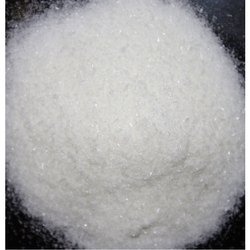
Sorbic Acid (E200)
PFAS as a Regulatory Example
PFAS, or per- and polyfluoroalkyl substances, have attracted significant regulatory attention because of concerns surrounding their persistence and potential environmental and health impacts.
For the food sector, PFAS-related rules can have implications beyond the ingredient itself.
Potential areas of exposure include:
Food-contact packaging
Processing equipment
Coatings
Production materials
Supply-chain documentation
Testing and compliance requirements
Food manufacturers therefore need to monitor PFAS developments across both chemical and food-contact regulatory frameworks.
Food Dyes Add Another Layer
Food dyes demonstrate how state-level action can also directly affect food formulations.
Changes involving permitted colors can potentially influence:
Product formulations
Ingredient sourcing
Labeling
Consumer-product specifications
Reformulation costs
National product strategies
For multinational food companies, a fragmented U.S. regulatory environment can make product standardization more difficult.
The Compliance Challenge
The biggest challenge for manufacturers is not simply knowing what federal regulators require.
Companies increasingly need to understand:
1. Federal Requirements
What is currently permitted or restricted at the national level?
2. State Requirements
Which states have introduced additional restrictions?
3. Future Implementation Dates
When do new state requirements actually take effect?
4. Customer Requirements
Are major food manufacturers adopting standards that go beyond legal minimums?
5. International Standards
Do export markets impose additional restrictions?
This creates a need for continuous regulatory monitoring.
Market Implications
Increasing state-level regulation could create several consequences for the food ingredient industry.
Potential effects include:
Higher compliance costs
More frequent reformulation
Increased testing
Greater demand for alternative ingredients
More complex labeling
Higher documentation requirements
Greater supplier qualification requirements
Increased regulatory risk for national brands
Ingredient suppliers that can provide compliant alternatives and strong regulatory documentation may gain a competitive advantage.
Competitive Intelligence
Food ingredient companies can track regulatory developments through several indicators.
State Legislation
Monitor new bills, bans, restrictions, and implementation dates.
Ingredient Substitution
Track demand for alternatives to regulated ingredients.
Reformulation Activity
Watch major food manufacturers for product changes.
Supplier Investment
Monitor testing, certification, and regulatory-support capabilities.
Customer Specifications
Large food companies may impose restrictions that go beyond government requirements.
This intelligence can help suppliers anticipate demand before regulatory changes become fully effective.

Procurement Considerations
Procurement teams should increasingly include regulatory exposure in supplier-selection decisions.
Important questions include:
Does the supplier provide current regulatory documentation?
Can the supplier support reformulation?
Are alternative grades or ingredients available?
Can the supplier provide traceability?
Are products suitable for different state requirements?
Can the supplier support testing and certification?
How quickly can specifications be updated?
For national food manufacturers, supplier flexibility can become particularly valuable when regulations differ between states.
Looking Ahead
The growing role of state-level regulation means U.S. food ingredient companies may have to manage a more fragmented compliance environment.
PFAS and food dyes illustrate two different forms of regulatory exposure: one involving chemicals and food-contact materials, and the other directly affecting food formulation.
For ingredient suppliers and food manufacturers, the strategic response is increasingly about regulatory preparedness.
Companies that identify regulatory trends early, maintain strong documentation, and develop alternative sourcing and formulation options can potentially reduce disruption when new requirements take effect.
Key Takeaways
U.S. states are increasingly developing food and chemical policies independently of federal timelines.
PFAS regulation can affect food-contact materials, packaging, processing, and supply chains.
Food-dye restrictions can directly affect product formulation and ingredient sourcing.
Regulatory fragmentation can increase compliance and reformulation costs.
Suppliers with strong documentation and alternative ingredient capabilities may gain an advantage.
Food manufacturers should monitor both state and federal requirements continuously.
Found this useful?