Tennessee's Eastman Chemical Beats Estimates and Raises Confidence
Tennessee’s Eastman Chemical Beats Estimates and Raises Confidence
Introduction
Tennessee-based Eastman Chemical Company delivered a stronger-than-expected second quarter in 2026, showing meaningful improvement in earnings, sales volumes and operating margins despite continued uncertainty across global chemical markets.
Eastman reported Q2 2026 sales of $2.513 billion, up from $2.287 billion in Q2 2025. Adjusted earnings per share increased to $1.97, compared with $1.60 a year earlier, while adjusted EBIT rose to $320 million from $275 million.
The results demonstrate how Eastman is using stronger volumes, disciplined pricing, cost reductions and its integrated U.S. manufacturing footprint to navigate a volatile chemical market.
Eastman Delivers Stronger Q2 Results
Eastman's second-quarter performance showed improvement across several key financial measures.
The company reported:
Sales revenue: $2.513 billion
Adjusted EBIT: $320 million
Adjusted EPS: $1.97
Reported EPS: $1.59
Operating cash flow: $224 million
Sales volume/mix: Up 8% sequentially
Adjusted EBIT margin improved by 350 basis points sequentially, supported by stronger sales volume and mix in Advanced Materials and Additives & Functional Products, as well as improved spreads in Chemical Intermediates.
The results indicate that Eastman's commercial and operational measures are beginning to translate into stronger profitability.
Advanced Materials Benefits From Higher Volumes
Advanced Materials was one of the important contributors to Eastman's sequential improvement.
The business benefited from stronger sales volumes and improved price-cost management. The improvement reflects recovering demand in selected specialty applications as well as Eastman's ability to leverage its differentiated materials portfolio.
For industrial buyers, this segment is particularly important because Eastman supplies specialty materials used across transportation, building and construction, and other performance-sensitive applications.
Chemical Intermediates Gains From Tighter Market Conditions
Chemical Intermediates also provided an important earnings boost.
Earlier in 2026, Eastman reported that weaker commodity-market conditions had pressured selling prices and spreads. However, market conditions tightened during the second quarter, supporting a significant improvement in spreads.
This shift illustrates how quickly chemical intermediates markets can respond to supply disruptions.
For procurement teams, tighter markets can mean higher replacement costs and reduced negotiating leverage. Monitoring producer margins and regional availability can therefore provide an early warning before price increases appear in supplier quotations.
Pricing Remains a Major Procurement Issue
Eastman's Q2 performance also reinforces the importance of pricing discipline in the specialty chemicals sector.
The company has been implementing approximately $500 million in price increases across its portfolio to offset higher raw-material and distribution costs.
Eastman subsequently announced additional increases for several product groups during June and July, including polyester, copolyester, cellulose ester polymers, esters, NPG and amines.
For buyers, this means that supplier price increases should be evaluated against the underlying changes in raw materials, energy, logistics and regional supply conditions rather than accepted automatically.
Circular Materials Add a Growth Opportunity
Another important part of Eastman's strategy is its circular economy platform.
The company's Kingsport methanolysis facility continues to support growth in recycled-content products. Eastman said revenue from its circular platform doubled during the first half of 2026, while the facility continued to perform well operationally.
This is strategically significant because demand for recycled and lower-carbon materials continues to influence purchasing decisions in consumer goods and other industries.
For procurement teams, the growing availability of recycled-content materials could create additional sourcing options as companies work toward sustainability targets.
Cost Reduction Supports Earnings Confidence
Eastman is also relying on internal cost reductions to strengthen profitability.
The company remains focused on delivering $125 million to $150 million of cost savings, net of inflation, while maintaining disciplined capital spending.
Cost reduction is becoming increasingly important across the global chemical industry as producers face uneven demand, energy costs, geopolitical risks and excess capacity in some markets.
Eastman's approach combines cost control with commercial actions rather than relying solely on demand recovery.
What Eastman's Results Mean for Chemical Procurement
The company's Q2 performance provides several useful signals for procurement teams.
1. Higher Volumes Do Not Always Mean Lower Prices
Even when demand improves, suppliers may maintain pricing discipline if their own raw-material and distribution costs remain elevated.
2. U.S. Supply Can Provide Resilience
Eastman emphasized its integrated U.S.-based manufacturing assets as an advantage in an uncertain global environment.
For buyers, geographic diversification can reduce exposure to international shipping disruptions and geopolitical risks.
3. Monitor Price Announcements Closely
Eastman's recent price increases across several product categories show that cost pressures can be passed through at the individual-product level.
4. Circular Materials Are Becoming Commercially Relevant
The growth of Eastman's methanolysis platform suggests that recycled feedstocks are moving beyond sustainability initiatives and becoming part of mainstream commercial sourcing strategies.
H2 2026 Outlook
Eastman expects third-quarter adjusted EPS to approach the Q2 level of $1.97.
The company expects higher earnings in Advanced Materials and Fibers, while Additives & Functional Products could experience seasonal volume pressure. Chemical Intermediates earnings are expected to decline modestly as the impact of supply-chain disruptions lessens.
This outlook suggests that Eastman expects the strong Q2 performance to remain broadly sustainable, although some of the benefits from tighter chemical markets may moderate.
Conclusion
Eastman's Q2 2026 results provide a positive signal for the company and demonstrate the benefits of stronger volumes, disciplined pricing and operational improvements.
Sales increased to $2.513 billion, while adjusted EPS reached $1.97 and adjusted EBIT rose to $320 million.
For chemical buyers, however, the results also highlight a challenging procurement environment. Eastman's continued price increases show that producers are actively defending margins against higher raw-material and logistics costs.
The key takeaway for procurement teams is that supplier earnings, pricing actions, raw-material costs and regional supply conditions should be analyzed together. As H2 2026 progresses, companies that monitor these indicators closely will be better positioned to negotiate contracts, manage landed costs and identify alternative sourcing opportunities.
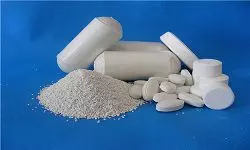
Calcium Hypochlorite
Found this useful?