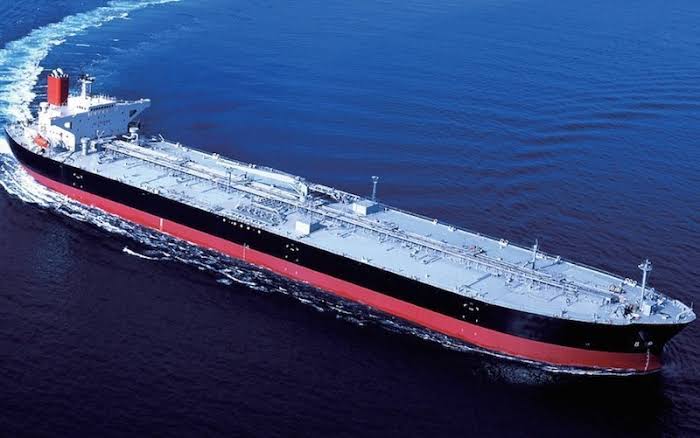
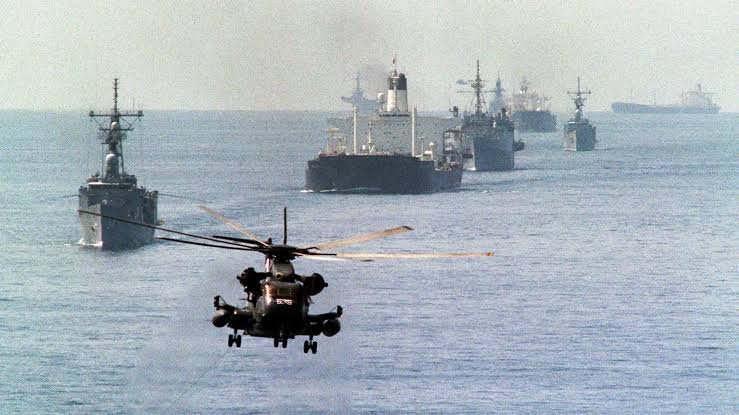
The Houthi embargo declaration has introduced another layer of uncertainty into Red Sea shipping, but the announcement provided few operational details explaining how the embargo would work. That lack of clarity makes credibility assessment more important than immediate acceptance of the claim at face value.
For chemical traders, procurement managers and industrial buyers, the central issue is not the language of the declaration alone. The real question is whether the group possesses the intent, capability and operational consistency required to change vessel behaviour, insurance conditions and cargo availability. Previous Red Sea threats provide a reference point, but each new declaration requires fresh analysis. Procurement teams should rank the announcement through observable shipping and security indicators rather than political messaging alone.
Why the Lack of Operational Detail Matters
An embargo normally requires a defined target, enforcement mechanism and geographic scope. Without these elements, market participants cannot easily determine which vessels, cargoes or routes face the greatest exposure.
The latest declaration offers limited clarity on these practical questions. It does not fully explain how vessels would be identified, what activity would trigger enforcement or how broadly restrictions would apply.
This ambiguity creates two competing interpretations.
The declaration may represent strategic signalling designed to influence shipping behaviour without requiring continuous operational action. Alternatively, the lack of detail may preserve flexibility, allowing the group to choose targets without committing to a narrow public framework.
Chemical buyers should avoid assuming that unclear language means limited risk. Ambiguity can reduce predictability even when the underlying operational capability remains unchanged.
The announcement should therefore receive a moderate initial credibility ranking, subject to confirmation through vessel activity, security incidents and changes in carrier behaviour.
Ranking the Declaration Against Previous Red Sea Threats
Past threats provide a useful baseline because credibility depends partly on demonstrated behaviour. Announcements carry greater weight when the issuing group has previously influenced shipping decisions or regional trade.
A structured ranking can divide the latest declaration into three levels:
Rhetorical credibility: The group has communicated an intent to restrict or influence maritime activity.
Operational credibility: Previous actions indicate some ability to threaten vessels or alter shipping behaviour.
Sustained enforcement credibility: The declaration lacks enough detail to confirm that the group can maintain a broad embargo over time.
Based on these categories, the current announcement ranks higher than an unsupported political statement but below a clearly defined and consistently enforced maritime restriction.
This middle ranking matters for procurement teams. The threat may not stop trade completely, yet it can still increase costs by encouraging carriers and insurers to take defensive action.
Credibility analysis should separate three factors that often become mixed together during fast-moving security events.
Intent concerns whether the group genuinely seeks to influence shipping and trade. The embargo declaration provides a clear statement of intent, even though the operational framework remains vague.
Capability concerns whether the group can detect, reach and threaten vessels within the relevant maritime zone. Previous Red Sea activity gives this factor greater weight than the declaration alone would justify.
Consistency concerns whether operations can continue at a level strong enough to sustain an embargo. This remains the least certain element because broad maritime enforcement requires repeated action, target identification and operational endurance.
A declaration can carry high intent but only moderate enforcement capacity. Chemical procurement teams should therefore treat credibility as a spectrum rather than a simple true-or-false judgment.
What an Embargo Would Need to Affect Physical Trade
A credible maritime embargo must influence actual commercial decisions. It does not need to stop every vessel to affect global supply chains.
If enough carriers perceive unacceptable risk, they may avoid the route voluntarily. This can produce a commercial restriction without complete physical control of the waterway.
Several mechanisms could give the declaration practical effect:
Repeated threats against selected commercial vessels
Incidents involving ships linked to targeted countries or companies
Carrier decisions to suspend Red Sea transits
Higher war-risk insurance premiums
Greater use of the Cape of Good Hope route
Reduced availability of chemical and product tankers
Longer voyage schedules and tighter delivery windows
The strongest evidence would come from several of these indicators appearing together.
Chemical traders should focus on whether the announcement changes behaviour. An embargo becomes commercially meaningful when shipowners, charterers and insurers begin treating it as operationally credible.
Shipping Behaviour Will Provide the Best Early Evidence
Vessel movement data can reveal whether the declaration is gaining credibility among commercial operators.
A decline in Red Sea transits would show that carriers see a material increase in risk. Route diversions would provide an even stronger signal, especially if major operators begin using longer alternatives.
Intelligence teams should also monitor vessel speed and waiting patterns. Ships may reduce speed, delay entry or remain near safer anchorage while operators assess conditions.
Changes in port calls can add another layer of evidence. Fewer arrivals at exposed terminals may indicate that the threat is influencing scheduling before wider trade data captures the effect.
For chemical importers, these behavioural shifts can matter more than public statements. A vessel diversion can extend transit times by days or weeks, increasing inventory requirements and delivered costs.
The declaration should receive a higher credibility ranking only if shipping behaviour begins confirming the stated threat.
Insurance Markets Can Amplify a Limited Threat
A maritime declaration does not need complete enforcement capability to raise insurance costs. Insurers price probability and potential loss rather than waiting for certainty.
Even a selective threat can increase war-risk premiums if underwriters believe that vessels face a greater chance of attack, delay or damage.
Chemical cargoes may attract additional scrutiny because they can involve flammable, corrosive or hazardous products. An incident involving such materials can create complex safety and environmental liabilities.
Rising insurance costs can affect procurement through:
Higher freight quotations
Additional security surcharges
More restrictive charter terms
Reduced willingness to cover exposed routes
Greater documentation and reporting requirements
Shorter commercial offer validity
These effects can persist even if no broad embargo develops.
Procurement teams should therefore distinguish between operational enforcement and commercial impact. A declaration can remain only partially credible as an embargo while still creating meaningful logistics costs.
Chemical Trade Faces Uneven Exposure
The effect of Red Sea disruption varies by product, origin and destination. Chemicals moving between Asia, the Middle East, Africa and Europe can face different levels of route dependence.
Bulk commodities often carry high exposure because freight represents a significant part of their delivered value. Longer voyages can materially change landed costs even when the supplier's product price remains stable.
Speciality chemicals face a different risk. Their cargo volumes may be smaller, but technical qualification and limited supplier options can make delays more disruptive.
Products such as methanol, solvents, polymers and industrial intermediates may move through shipping networks that depend on predictable access to Red Sea routes.
Buyers should map each product according to:
Country of origin
Normal shipping route
Alternative route availability
Freight share of landed cost
Supplier concentration
Current inventory coverage
Technical difficulty of substitution
This product-level ranking helps procurement teams avoid overreacting across an entire portfolio.
Previous Red Sea threats provide valuable evidence, but intelligence teams should not assume that every declaration will produce the same outcome.
Past activity demonstrates that maritime threats can influence carrier decisions and insurance pricing. It also shows that declared intentions do not always translate into broad or continuous enforcement.
The current announcement should therefore be compared through measurable questions.
Did earlier threats lead to route diversions? Did carriers resume normal operations when activity slowed? Did insurance premiums remain elevated after immediate security concerns eased?
These comparisons can help determine how quickly market participants may react this time.
A group with a track record of selective action can create significant commercial disruption without enforcing a universal embargo. Selectivity may actually increase uncertainty because operators cannot easily determine who faces exposure.
The latest declaration deserves attention for that reason, even while its practical scope remains unclear.
Indicators That Would Raise the Credibility Ranking
Several developments would justify moving the declaration into a higher-risk category.
The first would be repeated incidents aligned with the stated embargo. Consistency between the declaration and subsequent targeting would demonstrate operational intent.
The second would be clear evidence that major shipping companies have altered routes or suspended services.
The third would be a sustained increase in war-risk premiums, vessel charter rates and Red Sea transit times.
Additional warning indicators include:
Public carrier advisories naming the threat
Reduced chemical tanker availability
Concentrated delays near regional ports
Cargo cancellations or force majeure notices
Supplier refusal to guarantee shipment dates
Widening freight differences between Red Sea and alternative routes
A combination of physical, commercial and insurance indicators would provide the strongest confirmation.
Indicators That Would Weaken the Declaration
The credibility ranking should fall if vessel traffic remains broadly normal and carriers show little change in operating behaviour.
Stable insurance costs would provide another sign that commercial markets do not view the declaration as a major escalation.
A lack of incidents connected to the embargo over an extended period would also weaken the enforcement case.
Other stabilising signals include:
Normal port activity
Consistent chemical shipment schedules
Longer supplier quotation validity
Improved tanker availability
Fewer carrier security warnings
Declining use of alternative routes
Procurement teams should remain cautious, however. A period of quiet does not automatically remove risk if the underlying capability remains present.
The strongest evidence of reduced threat would come from normal commercial activity sustained over time.
How Procurement Teams Should Respond
The announcement does not yet justify indiscriminate inventory accumulation. Its limited operational detail creates uncertainty, but uncertainty alone should not drive every purchasing decision.
Buyers should first identify critical chemicals that normally transit the Red Sea. Materials with long lead times, few qualified suppliers and limited safety stock deserve priority attention.
Procurement teams should request updated routing information from suppliers and freight providers. They should also confirm whether current quotations include war-risk or diversion-related charges.
Alternative origins may become valuable, particularly where another supplier can avoid the exposed route. Buyers must compare delivered cost rather than factory-gate price alone.
Contract terms also require review. Delivery obligations, route flexibility and force majeure provisions can become important if carriers refuse normal transit.
The objective should be measured resilience, not panic buying.
What Chemical Intelligence Teams Should Track Next
The Houthi embargo declaration ranks as a credible threat signal but not yet a fully demonstrated maritime embargo. Previous Red Sea activity supports the group's ability to influence shipping, while the lack of operational detail limits confidence in broad enforcement.
Chemical intelligence teams should monitor behaviour rather than rhetoric. Vessel diversions, freight costs, insurance premiums and supplier terms will show whether the declaration is moving from communication into physical market impact.
The most important distinction is between complete route closure and partial commercial disruption. The group does not need to control every vessel to raise costs or reduce shipping capacity.
Buyers should maintain updated exposure maps for Red Sea-dependent products and suppliers. They should also preserve flexibility through alternative routes, qualified origins and appropriate inventory coverage.
The declaration's credibility will rise or fall through measurable market responses. Until those responses become clear, procurement teams should treat it as a serious but unconfirmed escalation in regional shipping risk.
Ready to source methanol from verified global suppliers? Explore competitive offers on our platform today.