UK steel production has contracted steadily for decades as high energy costs, aging facilities and import competition from Asia and Europe eroded the industry's competitive position. This decline extends beyond employment statistics and trade deficits to affect the country's chemical feedstock supply base in ways that procurement teams managing aromatics, carbon black feedstocks and specialty chemicals must understand. Integrated steel facilities historically supplied benzene, toluene, xylene, naphthalene and coal tar derivatives as byproducts from coke ovens and blast furnaces that supported UK chemical manufacturing clusters around Port Talbot, Scunthorpe and Teesside.
As steel capacity shuts down or transitions away from blast furnace routes toward electric arc furnaces and direct reduced iron methods that do not produce these chemical byproducts, the domestic availability of steel-derived feedstocks diminishes. Chemical buyers who once sourced materials locally now import from continental Europe or farther afield, accepting higher logistics costs, longer lead times and currency exposure that integrated domestic supply chains previously avoided.
How Steel and Chemical Production Connect
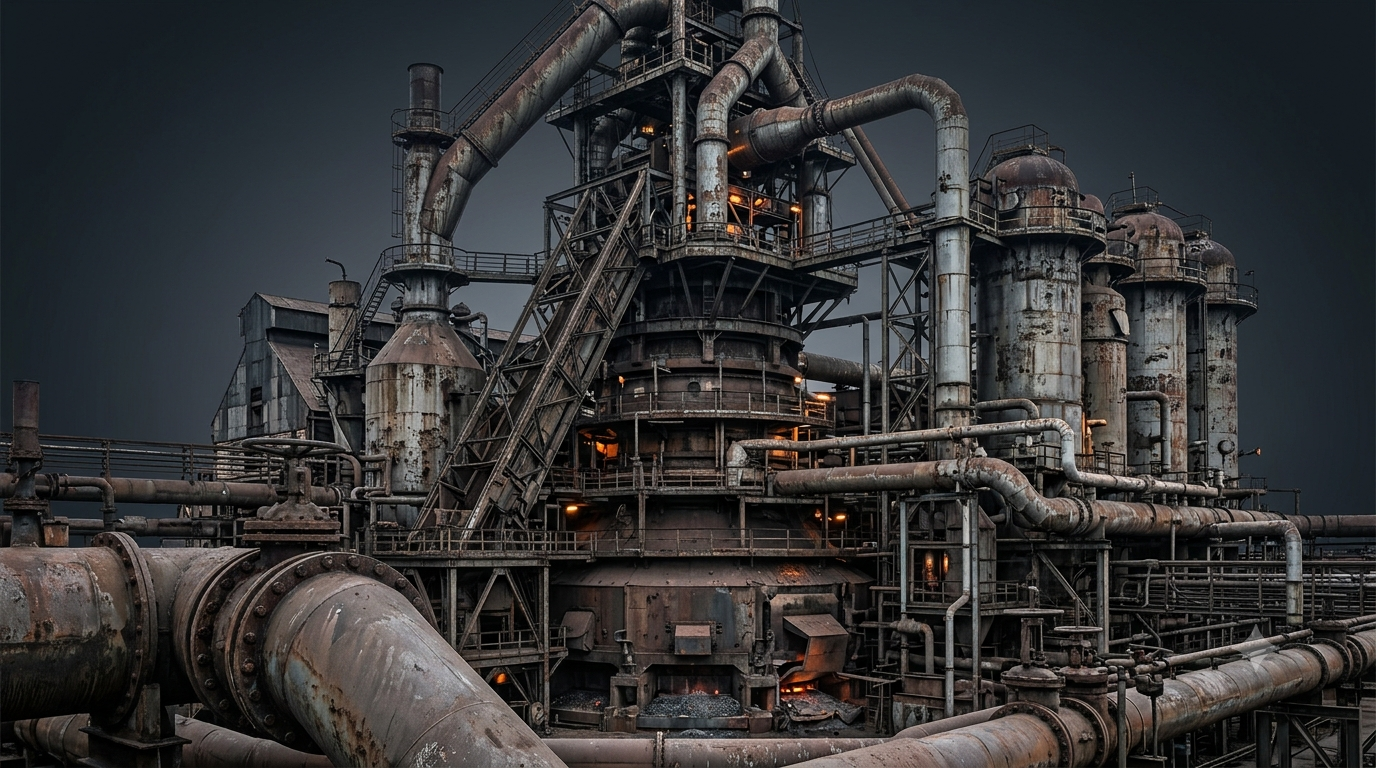
The relationship between steel and chemicals centers on coke production, a necessary step in traditional blast furnace steelmaking. Metallurgical coke gets produced by heating coal in oxygen-free ovens, driving off volatile organic compounds that condense into coal tar and coke oven gas. These byproducts contain valuable chemical feedstocks that integrated industrial sites recover and process.
Coal tar yields benzene, toluene, xylene, naphthalene, anthracene, phenol and numerous other aromatics through distillation and further processing. These materials serve as building blocks for plastics, resins, dyes, pharmaceuticals, agrochemicals and specialty chemicals. Benzene feeds styrene production for polystyrene and ABS plastics. Toluene serves as solvent and as feedstock for toluene diisocyanate used in polyurethane foams. Xylenes feed into polyester production through phthalic anhydride and terephthalic acid routes.
Coke oven gas contains hydrogen, methane, carbon monoxide and other light hydrocarbons that can be used as fuel or processed into chemical feedstocks. Some integrated sites capture this gas for ammonia synthesis or methanol production rather than simply burning it for energy.
Blast furnace gas also contains carbon monoxide that can be recovered for chemical use, though this is less common than coke oven gas utilization. The integration of steel and chemical production maximizes value extraction from coal inputs while providing steel mills with revenue from byproduct sales that improve overall economics.
The Scale of UK Steel Decline
UK crude steel production peaked around 24 million tons annually in the early 1970s. By 2000, production had fallen to roughly 15 million tons. By 2020, output dropped below 7 million tons. The decline accelerated during the 2010s as multiple facilities closed or drastically reduced capacity.
British Steel's Scunthorpe facility, Tata Steel's Port Talbot operations and remaining smaller producers now represent a drastically shrunken industry operating at fractions of historical capacity. Several facilities have switched from blast furnaces to electric arc furnaces that melt scrap steel using electricity rather than producing steel from iron ore using coke and blast furnaces.
This shift eliminates coke oven operations and the associated chemical byproducts. An electric arc furnace produces steel but generates no benzene, toluene or coal tar because no coal carbonization occurs. The transition improves steel production's carbon footprint by avoiding coal use and utilizing scrap material, but it severs the traditional link between domestic steel and chemical feedstock production.
Tata Steel's announcement of plans to close blast furnaces at Port Talbot and transition to electric arc furnace steelmaking represents the most significant recent development. Port Talbot operates the UK's largest remaining coke ovens and has been a major source of coal tar derivatives for the UK chemical industry. The facility's transformation will eliminate this feedstock source unless alternative arrangements preserve chemical recovery operations, which appears economically challenging given the scale reduction.
Specific Chemical Feedstocks Affected
Benzene supply in the UK increasingly depends on imports as domestic production from coke ovens declines. Benzene prices for UK buyers now track European benchmarks plus transportation costs rather than reflecting integrated domestic production economics. This creates exposure to European market dynamics, shipping availability and currency fluctuations that historically affected UK buyers less directly.
Toluene availability follows similar patterns with declining domestic production from coal tar necessitating imports from European refineries and petrochemical facilities. The UK's refining sector has also contracted with multiple refinery closures over the past two decades, further reducing domestic aromatics availability.
Naphthalene and higher aromatics from coal tar have become particularly import-dependent as these materials have limited alternative production routes. Naphthalene serves as feedstock for phthalic anhydride production, as moth repellent and in specialty chemical applications. Most UK consumption now relies on imports from Poland, Germany and other European countries maintaining coal-based chemical industries.
Carbon black feedstock, typically coal tar or ethylene cracker residues, faces similar constraints. The UK carbon black industry historically utilized coal tar from domestic steel operations but now sources feedstock through imports, affecting production economics and competitive positioning versus imports of finished carbon black from producers with more favorable feedstock access.
Phenol production historically utilized coal tar phenol recovery, though most modern phenol comes from cumene oxidation using petrochemical feedstocks. The decline in coal tar availability affects specialty phenolic chemicals and cresols more than commodity phenol supply.
Import Dependency and Logistics Implications
UK chemical buyers replacing domestic steel-derived feedstocks with imports face several cost and logistics challenges. Cross-channel shipping from continental Europe adds freight costs, port handling and potential customs procedures post-Brexit that did not affect domestic sourcing.
Lead times extend from days for domestic sourcing to weeks for imported materials requiring ocean freight, tank truck or rail transport from European sources. This forces buyers to carry higher inventory levels to buffer against supply disruptions or transportation delays, tying up working capital.
Currency exposure increases when materials previously purchased in pounds sterling from UK suppliers now get sourced in euros from European producers. Exchange rate fluctuations between pound and euro create pricing volatility that buyers must manage through hedging or pass-through to customers.
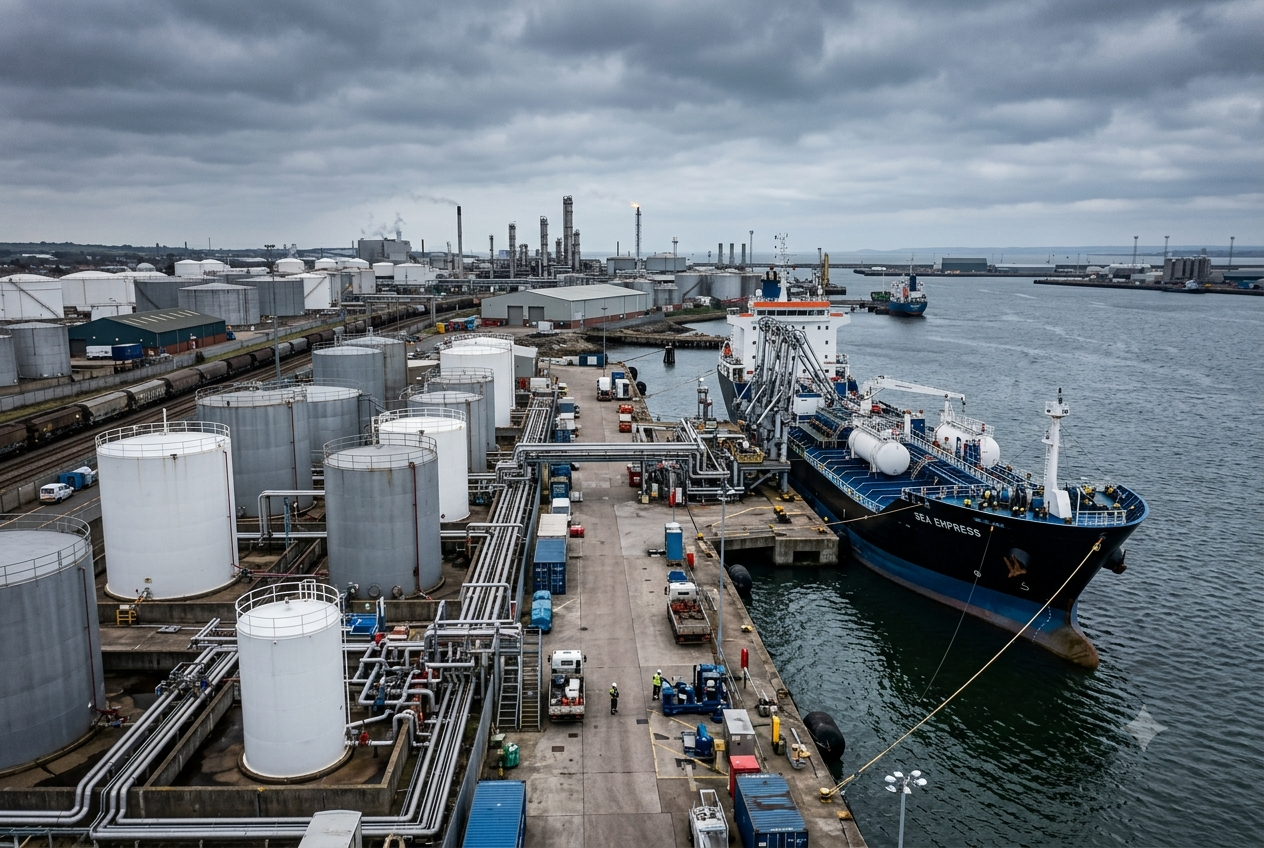
Port capacity and chemical handling infrastructure become potential bottlenecks as import volumes increase. UK ports equipped for bulk liquid chemical handling include Immingham, Grangemouth, Southampton and several others, but capacity is not unlimited and congestion can create delays during peak periods.
Where UK Chemical Buyers Source Alternatives
Poland maintains significant coal-based chemical production integrated with steel operations and coal tar processing facilities. Polish producers including Synthos and others supply benzene, toluene and coal tar derivatives to UK buyers who previously sourced domestically.
Germany's chemical industry includes coal tar processing at facilities integrated with remaining German steel operations and at standalone chemical plants processing imported coal tar. German suppliers serve UK markets with established logistics networks and commercial relationships.
Netherlands and Belgium serve as import hubs where chemical products from various European and global sources get stored, blended and distributed to UK customers. Rotterdam and Antwerp function as major chemical trading centers with tank storage capacity and distribution infrastructure supporting UK supply chains.
Further afield, some UK buyers have established supply relationships with Chinese, Indian or Middle Eastern producers for aromatics and derivatives, though logistics costs and lead times make these sources less attractive for routine procurement compared to European options.
The choice of sourcing origin depends on specific material requirements, volume, price sensitivity and logistics optimization. High-value specialty chemicals justify longer supply chains from distant sources, while commodity aromatics typically come from the nearest cost-effective source.
Impact on UK Chemical Manufacturing Competitiveness
The shift from domestically produced feedstocks to imports affects UK chemical manufacturers' cost structures and competitive positioning. Higher feedstock costs due to logistics and currency factors squeeze margins in commodity chemical segments where producers compete primarily on price.
Specialty chemical producers with differentiated products and technical service capabilities can often pass through higher feedstock costs to customers, mitigating competitive impact. However, even in specialty segments, persistent cost disadvantages versus continental European competitors with better feedstock access create pressure over time.
Some UK chemical producers have responded by relocating production to continental Europe or other regions offering better feedstock access and lower energy costs. This continues a broader pattern of UK chemical industry contraction that accelerated following energy price spikes and Brexit-related uncertainty.
The remaining UK chemical sector increasingly focuses on downstream activities including formulation, compounding, packaging and distribution that add value through technical service, logistics optimization and market proximity rather than through primary chemical manufacturing requiring large-scale feedstock consumption.
Policy Responses and Industrial Strategy
The UK government recognizes that heavy industry decline including steel and chemicals creates economic and strategic vulnerabilities. Various industrial strategy initiatives have aimed to preserve critical capabilities and support transition to lower-carbon production methods.
Subsidies and contracts-for-difference mechanisms have been proposed to support steel industry transition to electric arc furnaces and direct reduced iron using hydrogen rather than coal. These initiatives address decarbonization objectives but do little to preserve chemical feedstock production since the new steelmaking methods do not generate coal tar byproducts.
Carbon capture and storage (CCS) infrastructure development in industrial clusters including Teesside and Humberside aims to enable continued operation of carbon-intensive industries including chemicals by capturing emissions rather than eliminating the processes that generate them. If successful, CCS could allow some petrochemical operations using natural gas or naphtha feedstocks to continue competing despite high carbon costs.
However, these policies do not specifically address coal tar chemical supply disruption from steel industry transformation. The economic logic of modern chemical production favors petrochemical routes over coal-based chemistry for most applications, so government policy supports transition rather than preservation of legacy integrated steel-chemical operations.
Long-Term Structural Trends
The UK steel decline and associated chemical feedstock constraints reflect long-term structural trends unlikely to reverse under plausible economic or policy scenarios. Energy costs in the UK persistently exceed those in competitor regions including the Middle East, United States and parts of Asia where natural gas prices remain substantially lower.
Environmental regulations and carbon pricing in the UK and broader European Union create costs that producers in less regulated jurisdictions avoid. While these policies serve important decarbonization objectives, they affect energy-intensive industries including steel and chemicals disproportionately.
Capital investment in UK heavy industry has lagged for decades as companies prioritized returns to shareholders over facility upgrades and as uncertainty about long-term viability deterred major commitments. Aging facilities operate less efficiently and reliably than modern plants in competitor regions, creating productivity gaps that compound cost disadvantages.
The domestic market size for steel and chemicals in the UK cannot support production scales that achieve global cost competitiveness in many commodity segments. Producers serving only the UK market operate at disadvantages versus those serving larger European or global markets from optimally scaled facilities.
What Chemical Buyers Should Do Now
Procurement teams sourcing aromatics, coal tar derivatives and related materials should assess their exposure to UK steel industry decline and take actions to ensure supply continuity and cost competitiveness. First, audit current supplier base to identify which materials come from UK steel-integrated sources and evaluate vulnerability to facility closures or operational changes.
Second, develop European and potentially global sourcing alternatives for materials at risk of domestic supply disruption. Qualify alternative suppliers before disruptions occur rather than conducting emergency sourcing during supply crises when negotiating leverage disappears.
Third, model the total landed cost of imported alternatives including freight, currency hedging, inventory carrying costs and potential customs duties or regulatory compliance expenses. Ensure procurement cost models reflect actual total costs rather than just quoted purchase prices.
Fourth, evaluate whether specification changes or material substitutions could reduce dependence on specific feedstocks or suppliers. Reformulation using alternative aromatics, different solvent blends or synthetic versus coal-derived materials might improve supply security even if development costs are required.
Fifth, engage with industry associations and policy processes to communicate how steel industry changes affect chemical supply chains. Government officials often underestimate interconnections between industries and may not recognize chemical supply impacts of steel sector policies without industry input.
The Broader European Context
UK steel and chemical feedstock challenges exist within broader European industrial transformation driven by energy transition, carbon reduction commitments and competition from lower-cost regions. Germany, France, Belgium and other European countries face similar pressures around heavy industry competitiveness and integrated industrial site economics.
The European Union's Carbon Border Adjustment Mechanism (CBAM) aims to address some competitive disadvantages by imposing carbon costs on imports equivalent to those borne by EU producers. However, CBAM primarily targets finished goods like steel rather than chemical feedstocks, leaving gaps in how it protects integrated chemical operations.
European chemical producers increasingly advocate for industrial policies that preserve critical supply chains and manufacturing capabilities rather than simply managing decline. This includes support for low-carbon production technologies, protection against unfair trade practices and strategic stockpiling of materials where supply security concerns justify government intervention.
UK chemical industry participants should monitor European policy developments and assess opportunities to participate in cross-border industrial collaborations or supply chains that improve economics through scale and integration even if purely domestic operations become unviable.
Alternative Feedstock Development
Some UK chemical producers are exploring alternative feedstock strategies to reduce dependence on imports and improve sustainability profiles. Biomass-derived aromatics through pyrolysis or gasification of forestry and agricultural waste represent one possibility, though economics remain challenging at current technology maturity levels.
Recycled plastics as chemical feedstock offer another pathway where waste polyethylene or polypropylene gets converted back to olefins and aromatics through pyrolysis or gasification. Several companies are developing commercial-scale facilities in the UK and Europe to pursue this circular economy approach.
Captured CO2 conversion to chemicals through electrochemical or catalytic routes could eventually provide feedstocks without fossil carbon dependence, though this technology remains far from commercial viability for aromatics production.
Hydrogen-based chemistry using renewable electricity to split water and then synthesize hydrocarbons through Fischer-Tropsch or methanol-to-olefins routes represents a long-term possibility. The UK's offshore wind resources could theoretically support large-scale green hydrogen production, though economic viability requires dramatic cost reductions in electrolysis and downstream conversion processes.
These alternative feedstock options should be monitored as long-term possibilities rather than near-term solutions. Procurement teams should maintain awareness of technology development while building supply strategies around currently available commercial sources.
The Reality for 2027 and Beyond
The UK's steel and chemical feedstock base will continue shrinking through the remainder of the decade as remaining blast furnace operations transition to cleaner steelmaking methods or close entirely. Chemical buyers should plan on increasing import dependency for aromatics and coal tar derivatives with no realistic prospect of domestic production recovery.
This transition creates costs and complexity but also opportunities for procurement teams that adapt proactively. Buyers who develop strong relationships with European suppliers, optimize logistics networks and build flexibility into specifications and formulations will manage the transition more successfully than those who attempt to preserve unsustainable domestic sourcing patterns.
The UK chemical industry will persist but in transformed configuration focused on areas where geography, skills, infrastructure or market access provide competitive advantages. Feedstock-intensive commodity production will largely move elsewhere while specialty chemicals, formulation, technical services and downstream manufacturing activities can remain viable.
Understanding these structural shifts and positioning procurement strategies accordingly separates successful chemical buyers from those who get caught unprepared by predictable but still disruptive supply chain transformations.
Ready to source Benzene from verified global suppliers? Explore competitive offers on our platform today.