Trade Policy Flash: India Duty Reinstated, EU Anti-Dumping July Decisions, US Tariff Monitoring
Trade Policy Flash: India Duty Reinstated, EU Anti-Dumping July Decisions, US Tariff Monitoring
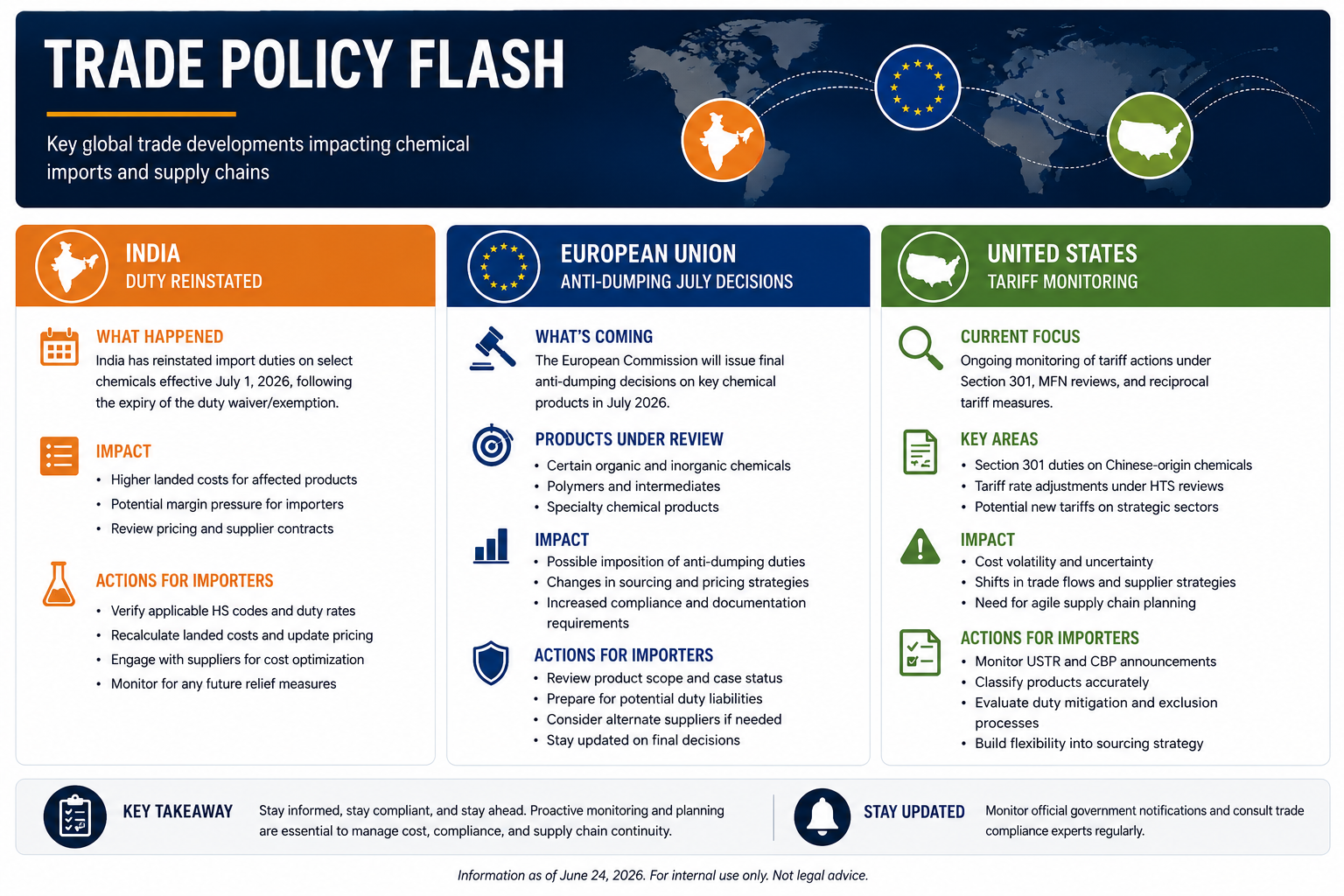
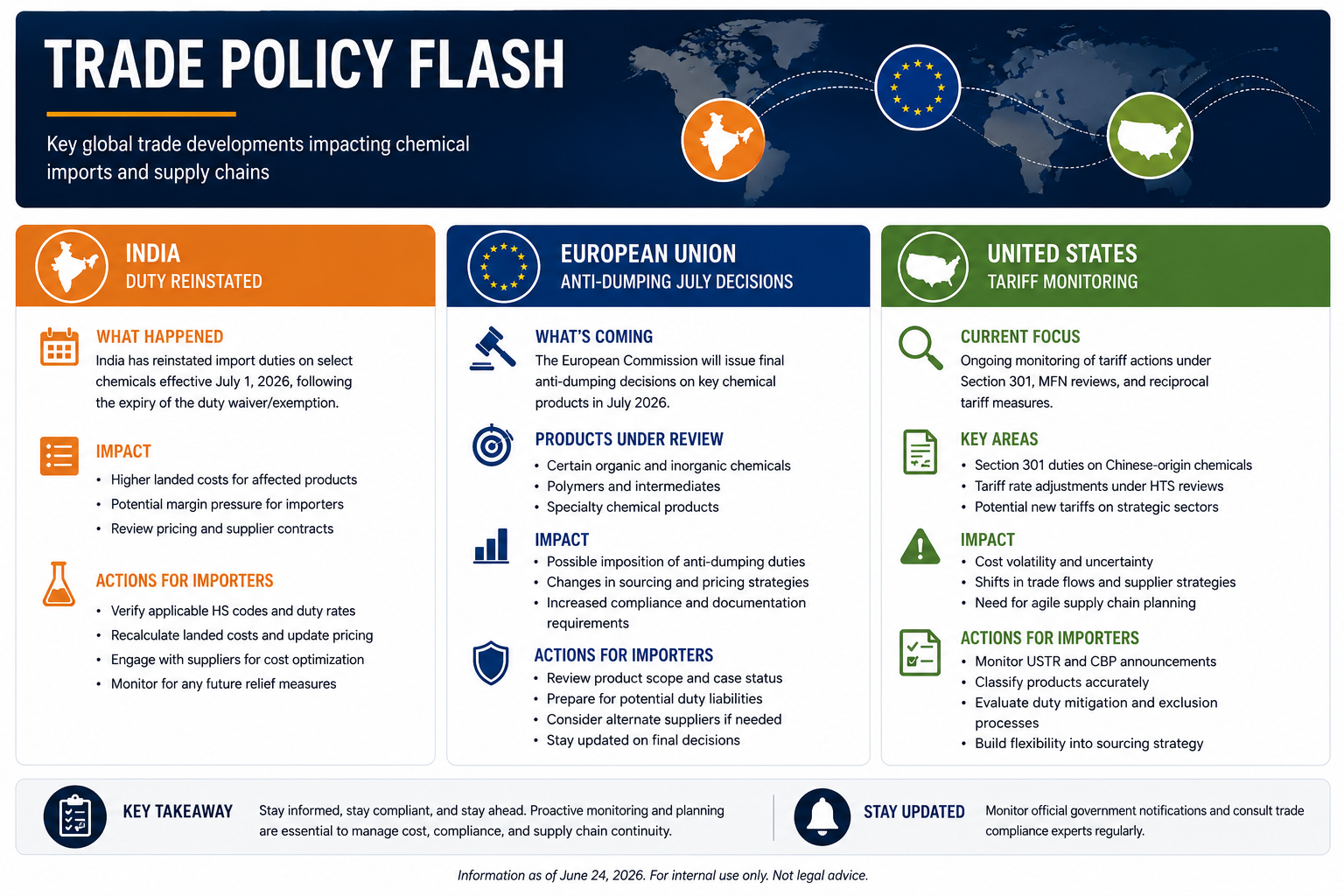
July has started with a sharp policy reset for chemical buyers — and procurement teams now have three different trade regimes moving at the same time.
What changed overnight is not minor. It affects landed cost calculations, sourcing strategy, and compliance risk across Asia, Europe, and the United States. For chemical importers, July 1 is no longer just a calendar date. It is a pricing event.
The practical issue now is speed: buyers who do not adjust contract assumptions this week may be working on outdated landed cost models by next week.
Three Policy Shifts Chemical Procurement Teams Should Reprice Immediately
The first and most immediate development is India.
The temporary zero-duty exemption on 40 petrochemical products officially ended at midnight, meaning standard Basic Customs Duty (BCD) rates now apply again. As of this morning, there is no confirmed sector-specific extension.
This changes import economics instantly.
Buyers importing polymers, surfactants, intermediates, and chemical feedstocks into India now need to recalculate:
New landed cost structures Margin assumptions on existing customer contracts Inventory valuation for July arrivals Q3 procurement timing decisions
The second key development is in the European Union.
Two important anti-dumping investigations tied to Chinese-origin chemicals are approaching decision stage.
Products under watch include:
Chlorfenapyr Phosphorous acid, currently facing a potential 122.8% anti-dumping duty framework
The expected decision window is Q3 2026, with July widely viewed as the most likely period for provisional or final determinations.
For EU chemical importers sourcing these products from China, this is no longer passive monitoring. Procurement teams should now track the Official Journal of the European Union daily, because once duties are formally published, cost structures can change overnight.
The third development remains broader but equally important: US tariff policy.
The Trump administration’s chemical tariff framework continues reshaping US import flows across multiple categories. The practical challenge is classification.
Chemical buyers considering new H2 sourcing categories must now confirm:
Whether Most-Favoured-Nation (MFN) tariff rates apply Whether Section 301 tariffs remain active on the category Whether country-of-origin rules affect landed cost treatment Whether alternative sourcing origins improve tariff efficiency
This is where legal review matters.

Borax Decahydrate (Technical Grade) - Argentina
Found this useful?