
Understanding Wetting Agents in Industrial Chemical Formulations
What Are Wetting Agents?
Wetting agents are surface-active chemicals, commonly known as surfactants, that improve the ability of liquids to spread across or penetrate solid surfaces. They work by reducing surface tension and changing the interaction between a liquid and the material it comes into contact with.
Water naturally tends to form droplets on certain surfaces instead of spreading evenly. This can create problems in industrial processes where liquids need to cover materials, penetrate fibres or distribute across surfaces.
Wetting agents help overcome these challenges by improving surface contact and liquid distribution. They are used in coatings, textiles, paper manufacturing, industrial cleaning, agriculture, mining and several other chemical-processing applications.
Their effectiveness depends on the surfactant chemistry, formulation conditions, substrate properties and intended industrial application.
How Wetting Agents Work in Industrial Formulations
Wetting agents contain two main structural components: a hydrophilic part that interacts with water and a hydrophobic part that has an affinity for oils or other less-polar materials.
When added to a suitable formulation, these molecules migrate towards interfaces and help reduce surface or interfacial tension. This allows the liquid to spread more effectively over a surface or penetrate porous materials.
Their performance is influenced by several factors:
Surface tension: Lower surface tension can improve liquid spreading.
Contact angle: A lower contact angle generally indicates better wetting of a solid surface.
Surface properties: Plastic, metal, textile fibres and mineral particles have different wetting characteristics.
Dynamic wetting: Fast industrial processes may require surfactants that act quickly on newly formed surfaces.
Formulation compatibility: Other ingredients can influence surfactant performance and stability.
Selecting a wetting agent therefore requires more than checking its ability to reduce surface tension. It must perform effectively under actual production conditions.
Main Types of Industrial Wetting Agents
Wetting agents are available in different chemical categories. Their selection depends on compatibility, foaming behaviour, solubility and the requirements of the final product.
1. Anionic Wetting Agents
Anionic wetting agents carry a negatively charged hydrophilic group. They are commonly used in water-based industrial formulations because of their effective wetting and spreading properties.
Examples include:
Sodium dioctyl sulfosuccinate
Sodium alkyl naphthalene sulfonate
Sodium lauryl sulphate
Alkyl sulphate-based surfactants
Industrial applications: Anionic wetting agents are used in textile processing, pigment dispersions, printing inks, coatings, agrochemical formulations and industrial cleaning. Their compatibility with other formulation ingredients should be evaluated, particularly in systems containing cationic materials.
2. Nonionic Wetting Agents
Nonionic wetting agents do not carry an electrical charge. They are widely used in industrial formulations because many grades offer useful compatibility across different water-based systems.
Common examples include:
Alcohol ethoxylates
Fatty alcohol ethoxylates
Alkyl polyglucosides (APGs)
Ethoxylated surfactants
Industrial applications: These products are used in detergents, industrial cleaners, textile processing, coatings, paper production and agricultural formulations. Certain grades are also selected for applications where low foaming is important.
3. Cationic Wetting Agents
Cationic wetting agents carry a positively charged hydrophilic group. They are selected for specific applications where their interaction with negatively charged surfaces or materials provides a functional advantage.
Common examples include selected quaternary ammonium compounds and other cationic surfactants.
Industrial applications: They may be used in textile treatments, fabric finishing and specialised industrial formulations. Compatibility testing is important because cationic surfactants can interact strongly with anionic ingredients.
4. Amphoteric Wetting Agents
Amphoteric surfactants can carry positive or negative charges depending on the pH conditions of the formulation.
Examples include betaines and amphoacetate-based surfactants.
Industrial applications: They are used in selected cleaning products, textile formulations and speciality chemical systems where a particular balance of compatibility, mildness or foam behaviour is required.
Industrial Applications of Wetting Agents
Wetting agents support several manufacturing processes by improving liquid contact with materials and helping achieve more uniform treatment.
Paints, Coatings and Printing Inks
In paints and coatings, wetting agents improve the spreading of liquid formulations over surfaces. They can also help wet pigments and fillers during production.
Poor wetting may lead to surface defects such as crawling, cratering, uneven coverage and pigment-related processing difficulties.
Wetting additives are selected to improve substrate contact, pigment incorporation, flow and surface appearance. Silicone-based, polymeric and surfactant-based technologies are used depending on the coating system.

Textile Processing
Textile manufacturing involves several wet-processing stages, including scouring, dyeing, bleaching and finishing.
Wetting agents help processing liquids spread across fibres and penetrate fabric structures. This supports more uniform treatment and can improve the consistency of dyeing and finishing operations.
Their selection depends on fibre type, process temperature, pH, electrolyte concentration and foam requirements.
Paper and Pulp Manufacturing
Wetting agents are used in paper processing to improve liquid distribution and support selected treatment operations.
They may assist in coating, printing, surface treatment and recycled-paper processing. Their performance depends on compatibility with pulp, fillers, binders and other additives used in production.
Industrial Cleaning and Detergents
Industrial cleaning formulations need to spread across surfaces and interact with contaminants such as oils, grease and dirt.
Wetting agents help cleaning liquids make better contact with the surface being cleaned. They are commonly combined with detergents, emulsifiers and other surfactants to support soil removal.
Low-foaming grades may be preferred in spray-washing equipment and automated cleaning systems.
Agriculture and Agrochemical Formulations
Wetting agents are used in certain pesticide and crop-protection formulations to improve liquid spreading over plant surfaces.
They can help reduce droplet beading and improve contact with difficult-to-wet surfaces. The appropriate surfactant depends on the active ingredient, formulation type, crop application and regulatory requirements.
Mining and Mineral Processing
Mineral particles and other solid materials may be difficult to wet during industrial processing.
Wetting agents can improve liquid contact with mineral surfaces and support selected dust-control, slurry-handling and mineral-processing applications.
Their performance depends on mineral composition, water chemistry and the other chemicals used in the process.
Important Formulation Requirements for Wetting Agents
Selecting a wetting agent is an important part of industrial product development. An effective formulation must meet performance requirements while remaining stable and compatible with other ingredients.
1. Surface Tension and Contact Angle
The wetting agent should reduce surface tension sufficiently to achieve the required spreading and surface coverage.
Contact-angle testing can help evaluate how effectively a liquid spreads across a particular substrate. The target performance depends on the application rather than a single universal value.
2. Compatibility with Other Ingredients
Wetting agents are often combined with dispersants, emulsifiers, binders, pigments, preservatives and other additives.
The selected surfactant must remain compatible with these ingredients. Incompatible combinations may cause precipitation, separation, viscosity changes or reduced performance.
3. pH and Temperature Stability
Industrial processes may operate under acidic, alkaline or high-temperature conditions.
The wetting agent should maintain suitable performance throughout the intended processing range. Temperature and pH can influence solubility, chemical stability and surfactant behaviour.
4. Foam Control
Some wetting agents generate considerable foam during mixing, spraying or circulation.
Excessive foam can interfere with manufacturing operations, reduce filling efficiency and affect the quality of the final product.
Formulators should assess foam generation and foam stability. Low-foaming surfactants or compatible defoamers may be considered where necessary.
5. Solubility and Concentration
The wetting agent should dissolve or disperse properly in the formulation.
Its concentration must be optimised through laboratory testing. Excessive quantities may create foam, affect product stability or interfere with other ingredients, while insufficient quantities may fail to provide the required wetting performance.
6. Environmental and Regulatory Requirements
Industrial buyers should evaluate the environmental profile and regulatory suitability of the selected surfactant.
Important considerations include biodegradability, aquatic toxicity, restricted substances, application-specific regulations and wastewater discharge requirements.
Safety Data Sheets (SDS) and technical documentation should be reviewed before purchasing and using a chemical product.
Quality Control and Testing Methods
Quality control helps manufacturers confirm that a wetting agent performs consistently during production and in the final application.
Common evaluation methods include:
Surface tension testing: Measures the reduction in liquid surface tension.
Contact-angle measurement: Evaluates liquid spreading on a selected solid surface.
Draves wetting test: Commonly used to assess the wetting performance of textile surfactants.
Foam testing: Measures foam generation and stability under defined conditions.
Solubility testing: Checks whether the product dissolves or disperses as required.
Stability testing: Evaluates changes during storage and under different temperature conditions.
Compatibility testing: Identifies possible interactions with other formulation ingredients.
Testing should use application-relevant materials and conditions. A wetting agent that performs well in a simple water solution may behave differently in a complete industrial formulation.
How to Select the Right Wetting Agent for Industrial Use
Industrial manufacturers and chemical buyers should consider the following factors before selecting a wetting agent:
Application: Identify whether the product is intended for coatings, textiles, cleaning, agriculture or another process.
Surfactant type: Compare anionic, nonionic, cationic and amphoteric chemistries.
Substrate: Consider the surface properties of the material being treated.
Process conditions: Review temperature, pH, mixing speed and application method.
Foam requirements: Determine whether high, moderate or low foaming behaviour is acceptable.
Compatibility: Check interactions with binders, pigments, dispersants and other ingredients.
Technical specifications: Review active matter, appearance, solubility, ionic character and relevant performance data.
Supplier documentation: Request a current TDS, SDS and Certificate of Analysis (COA), where applicable.
Laboratory trials and pilot-scale testing are recommended before introducing a new wetting agent into full-scale production.
Developments in Industrial Wetting Agent Formulations
Industrial formulation requirements continue to evolve as manufacturers focus on production efficiency, product quality and environmental considerations.
There is growing interest in surfactants designed for lower dosage requirements, improved compatibility and more controlled foaming behaviour. Manufacturers are also evaluating alternative surfactant chemistries and formulations with improved environmental profiles.
In coatings, specialised wetting additives are being developed to improve substrate coverage, flow and surface appearance. In cleaning and textile processing, product development often focuses on effective wetting under specific operating conditions.
The most suitable formulation depends on the performance target, application environment and technical requirements of the end product.
Selecting the Right Wetting Agent for Better Formulation Performance
Wetting agents are important functional additives across many industrial sectors. By improving surface contact, spreading and liquid penetration, they support consistent performance in coatings, textiles, paper manufacturing, cleaning, agriculture and mineral processing.
However, choosing the right product requires careful evaluation of surfactant chemistry, compatibility, foam behaviour, pH, temperature and substrate properties.
Manufacturers can achieve more reliable results by combining suitable chemical selection with laboratory testing, quality control and supplier technical support. This approach helps ensure that wetting agents meet the practical requirements of industrial formulations.
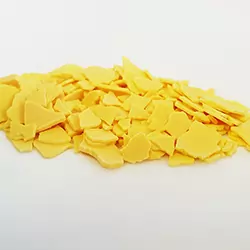
Sodium Sulfide (Yellow)
Found this useful?