h make them attractive materials for advanced additive manufacturing.
For optical applications, these materials must deliver much more than mechanical strength. They also require outstanding transparency, stable refractive properties and long-term resistance to discoloration and environmental exposure.
How 3D Printing Changes Lens Manufacturing
Traditional lens production begins with molded lens blanks that travel through several manufacturing stages before reaching the customer. Grinding equipment removes material to create the required prescription before polishing and coating complete the process.
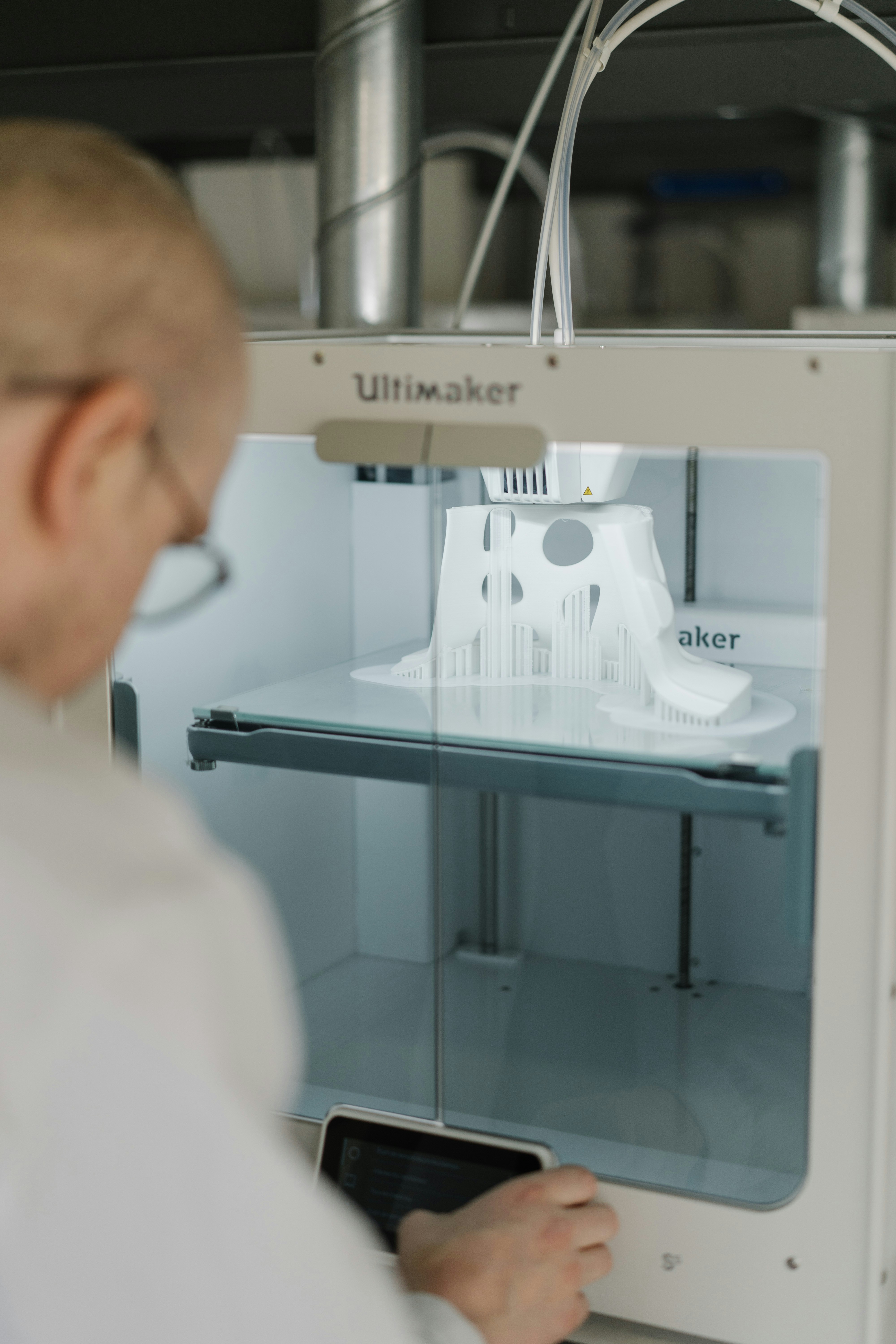
A digital manufacturing workflow changes this sequence by producing the lens directly from a digital design. This approach offers several operational advantages.
It reduces material waste because the process builds rather than removes material.
It shortens manufacturing workflows by eliminating multiple finishing steps.
It allows production facilities to manufacture customized lenses without maintaining large inventories of lens blanks.
It creates opportunities for localized production that can reduce transportation requirements.
Chemical Demand Behind Digital Lens Production
The success of printed ophthalmic lenses depends heavily on resin chemistry. Suppliers capable of producing specialized photopolymers with consistent quality could see increasing demand as additive manufacturing expands.
Important resin characteristics include:
High optical transparency.
Low shrinkage during curing.
Excellent UV stability.
Strong scratch resistance.
Reliable dimensional accuracy.
Long shelf life for commercial distribution.
These requirements make formulation expertise just as important as printing hardware.
Supply Chain Benefits for Procurement Teams
Procurement professionals continue to seek manufacturing solutions that reduce logistics costs while improving supply reliability. Digital production offers several attractive possibilities.
Instead of transporting partially finished lens blanks between multiple facilities, manufacturers can move digital design files and produce finished lenses closer to customers. This approach may reduce warehousing requirements, simplify inventory management and improve production flexibility.
Producing an optical-quality component remains significantly more demanding than manufacturing standard industrial plastic parts.
Manufacturers must achieve:
Exceptional surface smoothness.
Precise optical geometry.
Uniform transparency.
Minimal internal defects.
Stable refractive performance.
Long-term durability during daily use.
Even small imperfections can affect visual performance, making quality control essential throughout production.
Sustainability Advantages
Many manufacturers continue exploring technologies that reduce environmental impact while maintaining productivity.
Digital manufacturing can contribute by:
Lowering material waste.
Reducing transportation between production stages.
Decreasing inventory requirements.
Supporting on-demand manufacturing.
Improving material utilization.
Combined with efficient UV curing systems, these improvements may reduce the overall environmental footprint compared with conventional manufacturing workflows.
Opportunities for Chemical Suppliers
The transition toward digitally manufactured optical products creates opportunities throughout the specialty chemicals value chain.
Companies developing advanced photopolymer formulations may expand partnerships with:
Industrial 3D printer manufacturers.
Optical laboratories.
Medical device manufacturers.
Research institutions.
Specialty coating producers.
Demand may also increase for additives that improve UV stability, optical clarity, scratch resistance and long-term durability.
What Procurement Teams Should Watch
Procurement managers evaluating photopolymer suppliers should focus on more than price alone.
Important purchasing criteria include resin consistency, manufacturing capacity, quality certifications, technical support, logistics capability and long-term supply security. Reliable suppliers that maintain tight quality standards will be well positioned as optical additive manufacturing continues to develop.
The combination of advanced resin chemistry and industrial 3D printing represents an important step toward more efficient lens manufacturing. As material performance continues to improve, digital production methods may become an increasingly attractive option for manufacturers seeking greater flexibility, reduced waste and streamlined supply chains.
Ready to source UV-curable photopolymers from verified global suppliers? Explore competitive offers on our platform today.