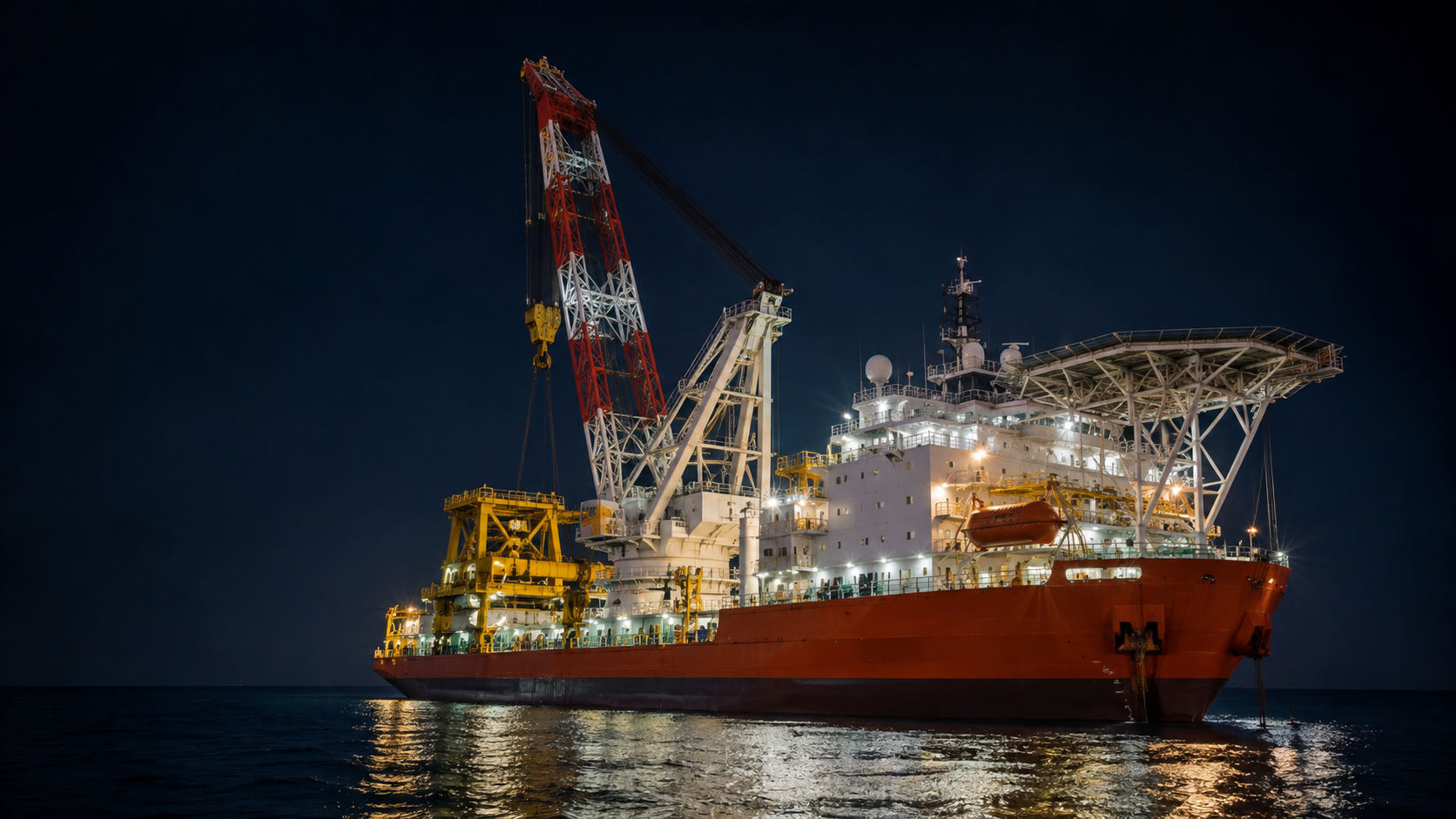
A gas project of this scale does not stall because of geology or engineering. It stalls because the right vessel is not available when the schedule needs it. Executing the Umm Shaif Gas Cap development will require access to specialized offshore installation vessels capable of handling the platform and subsea infrastructure work involved, and that requirement puts the project squarely inside one of offshore energy's most persistent bottlenecks.
For nitrogen fertilizer buyers tracking Gulf ammonia and urea feedstock security, vessel logistics is not a footnote. It is one of the more concrete variables standing between today's final investment decision and gas actually reaching Ruwais by 2030.
Why Specialized Vessels Are the Real Constraint
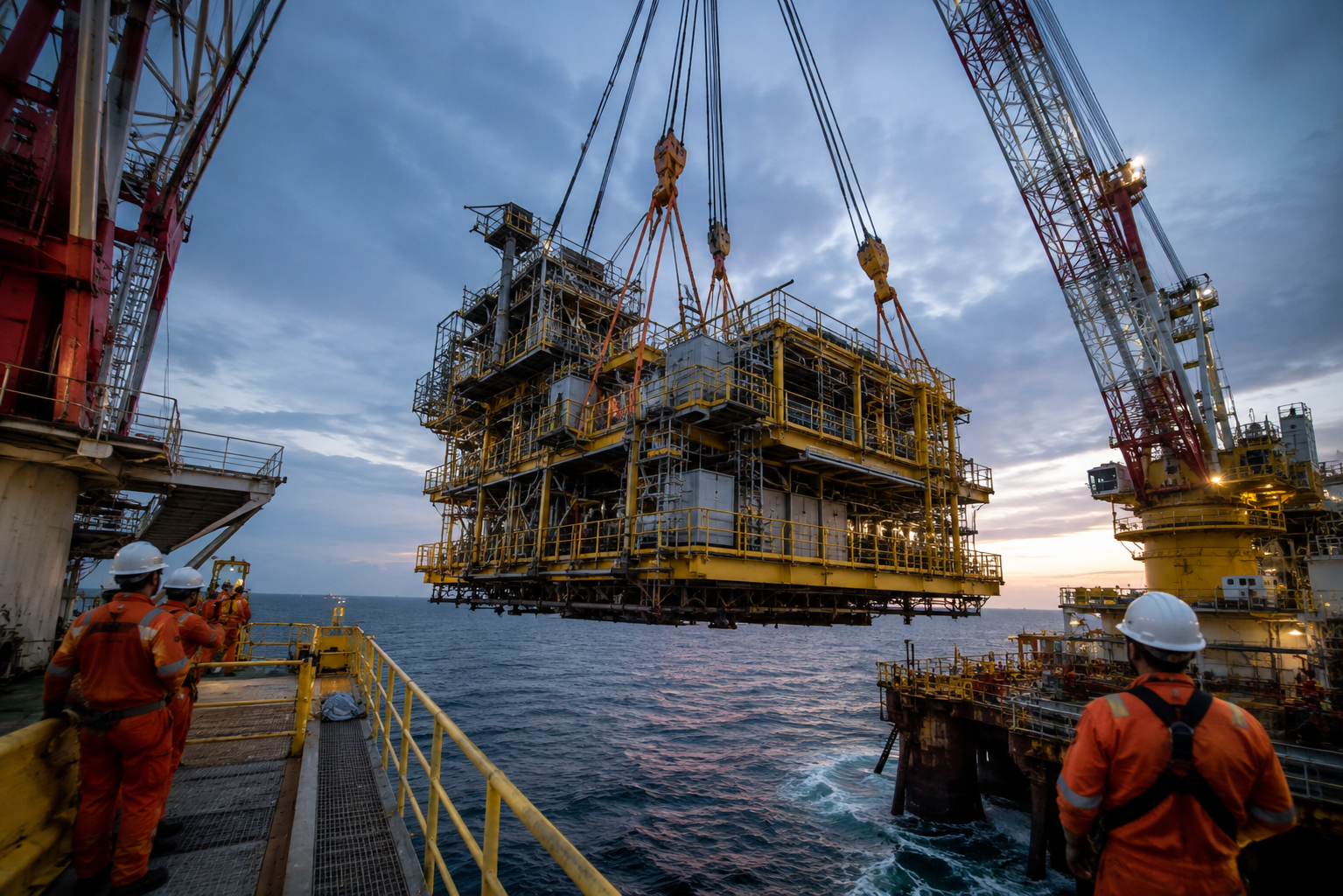
Offshore gas cap developments involve heavy platform structures and complex subsea tie-ins, work that requires purpose-built vessels rather than general purpose shipping. These vessels handle everything from lifting multi-thousand tonne compression modules into place to laying and connecting subsea pipelines.
Heavy lift vessels capable of installing large offshore platform structures represent a relatively small global fleet.
Subsea installation vessels equipped for pipeline and riser work operate on their own separate, similarly limited availability.
Demand for these vessel types comes from offshore projects worldwide, not just the Gulf, which means Umm Shaif is competing for the same limited fleet as projects in other regions.
A Recurring Industry Bottleneck
Availability of specialized offshore vessels has periodically constrained project timelines across the industry, and this is not unique to Umm Shaif. Any offshore development requiring heavy lift or subsea installation capacity runs into the same limited global fleet.
Vessel scheduling often has to be secured years in advance for major projects, since fleet operators book out capacity well ahead of actual installation windows.
A surge in offshore project activity across multiple regions simultaneously can tighten vessel availability further, pushing timelines for later-scheduled projects.
Weather windows and seasonal operating constraints in specific regions add another layer of scheduling complexity on top of raw vessel availability.
What This Means for the Umm Shaif Consortium
L&T's consortium partners on the offshore compression packages will need to secure vessel logistics well in advance to maintain the project's execution schedule. That planning has to happen alongside fabrication, since a completed compression module with no vessel to install it accomplishes nothing on schedule.
Early vessel booking reduces the risk of schedule slippage caused by fleet unavailability closer to the planned installation window.
Coordinating vessel logistics across two separate offshore packages, one handled by L&T's consortium and one by McDermott, adds scheduling complexity beyond a single-contractor project.
Any delay in vessel availability for either offshore package could push back the broader project's targeted first gas date.
Why This Matters for Ammonia and Urea Feedstock Timelines
The Umm Shaif expansion is targeting first gas by 2030, with incremental gas volumes expected to support the UAE's broader feedstock base, including downstream ammonia and urea production at Ruwais. Vessel logistics risk is one of the more tangible variables that could shift that timeline in either direction.
A schedule delay tied to vessel availability would push back when the incremental gas volumes actually become available to the broader UAE gas network.
Buyers factoring Umm Shaif into long term Gulf feedstock security planning should treat 2030 as a target date rather than a guaranteed one, given this kind of execution risk.
Vessel logistics risk sits alongside consortium coordination and broader project execution risk as one of the more trackable indicators of whether the project stays on schedule.
How Buyers Can Track This Risk
Procurement teams do not need to monitor vessel charter markets directly, but a few signals can indicate whether execution risk is building.
Watch for any public updates from L&T, Lamprell or McDermott regarding installation vessel contracting or scheduling for their respective offshore packages.
Track broader offshore vessel market tightness, since a surge in global offshore project activity could squeeze availability for Umm Shaif regardless of how well the consortium planned ahead.
Note any reported schedule adjustments to the project's targeted first gas date, since that would be the clearest downstream signal of vessel logistics risk materializing.
The Bottom Line for Gulf Feedstock Planning
Vessel logistics is one of the less visible risks behind a major offshore gas project, but it is also one of the more concrete ones. Unlike broader market or geopolitical risk, vessel availability is a physical fleet capacity constraint that either exists or does not at the moment a project needs it.
Buyers tracking Umm Shaif as part of their Gulf ammonia and urea feedstock security planning should treat vessel logistics execution as a genuine schedule risk worth monitoring through 2030, not just a routine project management detail.