Yeochun NCC's Shutdown and South Korea's Petrochemical Reckoning
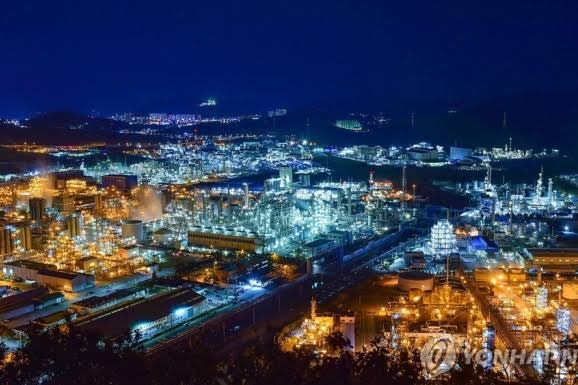
South Korea's Yeochun NCC (YNCC) has emerged as one of the clearest examples of the pressure facing the country's petrochemical industry. The company, a joint venture between DL Chemical and Hanwha Solutions, has been identified as one of the less competitive producers as South Korea attempts to reduce excess petrochemical capacity. Analysts have said YNCC could eventually shut one or two of its three crackers, highlighting the financial and competitive pressure on the company.
A National Capacity Cut Is Taking Shape
The YNCC situation is part of a much larger restructuring effort. In August 2025, South Korea's ten major petrochemical companies agreed to reduce national naphtha-cracking capacity by 2.7 million to 3.7 million tonnes per year, equivalent to as much as 25% of the country's approximately 14.7 million-tonne capacity. The objective is to address prolonged oversupply and improve profitability rather than allowing uncompetitive plants to continue operating at weak margins.
Why YNCC Is Particularly Vulnerable
YNCC faces several disadvantages that make it a likely candidate for deeper restructuring. Citi analysts have described the company as one of South Korea's least competitive producers because of its relatively weak financial position and limited integration. Its debt-to-equity ratio reached 249% at the end of the first half of 2025, while the company is also a major net seller of ethylene. These factors make sustained operation of all three crackers increasingly difficult in an oversupplied market.
The Industry Is Moving Beyond Temporary Cuts
South Korea's response increasingly looks like structural rationalization rather than a short-term production adjustment. In February 2026, authorities approved the country's first major petrochemical restructuring deal involving HD Hyundai Oilbank, Lotte Chemical and HD Hyundai Chemical. The plan includes a three-year shutdown of Lotte Chemical's 1.1-million-tonne-per-year Daesan naphtha cracker, supported by a government package worth more than 2 trillion won.
China's Expansion Is Part of the Problem
South Korea's restructuring is also being driven by the changing competitive landscape across Asia. Rapid Chinese petrochemical capacity additions have increased regional supply and intensified competition for commodity products such as ethylene and polyethylene. South Korean producers, many of which rely on naphtha-based crackers, are increasingly forced to compete with newer and larger facilities while dealing with weaker margins. The result is growing pressure to concentrate production in the most efficient assets.
What YNCC Signals for South Korea
The future of Yeochun NCC will therefore be an important indicator of how aggressively South Korea follows through on its restructuring plans. If one or more YNCC crackers are permanently retired, the decision would reinforce the government's strategy of removing older or less competitive capacity rather than simply supporting continued operation. For the wider Asian petrochemical market, the key indicators will be further cracker closures, utilization rates, consolidation deals and the pace of China's capacity growth. Together, these developments will determine whether South Korea can restore profitability while remaining a major regional petrochemical supplier.
Biotin
Found this useful?