Zeolites: Applications in Detergents, Catalysts and Gas Separation
Zeolites are crystalline, microporous materials made primarily from silicon, aluminium and oxygen. Their frameworks contain interconnected channels and cavities that allow selected molecules and ions to enter, leave or interact with the material.
Both natural and synthetic zeolites are used in industrial applications. Synthetic varieties are particularly important because their pore structures, chemical compositions and properties can be designed for specific processes.
Their ability to exchange ions, adsorb molecules and promote chemical reactions makes them valuable across several industries. Three major application areas are detergent manufacturing, catalytic processing and gas separation.
1. Zeolites in Detergent Manufacturing
One of the major applications of synthetic zeolites is their use as builders in laundry detergents. Zeolite A is widely used as a phosphate alternative in detergent formulations.
How Zeolites Improve Cleaning Performance
Water naturally contains dissolved calcium and magnesium ions, which are responsible for water hardness. These minerals can reduce detergent effectiveness and contribute to deposits on fabrics and washing equipment.
Zeolites help address this problem through ion exchange. They capture calcium and magnesium ions from washing water and release sodium ions in their place.
This process softens the water and allows surfactants to perform more effectively during washing.
Key Benefits for Detergent Producers
Water softening: Reduces calcium and magnesium concentrations in washing water.
Improved cleaning: Helps detergents maintain their cleaning performance in hard water.
Phosphate alternative: Provides a builder option that can replace phosphate-based ingredients in suitable formulations.
Formulation support: Helps manufacturers develop phosphate-reduced or phosphate-free laundry products.
Zeolites are particularly important in powdered laundry detergents, where their ion-exchange properties support effective cleaning. Their use can also help reduce the environmental concerns associated with phosphate discharge, although the overall environmental performance depends on the complete detergent formulation and its production.
2. Zeolites as Catalysts in Petroleum Refining and Petrochemicals
Zeolites are essential materials in several catalytic processes used by petroleum refineries and petrochemical manufacturers.
Their internal pore structures provide active sites where chemical reactions can take place. Certain zeolites also contain acidic sites that help break, rearrange or transform hydrocarbon molecules.
Fluid Catalytic Cracking
One of the most important industrial applications is fluid catalytic cracking (FCC). Refineries use this process to convert heavier petroleum fractions into lighter, more valuable products.
Zeolite Y is a major component of many FCC catalysts. It helps break large hydrocarbon molecules into smaller products, including gasoline-range hydrocarbons and other useful feedstocks.
Other Catalytic Applications
Hydrocracking: Zeolite-containing catalysts help convert heavier hydrocarbons into lighter products in the presence of hydrogen.
Isomerization: Zeolites support the rearrangement of molecular structures, helping produce compounds with desirable properties.
Aromatics processing: Zeolite catalysts such as ZSM-5 are used in selected reactions involving aromatic hydrocarbons and petrochemical intermediates.
Methanol-to-hydrocarbons processes: ZSM-5 can catalyse the conversion of methanol into hydrocarbon products, including gasoline-range compounds and light olefins, depending on process conditions.
Benefits for Industrial Processing
High catalytic activity and selectivity in suitable reactions.
Controlled molecular access through defined pore structures.
Potential improvements in product distribution and process efficiency.
Reusable solid catalyst systems that can be regenerated under appropriate operating conditions.
These characteristics make zeolites valuable to refinery operators seeking better conversion performance, product quality and efficient use of feedstocks.
3. Zeolites in Industrial Gas Separation
Gas separation is another important application of zeolites. Their microporous structures allow them to selectively adsorb certain gas molecules while allowing others to pass through.
This behaviour is influenced by molecular size, pore dimensions, polarity and interactions with ions inside the zeolite framework.
Pressure Swing Adsorption (PSA)
Pressure swing adsorption is a widely used technology for separating gases with zeolite-based adsorbents.
During the adsorption stage, a gas mixture passes through a bed of zeolite. Selected components are retained within the pores. The remaining gas exits with a different composition.
The pressure is then reduced to release the adsorbed components and regenerate the material for another cycle.
Major Gas Separation Applications
Oxygen production: Zeolite-based PSA systems can separate oxygen-enriched gas from air by preferentially adsorbing nitrogen.
Nitrogen production: Certain molecular sieves selectively retain oxygen and other components, allowing nitrogen-enriched gas to be collected.
Natural gas purification: Zeolites can remove contaminants such as carbon dioxide and, in suitable systems, other unwanted components from gas streams.
Hydrogen purification: Zeolite adsorbents can be incorporated into pressure swing adsorption systems used to separate hydrogen from mixed gas streams.
Biogas upgrading: Selected zeolite materials can adsorb carbon dioxide from biogas, helping increase its methane concentration.
Advantages of Zeolites in Gas Processing
Selective adsorption of different gas molecules.
High internal surface area and structured pore networks.
Potential for repeated adsorption and regeneration cycles.
Applications in gas drying, purification and separation.
The choice of zeolite depends on the gas mixture, operating pressure, temperature, required product purity and regeneration requirements.
Types of Zeolites Used Across Industries
Different zeolite structures offer different properties, making material selection important for industrial performance.
Zeolite type | Major industrial application |
|---|---|
Zeolite A (4A) | Detergent builders and water softening |
Zeolite X / 13X | Gas adsorption, drying and purification |
Zeolite Y | Fluid catalytic cracking and hydrocarbon processing |
ZSM-5 | Petrochemical conversion and hydrocarbon processing |
Zeolite 5A | Molecular separation and gas adsorption |
Clinoptilolite | Water treatment and environmental applications |
Natural zeolites are also commercially important, particularly in applications such as wastewater treatment, agriculture and environmental remediation.
Market Opportunities and Industrial Demand
Demand for zeolites is connected to several large industrial sectors, including household and industrial cleaning products, petroleum refining, petrochemicals and gas processing.
Detergent manufacturers use synthetic zeolites to support phosphate-reduced formulations and effective water softening. Refineries depend on zeolite-containing catalysts for important conversion processes, while gas-processing companies use molecular sieves to improve purification and separation operations.
Industrial demand is also influenced by technological developments. Improvements in zeolite synthesis, pore engineering and membrane technology are creating opportunities for more selective materials and specialised applications.
The development of new energy and low-carbon technologies may also expand the role of zeolites in hydrogen purification, carbon dioxide separation, biogas upgrading and sustainable fuel production. However, commercial adoption depends on technical performance, production costs and comparison with alternative separation materials.
What Manufacturers and Buyers Should Consider
Industrial buyers selecting zeolites should evaluate more than the material's general type. Performance depends on its composition, structure and suitability for the intended process.
Important purchasing considerations include:
Zeolite grade and structure: Confirm whether the application requires 4A, 5A, 13X, Y, ZSM-5 or another structure.
Purity and composition: Check chemical composition, moisture content and relevant impurity limits.
Particle size: Evaluate powder, bead, pellet or granule specifications according to equipment requirements.
Adsorption or ion-exchange capacity: Request application-specific performance data.
Thermal and chemical stability: Ensure the material can withstand operating conditions.
Supplier consistency: Review technical documentation, quality certifications and batch-to-batch consistency.
For detergent production, calcium exchange capacity and particle properties may be particularly important. For catalytic applications, acidity, surface area and hydrothermal stability require attention. Gas separation buyers should focus on adsorption selectivity, capacity, regeneration performance and mechanical strength.
The Role of Zeolites in Future Industrial Processes
Zeolites remain important functional materials because their structures can be adapted to different industrial requirements. Their established applications in detergents, refining and gas separation provide a strong commercial foundation.
As manufacturers seek more efficient processes, improved resource utilisation and lower environmental impacts, developments in zeolite technology may support new applications across chemicals, energy and environmental management.
For industrial buyers, understanding the differences between zeolite grades and their performance characteristics is essential for selecting the right material for each process.
https://www.nature.com/articles/s41578-021-00347-3?
https://www.usgs.gov/centers/national-minerals-information-center/zeolites-statistics-and-information?
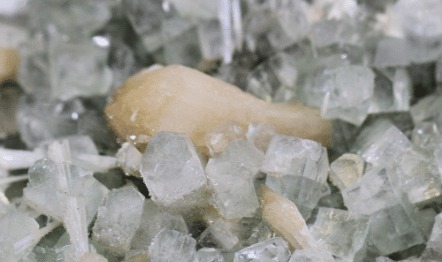
Zeolite
Found this useful?