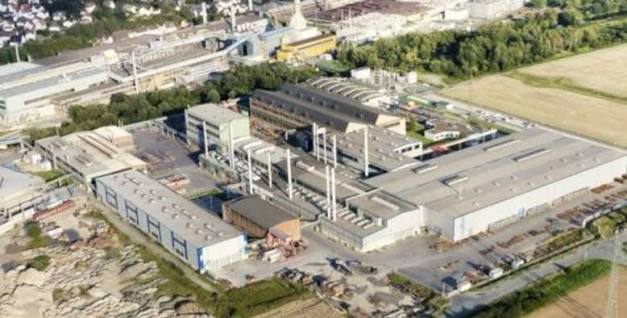
BASF's continuing restructuring at Ludwigshafen is reducing the scale of one of Germany's most important chemical production sites. The plant closures driving the workforce reduction are also requiring the company to navigate formal regulatory and labor consultation processes that accompany large-scale industrial restructuring in Germany.
For chemical companies, closing a production unit involves considerably more than shutting down equipment. Employers must manage employee consultation, workforce impacts, regulatory obligations, environmental considerations and the safe transition of industrial facilities.
This makes the Ludwigshafen restructuring an important example of how corporate capacity decisions interact with Germany's institutional labor and regulatory framework.
Plant Closures Are More Than Operational Decisions
A chemical company may determine that a plant is no longer economically competitive because of energy costs, weak demand, aging equipment or changes in its product portfolio.
The decision to reduce or close capacity, however, triggers a series of additional processes.
Management must consider how the closure affects employees, contractors, production networks and surrounding infrastructure. At a major integrated site such as Ludwigshafen, those effects can extend across multiple interconnected production units.
A shutdown therefore requires careful coordination between commercial, operational, regulatory and workforce functions.
Labor Consultation Is a Central Part of Restructuring
Large-scale workforce changes in Germany generally involve established employee representation mechanisms. Works councils and other labor representatives can play an important role when companies restructure operations and reduce employment.
For a company such as BASF, the process can involve discussions around affected positions, redeployment opportunities, working arrangements and measures intended to reduce the impact on employees.
This consultation can influence the timing and implementation of restructuring.
For chemical companies, workforce planning therefore becomes an important component of plant closure strategy rather than an issue addressed only after the operational decision has been made.
Regulatory Requirements Add Another Layer
Chemical plants are subject to extensive regulatory requirements throughout their operating lives. Closing a facility does not eliminate those obligations immediately.
Companies may need to address issues associated with equipment decommissioning, chemicals remaining on site, environmental protection and site safety.
The precise requirements depend on the facility, substances involved and applicable German and European regulations.
This means a plant closure can continue requiring regulatory work long after production has stopped.
Ludwigshafen's Integrated Structure Creates Additional Complexity
Ludwigshafen is not simply a collection of independent factories. Its production units are interconnected through shared infrastructure, utilities, pipelines and logistics systems.
Closing one unit can therefore affect other operations.
BASF must evaluate how changes to individual plants influence the wider site. Maintaining an integrated production network while reducing selected capacity requires careful planning.
For procurement teams, this creates uncertainty around future availability of products that depend on interconnected production chains.
Workforce Reduction Can Follow a Longer Transition
Headcount reductions do not necessarily occur at the same moment as a plant closure announcement.
Companies may implement restructuring in stages as production units are shut down, consolidated or transferred.
Employees may also move into other roles where opportunities exist, while other positions may disappear as the site changes.
This creates a transition period during which the physical production footprint and workforce structure can change at different speeds.
Closure Processes Can Affect Supply Planning
Chemical buyers often focus on whether a plant remains operational. The restructuring process shows why procurement teams should also monitor how a producer manages the transition.
A company may continue supplying customers during part of the restructuring period while preparing to discontinue or consolidate production later.
That gives buyers an opportunity to assess exposure and develop alternatives before capacity disappears.
Key questions include:
Which products depend on affected facilities?
Are alternative BASF production sites available?
How many external suppliers can meet the required specifications?
Will qualification of replacement suppliers take significant time?
Could closure affect regional lead times or logistics costs?
These questions become especially important for specialized chemicals with limited alternative capacity.
Environmental Obligations Continue During Decommissioning
Chemical plant closures can create environmental responsibilities that extend beyond the final production run.
Facilities may contain chemical residues, storage systems and process equipment requiring controlled handling.
Decommissioning must therefore be managed carefully to protect workers, nearby communities and the environment.
For large industrial sites, environmental considerations can also influence the timing and cost of restructuring.
This reinforces the importance of treating plant closure as a managed lifecycle process rather than a simple production shutdown
Employee consultation: Monitor whether workforce discussions could affect implementation timing.
Production transfers: Identify whether products will move to other BASF facilities.
Supplier alternatives: Assess external producers before qualification becomes urgent.
Inventory exposure: Review whether additional safety stock is justified for vulnerable products.
Regulatory developments: Track environmental or decommissioning requirements that could affect site operations.
A structured monitoring process can help buyers distinguish between temporary disruption and permanent capacity reduction.
Supplier Qualification Becomes More Important
When a major producer reduces capacity, alternative suppliers may become more attractive.
However, switching chemical suppliers is not always immediate. Pharmaceutical, food, specialty chemical and other regulated applications can require extensive qualification.
Even industrial chemicals may require technical testing before a new source can be approved.
Procurement teams should therefore begin alternative-source evaluation while the existing supplier remains operational.
This creates greater flexibility if a closure eventually affects supply.
German Industrial Restructuring Has Broader Implications
The Ludwigshafen case also demonstrates how industrial restructuring interacts with Germany's broader economic environment.
High energy costs, changing global competition and pressure on chemical margins have encouraged producers to reassess European manufacturing footprints.
But capacity decisions must operate within established labor, environmental and regulatory systems.
This can make restructuring more complex than simply comparing production costs between two locations.
For companies evaluating future investments, the institutional environment can therefore become part of the overall calculation.
What Chemical Suppliers Should Learn
Chemical suppliers can also learn from the restructuring process.
Companies considering capacity reductions should communicate clearly with customers about expected production changes and transition plans.
Early communication allows customers to qualify alternatives, adjust inventories and revise sourcing strategies.
For suppliers, transparency can also protect commercial relationships during difficult restructuring periods.
Customers are more likely to manage a capacity reduction effectively when they have sufficient time to prepare.
The Bottom Line for Chemical Procurement
The plant closures contributing to BASF's Ludwigshafen headcount decline illustrate the complexity of restructuring a major German chemical site. Operational decisions must be implemented alongside formal labor consultation, regulatory obligations and environmental responsibilities.
For chemical buyers, the lesson is to treat closure announcements as early supply chain signals rather than immediate supply disruptions.
Procurement teams should track specific shutdown schedules, production transfers and workforce developments while qualifying alternative suppliers where exposure is significant.
The broader issue extends beyond BASF. As European chemical producers reassess capacity, companies will increasingly need to manage the interaction between economic restructuring, labor requirements and regulatory obligations.