A Guide to Chemicals Used in Ceramic Manufacturing Processes
Why Ceramic Processing Chemicals Are Important
Ceramic manufacturing involves several stages, including raw material preparation, milling, mixing, shaping, drying, glazing and firing. Each stage requires careful control of material properties to achieve consistent product quality.
Ceramic processing chemicals are additives used to improve the behaviour of ceramic powders, suspensions, pastes and glazes during production. They help control viscosity, particle dispersion, moisture, flexibility, adhesion and surface application.
Without suitable additives, manufacturers may experience processing difficulties such as uneven material distribution, poor mould filling, surface defects, cracking and inconsistent product dimensions.
These chemicals are used in traditional ceramics, including tiles, sanitaryware, tableware and bricks, as well as advanced ceramics used in electronics, engineering and specialised industrial applications.
Main Types of Ceramic Processing Chemicals
Different chemical additives perform specific functions depending on the ceramic material, production method and desired final properties.
1. Deflocculants and Dispersants
Deflocculants help separate ceramic particles and reduce the tendency of fine particles to form unwanted clusters. They improve the flow properties of ceramic suspensions and allow manufacturers to prepare slurries with suitable solids content and viscosity.
Common types include:
Sodium silicate
Sodium polyacrylate
Ammonium polyacrylate
Phosphate-based dispersants
Other specialised polymer dispersants
Industrial applications: Deflocculants are widely used in ceramic tile production, slip casting, glaze preparation and technical ceramic manufacturing. They help improve slurry flow, support consistent application and reduce unnecessary water requirements.
2. Ceramic Binders
Binders improve the strength and cohesion of unfired ceramic bodies, commonly known as green bodies. They help ceramic components maintain their shape during handling, transportation and machining before firing.
Common binder materials include:
Polyvinyl alcohol (PVA)
Polyethylene glycol (PEG)
Starch-based binders
Cellulose derivatives
Acrylic polymer binders
Industrial applications: Binders are used in dry pressing, extrusion, ceramic injection moulding, spray-dried powder preparation and technical ceramic production. The appropriate binder depends on the shaping method and the required green strength.
3. Plasticizers
Plasticizers improve the flexibility and workability of ceramic mixtures, particularly when polymer binders are used. They help reduce brittleness and support shaping processes that require controlled deformation.
Common examples include glycerol, polyethylene glycol and other compatible plasticizing agents.
Industrial applications: Plasticizers are used in ceramic extrusion, tape casting, injection moulding and other forming processes. They help improve material flexibility and reduce the risk of handling-related cracking.
4. Lubricants and Pressing Aids
Lubricants reduce friction between ceramic particles and between the material and forming equipment. They help powders move and compact more uniformly during pressing.
Common examples include:
Stearic acid
Oleic acid
Wax-based lubricants
Specialised polymer lubricants
Industrial applications: These additives are used in ceramic tile pressing, powder compaction and technical ceramic manufacturing. They can improve mould release, reduce equipment wear and support more uniform compaction.
5. Defoamers and Antifoaming Agents
Foam and trapped air can create problems during ceramic slurry preparation and glaze application. Air bubbles may contribute to surface defects, pinholes and inconsistent material distribution.
Defoamers help break existing foam, while antifoaming agents help prevent excessive foam formation.
Industrial applications: They are used in ceramic slips, glaze suspensions, coating formulations and other water-based ceramic processing systems. Suitable products help improve slurry preparation and application quality.
6. Wetting Agents and Surfactants
Wetting agents reduce surface tension and help liquids spread more evenly over ceramic particles or surfaces. Surfactants can also support particle dispersion and improve the interaction between different components of a formulation.
Industrial applications: These additives are used in ceramic glaze preparation, engobes, surface coatings and digital printing formulations. They help improve surface coverage and reduce application irregularities.
7. Rheology Modifiers and Suspending Agents
Rheology modifiers control how ceramic suspensions flow under different conditions. They help manufacturers achieve the required viscosity, stability and application behaviour.
Suspending agents help prevent solid particles from settling during storage or processing.
Common materials include cellulose derivatives, gums and specialised polymer formulations.
Industrial applications: These chemicals are used in glaze suspensions, ceramic slips, engobes and decorative coatings. They help maintain consistent material behaviour during storage, pumping and application.
8. Flocculants and Coagulants
Flocculants and coagulants help particles combine into larger aggregates. While deflocculants promote dispersion, flocculants encourage particle aggregation when required by a particular process.
Industrial applications: They are used in ceramic wastewater treatment, glaze recovery and the separation of suspended solids from process water. Their use can support water recycling and reduce the amount of suspended material entering wastewater systems.
Industrial Applications of Ceramic Processing Chemicals
Ceramic additives are used throughout the manufacturing process. Their functions vary depending on the type of product and the production technology.
Ceramic Tile Manufacturing
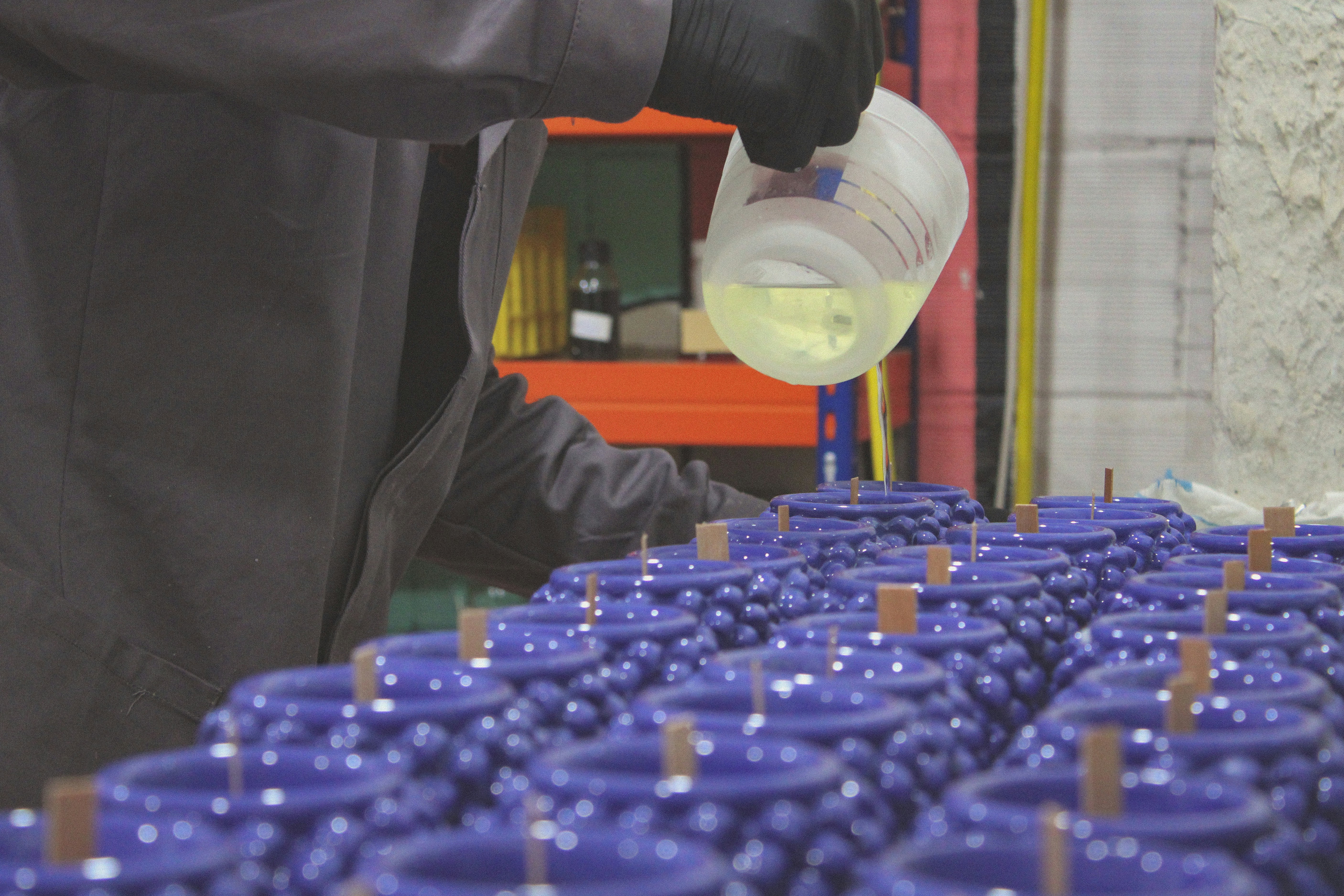
Tile production involves raw material milling, slurry preparation, spray drying, pressing, glazing and firing.
Deflocculants help control slurry viscosity during wet milling. Binders and lubricants support powder preparation and pressing, while glaze additives improve suspension stability and surface application.
These chemicals help manufacturers achieve consistent tile dimensions, surface appearance and production performance.
Sanitaryware and Tableware Production
Sanitaryware and tableware products often require controlled shaping, smooth surfaces and sufficient strength before firing.
Binders, plasticizers, dispersants and rheology modifiers help improve the workability of ceramic bodies and casting slips. Glaze additives also support even surface coverage and consistent finishing.
Technical Ceramics
Technical ceramics are used in electrical, electronic, mechanical and engineering applications. Their manufacturing processes often require careful control of raw material purity, particle size and forming behaviour.
High-purity dispersants, binders, plasticizers and specialised processing aids help achieve the required powder characteristics and green-body strength.
Chemical selection is particularly important because unwanted impurities may affect the properties of the final ceramic component.
Refractory Manufacturing
Refractory products are designed to withstand high temperatures and demanding industrial conditions. They are used in furnaces, kilns, steel production and other high-temperature processes.
Binders and processing additives help improve the cohesion, workability and shaping of refractory mixtures. The selection of additives must consider their compatibility with the refractory composition and firing conditions.
Ceramic Glazes and Surface Coatings
Glazes and engobes provide ceramic products with decorative finishes and functional surface properties.
Deflocculants help control glaze slurry viscosity, while binders and rheology modifiers support suspension stability and application. Wetting agents and defoamers can also help improve coating uniformity.
Quality Requirements for Ceramic Processing Chemicals
Chemical quality directly affects processing performance and can influence the consistency of the finished ceramic product. Manufacturers should evaluate additives against defined technical specifications before approving them for production.
1. Chemical Composition and Purity
Chemical composition should match the intended application. Unwanted impurities may affect glaze colour, firing behaviour, material compatibility or the properties of technical ceramics.
For sensitive applications, manufacturers should pay particular attention to trace metals, ash content and other relevant contamination indicators.
2. Viscosity and Rheological Performance
Deflocculants, binders and rheology modifiers must deliver suitable flow characteristics under actual production conditions.
For example, a ceramic glaze should have the correct viscosity for its application method. A formulation designed for spraying may require different rheological properties from one used in dipping or pouring.
3. Particle Size and Dispersion Stability
Particle size distribution affects slurry behaviour, packing density and the consistency of ceramic processing.
Dispersants should maintain suitable particle distribution and reduce unwanted agglomeration. Manufacturers should also check whether the suspension remains stable during the required storage and processing period.
4. Moisture Content and Storage Stability
Moisture content can affect the handling and performance of powdered ceramic additives. Liquid formulations should also maintain their specified physical and chemical properties during storage.
Suppliers should provide suitable storage conditions, shelf-life information and handling instructions.
5. Compatibility with Ceramic Raw Materials
An additive must be compatible with the clay, feldspar, quartz, alumina or other materials used in the ceramic formulation.
Compatibility testing is important because different raw materials may respond differently to the same chemical additive. Testing should reflect the actual production formulation rather than relying only on general product descriptions.
6. Performance During Drying and Firing
Many organic processing additives are temporary materials that are removed or decomposed during firing.
Their thermal behaviour should be suitable for the ceramic production process. Incomplete burnout or unsuitable decomposition behaviour may contribute to defects such as black cores, bloating, cracking or unwanted residues.
Manufacturers should evaluate additive performance under the actual drying and firing conditions used in production.
7. Batch-to-Batch Consistency
Consistent chemical performance is essential for stable manufacturing operations. Variations in concentration, viscosity, active content or other specification parameters can affect production results.
Suppliers should maintain appropriate quality control procedures and provide documentation for individual batches.
Common Quality Problems and the Role of Processing Chemicals
Production problem | Possible contributing factor | Relevant chemical or process control |
|---|---|---|
High slurry viscosity | Poor particle dispersion or unsuitable solids loading | Deflocculant selection and slurry adjustment |
Uneven glaze application | Incorrect viscosity or suspension instability | Rheology modifiers and glaze binders |
Weak green body | Insufficient binder performance | Suitable binder formulation |
Cracking during handling | Poor flexibility or inadequate green strength | Binder and plasticizer adjustment |
Air bubbles and pinholes | Trapped air or excessive foam | Defoamers and improved mixing |
Poor mould release | Excessive friction during forming | Suitable lubricants and pressing aids |
Uneven particle distribution | Agglomeration or inadequate mixing | Dispersants and milling control |
These problems can have multiple causes. Chemical adjustments should therefore be supported by process inspection and laboratory testing rather than being treated as a universal solution.
How to Select the Right Ceramic Processing Chemicals
Choosing suitable additives requires a clear understanding of the ceramic formulation, manufacturing method and finished product requirements.
Industrial buyers and production teams should consider:
Application requirements: Identify whether the additive is needed for slurry preparation, pressing, extrusion, glazing or wastewater treatment.
Raw material compatibility: Check how the chemical performs with the actual ceramic body and mineral composition.
Technical specifications: Review purity, active content, viscosity, pH, moisture and other relevant parameters.
Processing conditions: Consider mixing time, temperature, solids loading, drying conditions and firing schedules.
Product performance: Evaluate flow behaviour, green strength, surface quality and defect rates during production trials.
Documentation: Request a Technical Data Sheet (TDS), Safety Data Sheet (SDS) and Certificate of Analysis (COA), where applicable.
Supplier reliability: Assess batch consistency, technical support, delivery capability and product traceability.
Small-scale laboratory trials followed by controlled production testing can help determine whether an additive is suitable before full-scale implementation.
Improving Ceramic Manufacturing Quality Through Process Control
Ceramic processing chemicals are most effective when they are used as part of a controlled manufacturing system. Accurate weighing, consistent mixing, suitable storage and regular quality checks help reduce variations between production batches.
Manufacturers can also improve process consistency by monitoring slurry viscosity, density, moisture content, particle size distribution and drying behaviour.
In addition, reviewing firing conditions and additive burnout characteristics can help reduce defects in finished ceramic products.
Working with technically capable suppliers can support product selection, formulation adjustments and troubleshooting when production requirements change.
Building a Consistent Ceramic Processing Strategy
Ceramic processing chemicals support important manufacturing activities, from raw material preparation and slurry control to forming, glazing and surface finishing. Deflocculants, binders, plasticizers, lubricants, wetting agents and defoamers each perform specific functions that influence production behaviour.
However, selecting an additive based only on its chemical name or price is not enough. Manufacturers should evaluate technical specifications, compatibility, process performance and batch consistency before making purchasing decisions.
A well-managed chemical selection and quality control programme can help ceramic manufacturers improve production stability, reduce material waste and achieve more consistent finished products.
https://gaftp.epa.gov/ap42/ch11/s07/reference/2025%20Version/ref01_c11s07_2025.pdf
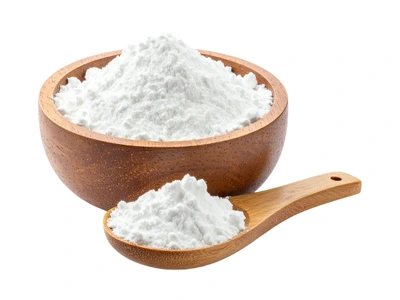
Sodium Tripolyphosphate (E451(i))
Found this useful?