AI-Driven Cost Transformation in Specialty Manufacturing
Artificial intelligence is moving beyond experimentation in the chemical industry and becoming a practical tool for improving manufacturing economics.
For specialty chemical producers, the opportunity is particularly significant. Unlike commodity producers, specialty manufacturers often operate complex production processes involving multiple formulations, smaller production runs, strict quality requirements, and highly variable customer specifications.
These characteristics create numerous opportunities for AI to reduce costs.
AI can help manufacturers improve:
Production efficiency
Yield
Energy consumption
Maintenance planning
Quality control
Production scheduling
Raw material utilization
Inventory management
Supply chain performance
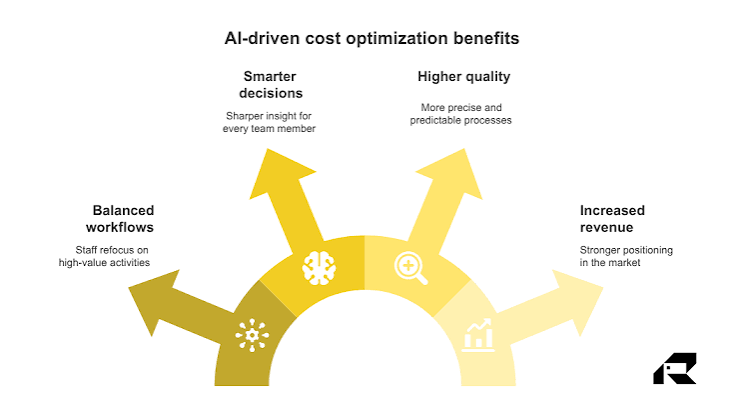
The result is a shift from AI as a technology investment toward AI as a cost-transformation strategy.
Why Specialty Manufacturing Is Ready for AI
Specialty chemical production generates large amounts of operational data.
Manufacturers may collect information from:
Process sensors
Laboratory testing
Production equipment
ERP systems
Maintenance records
Quality-control systems
Supply-chain platforms
Customer orders
Historical batch records
Much of this information has traditionally been used for monitoring rather than optimization.
AI can connect these data sources and identify relationships that are difficult to detect through conventional analysis.
This creates opportunities to move from:
Monitoring → Prediction → Optimization
Yield Improvement Can Create Immediate Value
Yield is one of the most important economic variables in chemical manufacturing.
A small improvement in yield can reduce raw material consumption while increasing the amount of saleable product produced from the same production assets.
AI models can analyze historical production conditions and identify factors associated with:
Higher yields
Lower waste
Better conversion rates
Fewer off-specification batches
More consistent production
Instead of relying entirely on operators to identify these relationships, manufacturers can use machine-learning models to continuously analyze production data.
Predictive Maintenance Can Reduce Unplanned Downtime
Equipment failures can be particularly expensive in specialty manufacturing.
An unexpected shutdown can create:
Lost production
Delayed customer deliveries
Emergency maintenance expenses
Wasted raw materials
Additional labor costs
Restart losses
Predictive-maintenance systems can analyze equipment data to identify early signs of potential failures.
Relevant indicators can include:
Temperature
Vibration
Pressure
Flow
Motor performance
Historical maintenance patterns
The goal is not simply to predict failure.
It is to schedule maintenance before failure becomes expensive.
Energy Optimization Is Another Major Opportunity
Chemical manufacturing is energy-intensive.
Even specialty facilities with relatively small production volumes can consume significant amounts of electricity, steam, cooling and other utilities.
AI can help optimize energy consumption by analyzing relationships between:
Production rates
Process temperatures
Equipment loads
Steam requirements
Cooling demand
Operating conditions
Manufacturers can then identify operating conditions that maintain product quality while reducing unnecessary energy consumption.
This creates a particularly attractive combination:
Lower operating costs + lower emissions
AI Can Improve Batch Consistency
Specialty chemicals often require precise control over product specifications.
Small variations in production conditions can affect:
Purity
Viscosity
Color
Particle size
Concentration
Performance characteristics
AI can compare thousands of historical batches to identify the operating conditions associated with consistent quality.
This can help operators detect deviations earlier.
The economic benefit can come from reducing:
Scrap
Rework
Customer complaints
Batch failures
Quality investigations

Glacial Acetic Acid - China
Quality Control Can Become More Predictive
Traditional quality control often identifies problems after production has already occurred.
AI enables a more predictive approach.
Instead of asking:
"Does this batch meet specifications?"
manufacturers can increasingly ask:
"Is this batch likely to meet specifications based on current operating conditions?"
That distinction is important.
If a potential quality problem is identified early enough, operators may be able to adjust the process before the batch becomes unusable.
Production Scheduling Is a Hidden Cost Opportunity
Specialty manufacturers frequently produce multiple products on shared equipment.
This creates scheduling complexity.
Changing between products may require:
Cleaning
Purging
Equipment preparation
Raw material changes
Quality testing
Poor scheduling can increase downtime and reduce asset utilization.
AI-powered scheduling can evaluate multiple constraints simultaneously, including:
Customer deadlines
Equipment availability
Batch sizes
Cleaning requirements
Raw material availability
Labor capacity
Maintenance schedules
The objective is to produce more output from the same manufacturing footprint.
Inventory Optimization Can Extend Beyond Manufacturing
AI-driven cost transformation should not stop at the factory gate.
Specialty manufacturers often maintain inventories of numerous raw materials because customer requirements can vary significantly.
Too much inventory creates:
Working-capital costs
Storage expenses
Obsolescence risk
Expiry risk
Too little inventory creates:
Production interruptions
Expedited freight
Customer delays
Lost sales
AI can improve forecasting by analyzing historical demand, customer behavior, seasonality and market signals.
This allows procurement teams to make more precise inventory decisions.
Procurement Can Become More Data-Driven
AI can also transform chemical purchasing.
Procurement systems can analyze:
Supplier pricing
Historical purchasing patterns
Freight costs
Lead times
Supplier reliability
Contract terms
Market conditions
Inventory requirements
This can help procurement teams identify opportunities to reduce total landed costs rather than simply negotiating lower unit prices.
The distinction is important.
A cheaper raw material is not necessarily cheaper once transportation, inventory and quality risks are included.
AI Can Identify Hidden Cost Drivers
One of AI's most valuable capabilities is finding relationships that traditional reporting may miss.
For example, a manufacturer may discover that a particular combination of:
Raw material lot
Production temperature
Equipment condition
Batch size
Operator shift
is associated with higher production costs.
Individually, none of these factors may appear significant.
Together, they may explain a substantial amount of cost variation.
Specialty Manufacturing Has an Advantage
Specialty chemical companies can potentially benefit from AI more than highly standardized commodity operations because their manufacturing processes are often more complex.
The more variables involved in production, the greater the potential value of advanced analytics.
This is particularly relevant where manufacturers have:
Multiple product grades
Frequent product changes
Complex formulations
Tight quality specifications
High-value products
Significant batch variability
AI can help turn this complexity from a cost burden into an optimization opportunity.
But Data Quality Is the First Challenge
AI cannot compensate for poor data.
Many manufacturers still operate with fragmented information across:
Legacy systems
Spreadsheets
Laboratory databases
Maintenance software
Production-control platforms
Before deploying advanced AI models, companies often need to establish:
Consistent data definitions
Reliable historical records
Connected systems
Data governance
Appropriate cybersecurity controls
In other words:
Better AI starts with better industrial data.
Workforce Adoption Matters
AI does not eliminate the need for experienced chemical operators and engineers.
In many cases, the opposite is true.
Domain expertise is required to determine whether an AI recommendation is operationally realistic.
The strongest model is therefore likely to combine:
AI recommendations + human process expertise
Operators can provide context that historical data cannot always capture.
AI can then augment their decision-making rather than simply replace it.
The Best Applications Are Not Always the Most Complicated
Manufacturers do not necessarily need sophisticated generative-AI systems to create value.
Some of the strongest opportunities may involve relatively focused applications such as:
Predictive maintenance
Energy optimization
Batch-yield prediction
Production scheduling
Demand forecasting
Quality prediction
These applications can have clearly measurable financial outcomes.
That makes them easier to justify from an investment perspective.
Cost Transformation Requires Measurable Targets
AI projects should ultimately be connected to financial outcomes.
Useful metrics include:
Cost per tonne
Yield percentage
Energy consumption per unit
Unplanned downtime
Scrap rate
Batch failure rate
Maintenance cost
Inventory days
Working capital
On-time delivery
Without these metrics, AI programs can become technology demonstrations rather than genuine cost-transformation initiatives.
From Pilot Projects to Factory-Wide Deployment
Many industrial companies begin AI adoption through small pilot projects.
A typical progression looks like:
Pilot → Validation → Scale-up → Integration → Continuous optimization
The challenge is often not proving that an AI model works.
The challenge is deploying it across multiple plants and production lines.
Companies therefore need standardized platforms that allow successful use cases to be replicated.
AI Can Improve Asset Utilization
Specialty chemical facilities can be expensive to build.
Increasing utilization of existing equipment can therefore create significant economic value.
AI can help identify:
Production bottlenecks
Underutilized equipment
Scheduling inefficiencies
Excessive changeover time
Maintenance-related capacity losses
If a facility can increase output without major capital expenditure, the return on investment can be substantial.
The Capital-Allocation Advantage
AI-driven cost reductions can also influence capital allocation.
If manufacturers can improve the productivity of existing assets, they may delay or reduce the need for new capacity investments.
That can improve:
Free cash flow
Return on invested capital
Asset productivity
Capital efficiency
For investors, this may ultimately be more important than the headline AI investment itself.
The real question is whether AI allows a chemical company to produce more value from the capital it already owns.
Specialty Chemicals Could Move Toward Autonomous Operations
The longer-term opportunity is greater than isolated cost savings.
Manufacturers are gradually moving toward increasingly autonomous production environments where AI systems continuously monitor and optimize operations.
A future production system could potentially:
Monitor process conditions
Predict deviations
Adjust operating parameters
Forecast maintenance requirements
Optimize energy consumption
Recalculate production schedules
Update inventory requirements
Human operators would remain responsible for oversight, safety and complex decisions.
But many routine optimization decisions could become increasingly automated.
AI and Sustainability Can Reinforce Each Other
Cost reduction and sustainability are often presented as separate objectives.
AI can connect them.
Reducing:
Energy consumption
Raw material waste
Scrap
Rework
Unplanned shutdowns
Excess inventory
can simultaneously reduce operating expenses and environmental impact.
This makes AI particularly attractive for chemical companies facing both margin pressure and sustainability requirements.
Cybersecurity Becomes More Important
Greater digitalization also increases operational risk.
Connecting manufacturing systems to AI platforms creates new cybersecurity considerations.
Chemical companies must protect:
Production data
Process-control systems
Supplier information
Customer data
Proprietary formulations
Manufacturing know-how
The more connected a factory becomes, the more important cybersecurity becomes as part of operational strategy.
The Competitive Gap Could Widen
AI adoption may eventually create a significant difference between chemical companies.
Early adopters could build advantages through:
Better process data
More efficient production
Faster decision-making
Lower operating costs
Better forecasting
Higher asset utilization
Those advantages can compound over time.
A company that has spent several years collecting high-quality production data may have a significant advantage over a competitor only beginning its digital transformation.
Not Every Company Will Capture the Same Value
AI investment alone does not guarantee better economics.
Companies may struggle if they have:
Poor data infrastructure
Fragmented operations
Weak management adoption
Limited technical talent
Unclear financial objectives
Low-quality historical data
The technology is increasingly accessible.
Execution is becoming the differentiator.
What This Means for Investors
Investors evaluating AI adoption in specialty chemicals should look beyond announcements about new software or partnerships.
More important questions include:
Is AI improving margins?
Cost reduction should eventually appear in operating performance.
Is yield improving?
Higher yield can directly increase manufacturing economics.
Is capital productivity improving?
Better utilization can improve ROIC without major new investment.
Is the technology scalable?
A successful pilot is less valuable if it cannot be deployed across the organization.
Does the company have proprietary data?
High-quality operational data can become a competitive asset.
Is management measuring the financial impact?
AI programs should have measurable business objectives.
What This Means for Procurement Teams
Procurement organizations should also consider how AI can change their own operations.
Priority areas include:
Demand forecasting
Supplier selection
Price benchmarking
Freight optimization
Inventory planning
Contract analysis
Supplier risk monitoring
The strongest procurement organizations may eventually combine AI-generated market intelligence with human negotiation and supplier-management expertise.
The New Cost Curve
The chemical industry's traditional cost advantage has depended on factors such as:
Feedstock
Energy
Scale
Location
Labor
Technology
AI adds another variable.
Increasingly, the cost curve may also depend on:
Data quality + process intelligence + automation
That could become particularly important as traditional feedstock advantages become harder to maintain.
Looking Ahead
AI is unlikely to transform specialty manufacturing through one revolutionary technology.
The bigger opportunity lies in thousands of smaller operational improvements that compound across a manufacturing network.
Better yields.
Lower energy consumption.
Fewer failed batches.
Less downtime.
Smarter scheduling.
Lower inventory.
More efficient procurement.
Together, these improvements can materially change the economics of a specialty chemical business.
The companies most likely to benefit will not necessarily be those spending the most on AI.
They will be those capable of connecting industrial data, process expertise and financial discipline into a repeatable operating model.
For specialty chemical manufacturers, AI is therefore becoming less about technological experimentation and more about something much more tangible:
building a lower-cost, higher-productivity manufacturing system without relying entirely on new physical capacity.
Key Takeaways
AI is becoming a practical cost-transformation tool for specialty chemical manufacturing.
Yield improvement, predictive maintenance and energy optimization offer significant opportunities.
AI can reduce scrap, downtime, rework and unnecessary inventory.
Production scheduling can become more efficient across complex multi-product facilities.
Procurement can use AI to optimize total landed cost and supplier decisions.
High-quality industrial data is becoming an increasingly important competitive asset.
Human process expertise remains essential for validating AI recommendations.
Successful AI programs should be measured against financial and operational KPIs.
AI can improve both manufacturing economics and resource efficiency.
The biggest competitive advantage may come from scaling successful AI applications across entire manufacturing networks.
For investors, the key question is whether AI improves margins, ROIC, cash flow and asset productivity rather than simply increasing technology spending.
Found this useful?