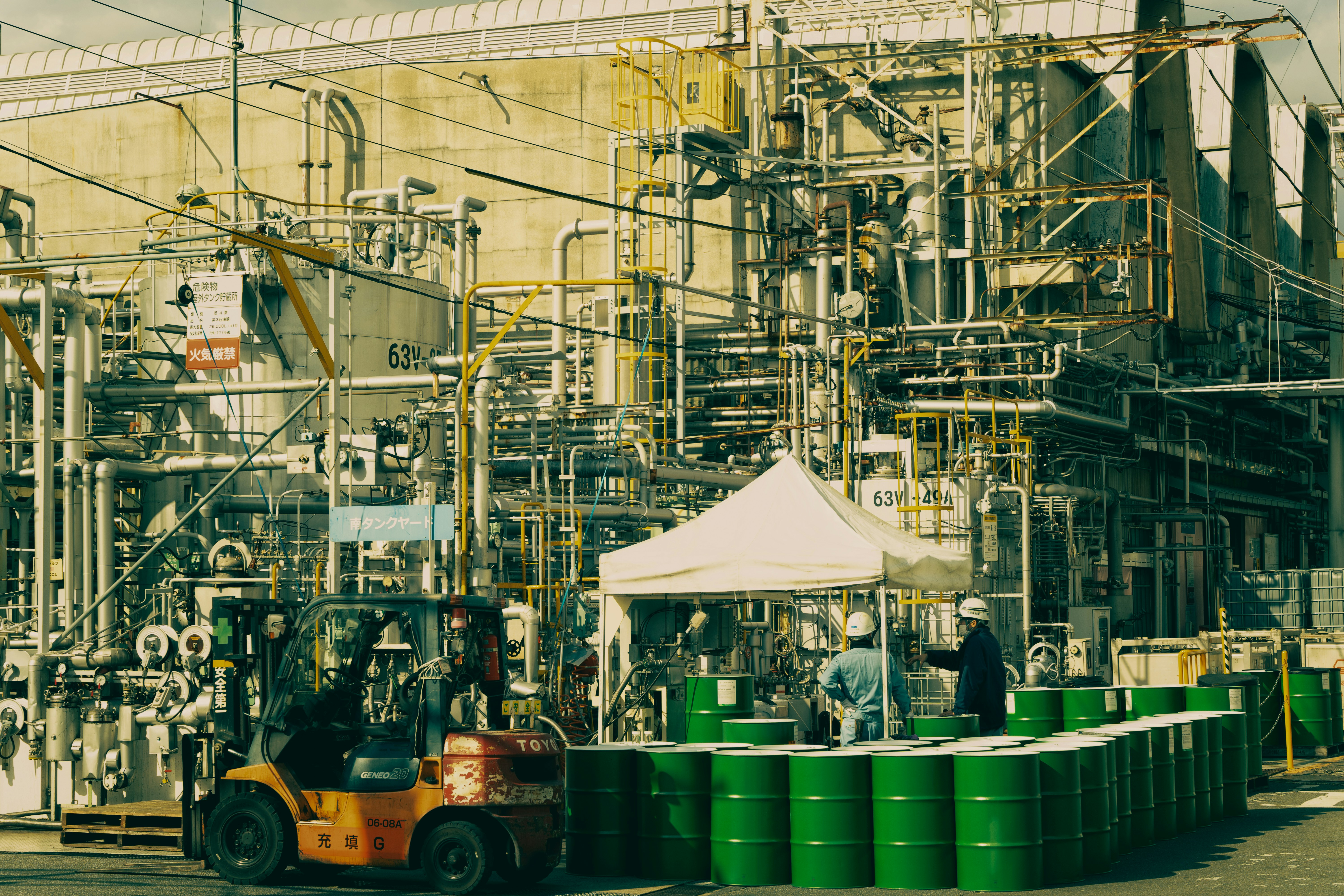
Air Products to Use LNG Cold Energy for Industrial Gas Production at PETRONAS Pengerang
Air Products plans to produce more than 600 tonnes per day of liquid oxygen, nitrogen and argon by using cold energy from liquefied natural gas (LNG) at PETRONAS’s Pengerang LNG regasification terminal in Johor, Malaysia. The project combines two industrial processes to improve energy efficiency while expanding the supply of essential industrial gases.
The facility will operate under an agreement with PG Cold Energy 1 Sdn. Bhd., a joint venture led by PETRONAS Gas Berhad and DIALOG Group Berhad. Air Products will design, build and operate the air separation unit (ASU), with start-up expected in early 2027. The development offers an important example of how energy infrastructure can support chemical manufacturing and industrial gas supply chains through more efficient use of existing resources.
PR Newswire
+1
How LNG Cold Energy Supports Industrial Gas Production
LNG must remain at extremely low temperatures during storage and transportation. Before natural gas enters the pipeline network for distribution, regasification terminals warm the LNG and convert it back into gaseous form.
This process creates an opportunity to recover useful cold energy rather than allowing it to go unused. Air Products will use this energy at Pengerang to support the low-temperature conditions required to liquefy air in its new ASU.
An air separation unit separates atmospheric air into its principal components, including nitrogen, oxygen and argon. The facility uses cryogenic processing to cool air, liquefy it and separate its components according to their different boiling points.
Conventional air separation requires substantial energy to achieve and maintain the temperatures needed for separation. Integrating the process with LNG regasification can reduce the refrigeration burden on the ASU, improving overall energy efficiency.
The approach connects two operations that already require very different temperature conditions. LNG regasification needs to warm an extremely cold liquid, while air separation requires refrigeration. Recovering the cold energy creates an opportunity to make these processes work together.
What Air Products and PETRONAS Plan to Build
The project will establish an LNG-based ASU at the Pengerang LNG regasification terminal in Johor. Under the agreement, Air Products will take responsibility for the facility's design, construction and operation.
PG Cold Energy 1 Sdn. Bhd. provides the joint venture structure behind the project. PETRONAS Gas Berhad participates through PG Energia Sdn. Bhd., while DIALOG Group Berhad participates through DIALOG Equity (Three) Sdn. Bhd.
PR Newswire
+1
Key project details include:
Production capacity: More than 600 tonnes per day of liquid oxygen, nitrogen and argon combined.
Location: Pengerang LNG regasification terminal in Johor, Malaysia.
Operator: Air Products, responsible for designing, building and operating the ASU.
Expected start-up: Early 2027.
Target market: Industrial gas customers across southern and central Malaysia.
Technology focus: Recovery of LNG cold energy to support air liquefaction and reduce production-related emissions.
The combined production figure represents the planned output of the three industrial gases, not 600 tonnes per day of each individual product. Their respective production volumes will determine how the facility meets customer demand across different industries.
The project also marks Air Products' fifth LNG-based ASU in Asia. It extends the company's industrial gas production capabilities in Malaysia and strengthens its ability to serve customers beyond its existing facilities.
PR Newswire
+1
Why Liquid Oxygen, Nitrogen and Argon Matter to Industry
Industrial gases play an essential role in manufacturing, chemical processing and high-technology production. Their importance extends beyond their use as raw materials because they also support cooling, controlled atmospheres, combustion processes and specialised manufacturing operations.
Liquid oxygen supports applications that require oxygen at industrial scale. Depending on the process, buyers may use oxygen in metal production, chemical oxidation, wastewater treatment and other operations that depend on controlled oxygen supply.
Liquid nitrogen provides a source of low-temperature cooling and inert gas after suitable conversion and handling. Manufacturers use nitrogen to protect sensitive materials from unwanted reactions, maintain controlled atmospheres and support cooling requirements in industrial processes.
Liquid argon serves applications that need a chemically inert atmosphere. Metal fabrication, welding and specialised manufacturing processes use argon to protect materials from reactions with surrounding gases.
These products have different technical requirements, so buyers cannot treat them as interchangeable commodities. Purity, delivery format, storage capacity and consumption rates all influence purchasing decisions.
For procurement teams, the planned Pengerang capacity matters because a larger local supply base can improve access to industrial gases. However, buyers will still need to assess whether the available grades, delivery arrangements and production volumes match their operational needs.
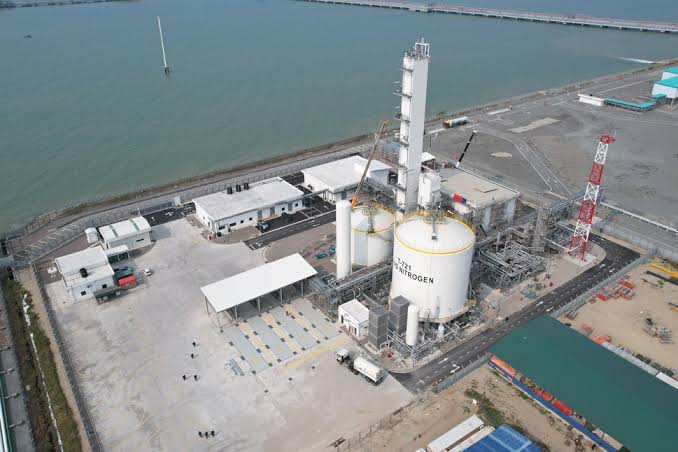
Which Industries Could Benefit From the Pengerang Facility?
Air Products expects the new facility to supply the merchant industrial gas market across southern and central Malaysia. Its target customers include electrical and electronics manufacturers, petrochemical producers, aerospace businesses and general manufacturing operations.
PR Newswire
+1
Each sector has distinct requirements that influence gas purchasing and supply planning.
- Electrical and electronics manufacturing: Semiconductor-related and electronics production can require high-purity gases and tightly controlled manufacturing environments. Reliable supply helps manufacturers maintain production schedules and meet demanding process specifications.
- Petrochemicals: Chemical plants use oxygen and nitrogen in selected process applications, equipment operations and safety systems. Gas requirements vary by process design, so buyers must match specifications and supply pressure or liquid delivery arrangements to each installation.
- Aerospace: Aerospace manufacturing and associated metalworking operations may use industrial gases for welding, heat treatment and other specialised production activities. Quality assurance and consistent supply remain important considerations.
- General manufacturing: Fabrication, metal processing and other industrial operations use oxygen, nitrogen and argon for a range of production and materials-handling tasks. Local availability can help businesses plan replenishment and reduce exposure to longer-distance deliveries.
The actual benefit for each buyer will depend on its location, consumption pattern and required gas specification. Businesses with continuous demand may value dependable bulk deliveries, while smaller users may prioritise packaged gas availability and distributor coverage.
The Pengerang project can strengthen the regional supply network, but buyers should evaluate the complete delivery chain rather than production capacity alone. Storage, transport, inventory planning and contingency arrangements remain essential to operational reliability.
The Energy Efficiency and Emissions Opportunity
The main technical advantage of LNG-based air separation lies in the recovery of energy that becomes available during regasification. Rather than relying entirely on separate refrigeration systems, the ASU can use the LNG's cold energy to help achieve the low temperatures required for air liquefaction.
Air Products expects this integration to improve energy efficiency and reduce production-related emissions. These benefits matter to industrial gas producers because refrigeration and compression account for important energy demands in cryogenic processing.
PR Newswire
+1
Several factors determine the environmental and operational benefits of this approach:
Energy recovery: Using available cold energy can reduce the additional energy required to create refrigeration for air separation.
Process integration: Connecting regasification and air separation can improve how the two facilities use their respective temperature requirements.
Production efficiency: Better energy utilisation can support more efficient industrial gas production, depending on plant design and operating conditions.
Industrial supply resilience: Locating gas production at an established energy terminal can create opportunities to coordinate infrastructure and serve nearby industrial customers.
The project does not eliminate the energy requirements of air separation. The ASU still needs suitable equipment, power and operating controls to produce gases at the required specifications.
For industrial buyers, the emissions benefit is also distinct from the product's technical performance. Procurement teams should continue to evaluate purity, reliability and delivery requirements while considering the environmental characteristics of the supplier's production process.
What the Project Means for Industrial Gas Procurement
The addition of a major production facility can influence how buyers assess regional sourcing options. For customers in southern and central Malaysia, the Pengerang development could expand the supply base available for future purchasing decisions.
However, planned capacity does not automatically guarantee immediate availability for every customer. The facility is targeting start-up in early 2027, so buyers should distinguish between the project's announced capacity and gas volumes that suppliers can currently deliver.
Procurement teams can prepare by reviewing several practical considerations:
Demand forecasting: Estimate routine consumption, peak demand and any expected increase in production before negotiating supply volumes.
Product specifications: Confirm purity grades, technical standards and delivery formats for oxygen, nitrogen or argon.
Logistics and storage: Assess whether existing tanks, delivery connections and handling systems can accommodate the supplier's proposed arrangements.
Supply continuity: Establish contingency plans for maintenance periods, delivery interruptions and unexpected demand increases.
Commercial terms: Compare pricing structures, minimum order quantities, delivery charges and contract commitments across eligible suppliers.
Industrial gas purchasing involves more than finding the lowest quoted price. A supplier that meets technical specifications and delivers consistently may offer greater operational value than an apparently cheaper alternative that creates interruptions or requires additional handling.
Buyers should also clarify whether their requirements call for liquid products delivered in bulk, packaged gas or gas supplied through a pipeline. The appropriate format depends on consumption volume, equipment and site infrastructure.
As the Pengerang facility moves toward start-up, procurement teams can use the development to review their existing supply arrangements and identify where additional sourcing options would improve flexibility.
Regional Supply Chain Implications and the Outlook for 2027
The Pengerang project strengthens the connection between Malaysia's LNG infrastructure and its industrial gas market. It also reflects a broader industrial approach in which companies seek to recover value from existing energy processes instead of treating each operation as an isolated system.
For Air Products, the new ASU expands production capabilities in southern and central Malaysia. The facility will complement the company's wider Malaysian network, which already serves industrial customers through production facilities and distribution infrastructure.
PR Newswire
+1
The expected early-2027 start-up gives industrial buyers a timeline around which to plan supplier discussions, technical assessments and potential contract reviews. Actual purchasing decisions will depend on commissioning progress, commercial availability and the supplier's ability to meet individual customer requirements.
Several developments will be worth watching as the project advances:
Commissioning progress and confirmation of commercial production.
Availability of liquid oxygen, nitrogen and argon for merchant customers.
Delivery coverage across southern and central Malaysia.
The practical energy efficiency and emissions performance of the integrated process.
Changes in supply options for electronics, petrochemicals, aerospace and manufacturing customers.
The wider significance extends beyond one terminal. If industrial facilities can integrate complementary processes effectively, similar approaches may offer opportunities to improve resource use across other energy-intensive industries.
For chemical traders and procurement managers, the key opportunity is to understand how new production capacity may change supplier options, delivery planning and contract negotiations. Building a sourcing strategy around verified specifications and reliable supply will remain essential as industrial gas markets evolve.
How Buyers Can Prepare for the New Industrial Gas Capacity
Companies that expect to purchase oxygen, nitrogen or argon should begin with their own consumption requirements rather than assuming the new plant will suit every application. A clear specification, realistic volume forecast and review of existing storage infrastructure will help procurement teams evaluate potential offers when commercial supply becomes available.
Buyers should also request information about quality assurance, delivery schedules, emergency supply arrangements and the terms that govern price adjustments. These details help establish whether a supplier can support both routine operations and unexpected changes in demand.
The Pengerang development demonstrates how LNG cold energy can support industrial gas production while potentially improving energy efficiency and lowering production-related emissions. As the facility approaches its planned start-up, its value for buyers will depend on how effectively its production capacity translates into accessible, dependable supply.
For procurement teams, early preparation can make it easier to compare suppliers, assess commercial proposals and identify suitable opportunities without compromising operational requirements.
Ammonia Anhydrous
Found this useful?