An $18 Billion Bet That US Steel Can Be Mined, Not Just Melted
An $18 Billion Bet That U.S. Steel Can Be Mined, Not Just Melted.
The United States is preparing for one of its most ambitious steel investments in decades — and the story starts not at a steel mill, but in an iron ore mine in Minnesota.
Essar-backed Mesabi Metallics has announced an $18 billion investment to create a fully integrated American steel business connecting its iron ore operation on Minnesota's Mesabi Iron Range with a proposed $15 billion steel complex in Iowa. The remaining roughly $3 billion represents investment in the Minnesota mine and pelletizing facility.


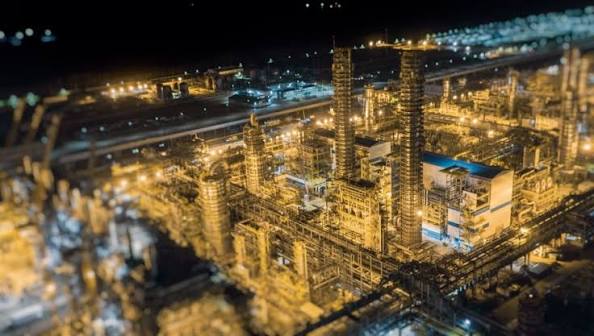
Image: Mesabi Metallics' Minnesota iron ore operation and the planned integrated steelmaking project.
From Mine to Finished Steel
The defining feature of the project is vertical integration.
Instead of importing iron units for steelmaking or relying primarily on recycled scrap, Mesabi Metallics plans to connect its own Minnesota iron ore resource directly to the Iowa steelmaking complex.
The proposed supply chain is:
Minnesota Iron Ore → DR-Grade Pellets → Direct Reduced Iron → Electric Arc Furnace → Finished Steel
The company says this would create a domestic supply chain in which the iron ore is mined, processed and transformed into steel within the United States.
A New Iron Ore Mine for the U.S.
The Minnesota operation is already an important part of the story.
Located in Nashwauk, Minnesota, the Mesabi Metallics project is described by the company as the first new iron ore mine built in the United States in 50 years.
Nearly $3 billion has been invested in the mine and pelletizing facility, which is designed to produce Patriot Pellet, a direct-reduction-grade iron ore pellet intended for modern steelmaking.
This is significant because direct-reduced iron facilities require high-quality iron ore feedstock.
Rather than simply supplying conventional blast furnaces, the Minnesota operation is being positioned specifically to support a newer DRI-to-EAF steelmaking route.
Why Direct Reduced Iron Changes the Equation
Traditional integrated steel mills typically use blast furnaces to reduce iron ore and produce molten iron.
The Mesabi project takes a different approach.
Direct Reduced Iron (DRI) removes oxygen from iron ore at temperatures below its melting point, producing solid metallic iron.
That DRI can then be fed into an electric arc furnace (EAF), where electricity is used to melt the iron and produce steel.
One particularly interesting element of the planned Iowa operation is the use of hot DRI.
Rather than cooling the reduced iron and transporting it long distances, the project intends to feed freshly produced hot DRI directly into the electric arc furnaces. Mesabi says this can reduce the energy required for melting and improve overall efficiency.The $15 Billion Iowa Complex
The centerpiece of the new investment is the proposed $15 billion steel complex in Iowa.
The facility is expected to create more than 8,000 construction jobs, while Mesabi says it will employ at least 1,750 full-time workers once operational.
The project is expected to begin production at around 7.5 million tonnes of steel per year, with plans discussed for eventual production of approximately 10 million tonnes annually.
If those targets are achieved, the facility would become one of the largest steelmaking operations in the United States.
Why EAF Technology Is Central
Electric arc furnaces have become increasingly important in American steelmaking.
An EAF can melt steel using electricity rather than relying on the coke-fired blast-furnace route.
EAFs are also highly compatible with recycled scrap. But scrap alone is not always enough for producing every type of high-quality steel at the required scale.
That is where DRI becomes important.
By combining DRI with scrap, the Iowa facility is designed to have access to a controlled source of high-quality iron units while retaining the flexibility of electric arc furnace technology.
Mesabi says the combination of hot DRI and EAF technology is intended to reduce energy consumption and emissions compared with traditional blast-furnace production.
A Domestic Alternative to Imported Iron Units
The project also reflects a broader push to strengthen the U.S. steel supply chain.
American steelmakers operate both integrated mills that process iron ore and EAF-based minimills that primarily recycle scrap and can also use imported iron units.
Mesabi's model attempts to connect the two concepts:
Domestic ore + domestic DRI + domestic EAF steelmaking.
The company says the approach could provide steel for sectors including automobiles, trucks, shipbuilding, household appliances, energy infrastructure and national defense.
Why the $18 Billion Figure Matters
The headline number includes two connected investments.
Component | Planned / Invested Amount |
|---|---|
Minnesota mine & pellet plant | ~$3 billion |
Iowa integrated steel complex | ~$15 billion |
Total | ~$18 billion |
The Minnesota mine is therefore not simply a separate mining project. It is intended to become the raw-material foundation for the Iowa steel complex.
That makes the project much closer to a mine-to-mill strategy than a conventional standalone steel plant.
A Major Test for U.S. Steelmaking
The project is ambitious, but it is also a long-term industrial undertaking.
Building a mine, pellet plant, DRI facility and large EAF steel complex requires enormous capital, infrastructure, engineering and execution.
There is also a market question.
Adding millions of tonnes of new steelmaking capacity could increase domestic supply significantly. Analysts have noted that the additional capacity could eventually put pressure on steel prices if demand does not grow at a similar pace.
The timing also matters. The project is not expected to reach its full production potential immediately, giving market conditions, steel demand and technology economics time to evolve.
The Bigger Industrial Strategy
What makes the project particularly notable is that it combines mining, metallurgy and manufacturing into one U.S.-based chain.
The concept is not simply to build another steel mill.
It is to control more of the journey:
Ore → Pellet → Reduced Iron → Steel → Finished Products
That could provide greater control over raw-material supply while supporting the development of a modern DRI-EAF steelmaking system.
If the project proceeds as planned, Minnesota's Mesabi Iron Range will provide the iron ore while Iowa becomes the location where that material is transformed into finished steel.
The result would be a large-scale mine-to-steel supply chain operating across two U.S. states.
What Happens Next?
The major challenge now is execution.
Mesabi Metallics still has to develop and build the Iowa complex while completing and operating its Minnesota mining and pelletizing infrastructure.
The company says construction of the Iowa project will create more than 8,000 jobs, with the operational workforce expected to exceed 1,750 people.
If completed at the proposed scale, the project would represent a major addition to U.S. steelmaking capacity and demonstrate how domestic iron ore, DRI and electric arc furnaces can be integrated into one large industrial system.
The headline may be an $18 billion steel investment, but the deeper story is about something more fundamental: building American steel from American ore, rather than simply melting steel that already exists.
Sources
Nickel Sulphate Hexahydrate
Found this useful?