Behind the Scenes of Europe's Biggest Solid-State Battery Factory Build
Behind the Scenes of Europe’s Biggest Solid-State Battery Factory Build
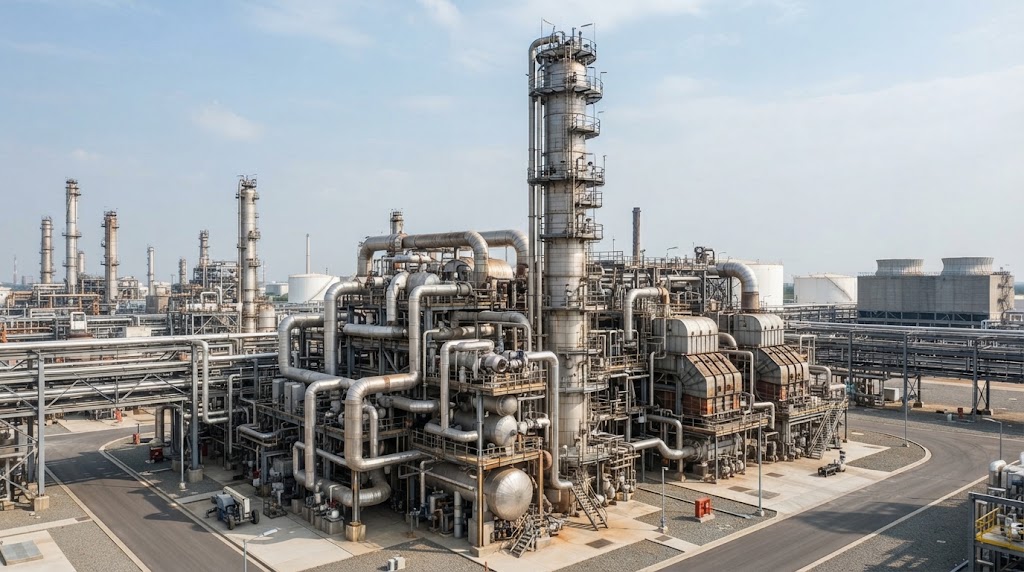
Europe’s race to build a competitive battery industry is entering a new phase as ProLogium moves ahead with one of the continent’s most ambitious solid-state battery projects in Dunkirk, northern France.
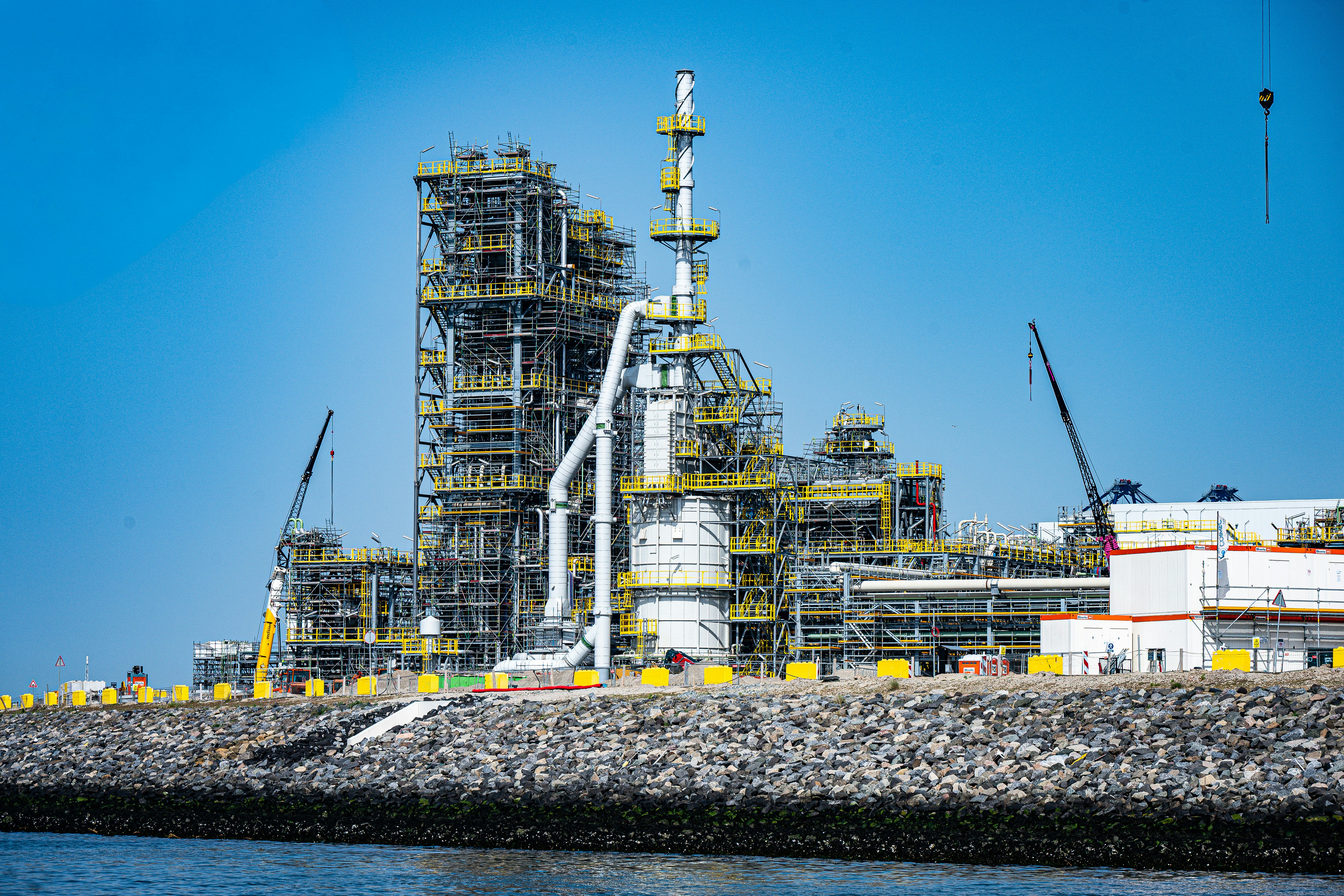
The €5.2 billion project is designed to bring large-scale production of fourth-generation lithium-ceramic solid-state batteries to Europe. Construction officially began in February 2026, while recent progress shows that the project is moving from planning into the infrastructure and engineering phase.


A €5.2 Billion Bet on Solid-State Batteries
ProLogium selected Dunkirk for its first major manufacturing facility outside Taiwan following an extensive site-selection process. The planned investment is approximately €5.2 billion, with the full project targeting up to 48 GWh of annual production capacity.
The location is strategically important. Dunkirk provides direct access to port infrastructure, established industrial networks and Northern European automotive markets. The Hauts-de-France region is also developing into a major battery manufacturing cluster, with several gigafactory and battery-material projects located nearby.
According to Nord France Invest, nearly 150 potential locations were considered before the project was narrowed down to three European sites. (Nord France Invest)
From Groundbreaking to Real Construction
The project reached a major milestone in February 2026, when ProLogium officially broke ground at the Dunkirk site.
The groundbreaking marked the transition from years of planning, permitting and site preparation to physical construction. The facility is intended to become ProLogium's first large-scale manufacturing site outside Taiwan and will use its proprietary solid-state lithium-ceramic technology. (ProLogium Technology Co., Ltd)
The initial production phase is expected to be much smaller than the eventual 48 GWh target. Current plans reported in February 2026 indicated an initial capacity of approximately 0.8 GWh, with production expected to begin after the first phase is completed. (electrive.com)
What Is Happening Behind the Scenes?
Building a battery gigafactory is much more than putting up a large industrial building. The production environment requires specialized infrastructure capable of supporting highly controlled battery manufacturing processes.
As of September 2026, ProLogium reported that several workstreams were already progressing at the Dunkirk site.
These include:
Site access and platform preparation
Electrical infrastructure installation
Grid connection activities
Engineering and design work
Supplier qualification
Technology localization
Workforce and talent development
A consortium involving Sogea Caroni, Exyte and Lucas & Gaillard Architectes is working on site preparation, while Ardelec Energie is involved in electrical infrastructure and ENEDIS is handling grid-connection work. (ProLogium Technology Co., Ltd)
This infrastructure stage is critical because a high-tech battery plant requires reliable electricity, specialized manufacturing systems, controlled production environments and extensive utilities before commercial cell production can begin.
Why Solid-State Batteries Are Different
Conventional lithium-ion batteries generally use a liquid electrolyte. Solid-state batteries replace this liquid-based system with a solid electrolyte or solid-state architecture.
ProLogium's technology uses a ceramic separator and solid-state electrolyte. The company says this architecture can improve safety and enable greater energy density while supporting faster charging and more efficient battery designs. (ProLogium Technology Co., Ltd)
The potential advantages are significant for electric vehicles.
A higher-energy-density battery could allow automakers to achieve greater driving range without proportionally increasing battery size. Improved safety characteristics could also help manufacturers design more compact and efficient battery packs.
However, producing solid-state batteries at automotive scale remains one of the industry's biggest challenges. Laboratory performance is very different from producing millions of consistent cells economically.
Why Dunkirk?
Dunkirk offers several advantages that make it attractive for advanced battery manufacturing.
First is logistics. The factory is located close to the Grand Port Maritime de Dunkirk, providing access to shipping routes and industrial supply chains.
Second is energy availability. France's electricity system has a relatively low carbon intensity, supported heavily by nuclear generation. This is particularly important for battery manufacturers attempting to reduce the carbon footprint of energy-intensive production.
Third is the region's growing battery ecosystem. Hauts-de-France already hosts major battery investments, creating a developing network of suppliers, researchers, manufacturers and skilled workers.
ProLogium itself describes the area as part of Europe's emerging “Battery Valley.” (Battery-News)
Building a European Battery Supply Chain
The Dunkirk project is not simply about manufacturing battery cells.
It forms part of Europe's broader effort to establish a stronger domestic battery value chain and reduce dependence on imported technologies.
ProLogium has been working on partnerships and localization efforts involving European companies. In 2026, for example, the company announced cooperation with OPmobility to explore the integration of its solid-state cells into battery modules and eventually complete battery packs. (electrive.com)
This type of cooperation will be important because successful EV manufacturing requires much more than cell production. Cells need to be integrated into modules, packs and vehicles while meeting strict automotive performance and safety requirements.
A New Chapter for Europe's EV Industry
The Dunkirk factory could become an important test of whether solid-state battery technology can successfully move from advanced pilot production into large-scale European manufacturing.
ProLogium says the project is expected to create approximately 3,000 direct jobs and 12,000 indirect jobs by 2030. The company originally announced a target of beginning production by the end of 2026, but current construction plans indicate a phased development, with the first production phase now expected later. (ProLogium Technology Co., Ltd)
The scale-up will ultimately depend on several factors: construction progress, manufacturing yields, supply-chain localization, customer validation and the economics of solid-state cell production.
If those challenges can be overcome, Dunkirk could become more than another European gigafactory. It could demonstrate how next-generation battery technology can be industrialized on European soil.
What Comes Next?
The immediate priority is completing the site's infrastructure and preparing the production environment. ProLogium's September 2026 update indicates that electrical and grid-connection work is progressing alongside engineering, supplier qualification and workforce development. (ProLogium Technology Co., Ltd)
The longer-term objective is to scale production toward the project's planned 48 GWh capacity.
For Europe, the significance extends beyond one factory. A successful solid-state battery manufacturing operation could strengthen the region's position in next-generation EV technology, create new industrial capabilities and provide European automakers with another source of advanced battery technology.
The Dunkirk project therefore represents a major industrial experiment: can Europe build solid-state batteries at scale, competitively and with a localized supply chain?
The answer will become clearer as the factory moves from construction to equipment installation, commissioning and eventually commercial production.
Sources
https://prologium.com/prologium-announces-e5-2b-gigafactory-in-dunkirk-france-and-greets-french-president-emmanuel-macron/?
https://prologium.com/prologium-breaks-ground-on-dunkirk-gigafactory-in-france/?

Ammonium Sulphate - Taiwan
Found this useful?