Calcium Stearate: Uses in Plastics, Rubber and Construction Materials
Calcium stearate serves three important industrial functions: lubrication, mould release and moisture protection. These properties make it a valuable additive in plastics manufacturing, rubber processing and construction materials, where manufacturers need consistent production performance and durable finished products.
Calcium stearate is a calcium salt of stearic acid that typically appears as a fine white powder. Its ability to repel water, reduce friction and improve material handling makes it useful across several manufacturing processes. For chemical buyers and procurement teams, understanding its applications, specifications and sourcing requirements helps identify the right grade for each industrial purpose.
What Is Calcium Stearate and How Does It Work?
Calcium stearate, with the chemical formula Ca(C₁₈H₃₅O₂)₂, belongs to a group of compounds known as metallic stearates or metal soaps. Manufacturers generally produce it by reacting stearic acid with calcium oxide or calcium hydroxide under controlled processing conditions.
The resulting material offers several useful characteristics:
Water resistance: Its hydrophobic nature helps reduce water absorption in construction materials and other applications.
Lubrication: It reduces friction between processing materials and equipment surfaces.
Thermal stability: Its relatively high melting range supports applications that involve elevated processing temperatures.
Release properties: It helps prevent materials from sticking to moulds and processing equipment.
Powder flow improvement: It reduces unwanted sticking and supports smoother handling of certain powder formulations.
Calcium stearate remains practically insoluble in water. This characteristic contributes to its effectiveness in moisture-resistant formulations, while its lubricating behaviour supports efficient processing in polymer and rubber manufacturing.
Calcium Stearate Uses in Plastics Manufacturing
The plastics industry represents one of the major application areas for calcium stearate. Manufacturers use it as an internal and external lubricant, processing aid, release agent and acid scavenger, depending on the polymer system and formulation.
1. PVC processing
Polyvinyl chloride (PVC) manufacturing relies on additives to achieve suitable processing characteristics and finished product quality. Calcium stearate helps control friction during mixing, extrusion and moulding.
In rigid PVC formulations, it supports lubrication and can contribute to better material flow during processing. It also works as a secondary stabilising component by helping neutralise acidic residues, including hydrogen chloride released during PVC degradation.
2. Polyethylene and polypropylene production
Calcium stearate also supports the processing of polyethylene (PE) and polypropylene (PP). In these polymer systems, manufacturers use it as an acid acceptor to neutralise acidic catalyst residues and as a lubricant to improve processing behaviour.
Its functions can benefit:
Plastic films and packaging materials.
Injection-moulded components.
Extruded sheets and profiles.
Polypropylene fibres and other polymer products.
Masterbatch and polymer compound formulations.
3. Improving mould release and surface quality
During injection moulding and other shaping processes, material adhesion to equipment can interrupt production and affect finished components. Calcium stearate helps reduce sticking and supports smoother mould release.
Its lubricating properties can also improve material movement through processing equipment. However, manufacturers must balance additive concentration carefully because excessive lubrication can affect fusion, surface characteristics and the mechanical properties of certain plastic products.
Applications of Calcium Stearate in Rubber Manufacturing
Rubber processing requires additives that support mixing, shaping and moulding without compromising the performance of the finished product. Calcium stearate serves several functions in this sector, particularly as a mould release and anti-blocking agent.
During rubber moulding, the material helps reduce adhesion between the rubber compound and metal mould surfaces. This makes product removal easier and can reduce interruptions during manufacturing.
Its applications include:
Mould release: Helps prevent rubber products from sticking to mould surfaces during vulcanisation and shaping.
Anti-blocking: Reduces unwanted adhesion between rubber sheets and surfaces during storage or handling.
Processing lubrication: Supports smoother movement of rubber compounds through selected manufacturing operations.
Surface treatment: Helps improve handling characteristics in certain rubber formulations.
Manufacturers of automotive rubber components, industrial seals, gaskets, hoses and other moulded products may use calcium stearate as part of their processing systems.
The appropriate grade depends on the rubber formulation, moulding temperature and required surface finish. Particle size and dispersion also matter because inconsistent additive distribution can affect processing results.
Role of Calcium Stearate in Construction Materials
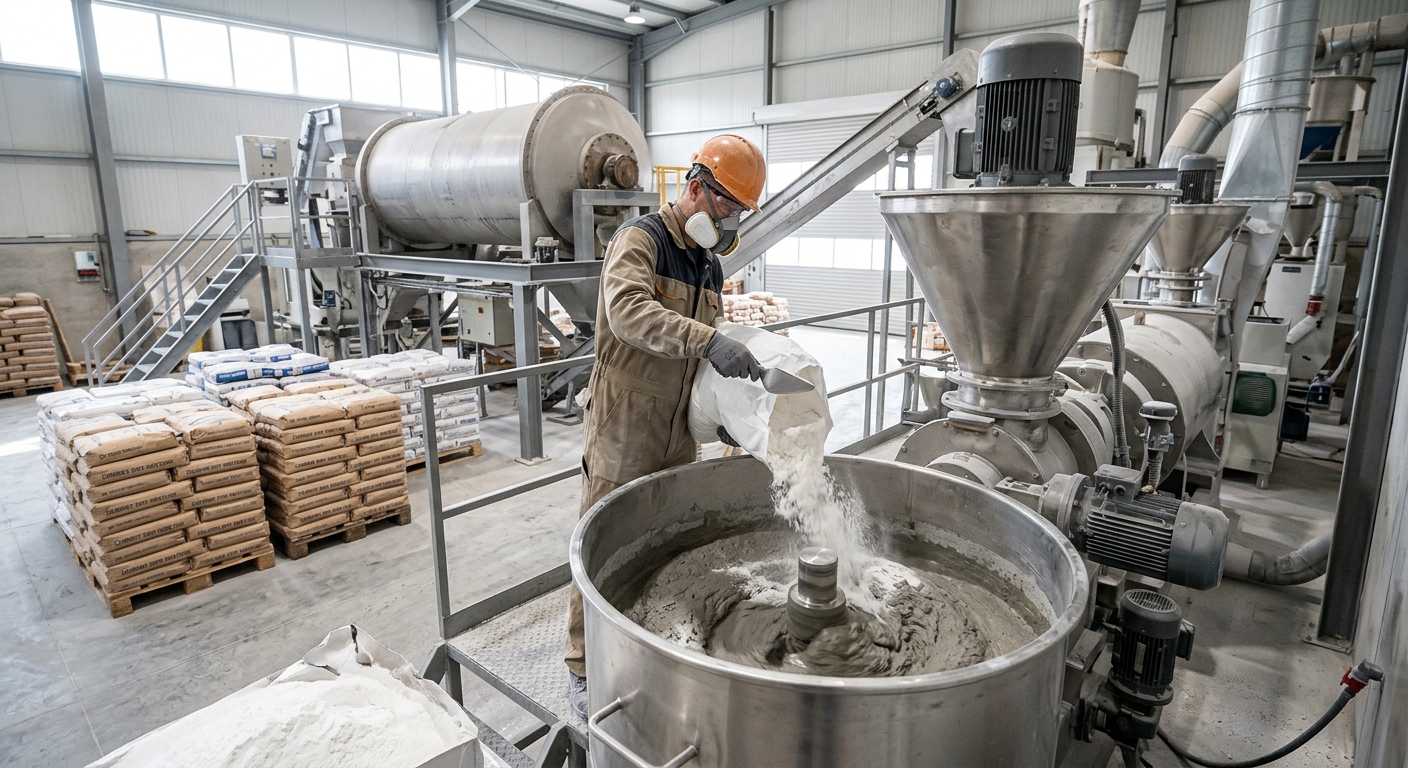
Calcium stearate offers an important advantage in construction materials because of its water-repellent properties. Manufacturers incorporate it into cement-based formulations to help reduce moisture penetration and improve the resistance of finished materials to water absorption.
Its hydrophobic behaviour makes it useful in several building material applications.
Cement and concrete products: Calcium stearate can act as a water-repellent additive in selected cement-based formulations. It helps reduce water absorption through pores and supports moisture protection.
Mortars and plasters: Manufacturers add it to certain dry-mix mortars and plaster formulations to improve water resistance. This property can help protect treated surfaces against moisture exposure.
Cement paints and coatings: Calcium stearate contributes water-repellent characteristics and can support surface performance in cement-based coating systems.
Bricks and masonry materials: Selected formulations use calcium stearate to reduce moisture uptake and help control water penetration through porous construction products.
Another relevant application involves efflorescence control. By reducing moisture movement through cementitious materials, calcium stearate can help limit the conditions that encourage soluble salts to migrate towards the surface.
However, the final performance depends on the cement composition, additive concentration, mixing conditions and overall formulation.
What Influences Calcium Stearate Quality and Performance?
Not all calcium stearate products offer identical performance. Differences in manufacturing methods, raw materials and processing conditions can influence the physical and chemical properties of the final product.
Industrial buyers should pay particular attention to the following specifications:
Calcium content: Indicates the proportion of calcium in the material and helps buyers evaluate product consistency.
Free fatty acid content: Influences the chemical composition and suitability of the additive for specific formulations.
Moisture content: Excessive moisture can affect powder handling, storage stability and processing performance.
Particle size: Determines how easily the additive disperses throughout plastics, rubber compounds and construction mixtures.
Melting range: Helps manufacturers assess suitability for their intended processing temperatures.
Appearance and colour: A consistent white powder appearance can support quality control in applications where product appearance matters.
Commercial grades commonly have melting ranges around 150°C to 160°C, although specifications vary between manufacturers and product types.
Buyers should request a technical data sheet (TDS) and certificate of analysis (COA) to compare product characteristics against their production requirements. A sample evaluation can also help confirm compatibility before committing to larger commercial quantities.
Key Factors Affecting Calcium Stearate Procurement
For chemical traders, importers and industrial procurement managers, sourcing calcium stearate involves more than comparing prices. Product consistency, supplier reliability and application-specific requirements all influence purchasing decisions.
Several factors deserve attention before placing an order.
1. Application-specific grade selection
A grade suitable for PVC processing may not deliver the same results in rubber moulding or cement waterproofing. Buyers should communicate the intended application and request recommendations based on the required technical specifications.
2. Raw material quality
Stearic acid quality and the manufacturing process influence the characteristics of calcium stearate. Differences in raw material composition can affect calcium content, free fatty acid levels and overall product consistency.
3. Particle size and dispersion
Fine powders can offer advantages in applications that require uniform additive distribution. However, the ideal particle size depends on the manufacturing process and the formulation's mixing requirements.
4. Packaging and storage
Calcium stearate typically comes in industrial bags designed for bulk handling and transportation. Buyers should confirm that packaging protects the powder against moisture contamination and damage during shipping.
5. Supplier documentation
Before purchasing, procurement teams should request:
Technical Data Sheet (TDS) for product specifications and recommended applications.
Certificate of Analysis (COA) for batch-specific quality information.
Safety Data Sheet (SDS) for handling, storage and safety requirements.
Country of origin and relevant shipping documentation.
Available packaging sizes and commercial supply conditions.
These checks help buyers compare suppliers on technical suitability rather than price alone.
Supply Chain and Market Considerations for Calcium Stearate
Calcium stearate demand connects several manufacturing sectors, including plastics, rubber, construction, coatings and specialty chemicals. Its use across different industries creates demand from manufacturers that purchase additives for both continuous production and specialised formulations.
The supply chain begins with fatty acid raw materials and calcium-based compounds. Manufacturers process these inputs into calcium stearate before supplying the finished product to distributors, chemical traders and industrial consumers.
Several factors can influence its commercial availability and purchasing costs:
Stearic acid prices: Changes in fatty acid markets can influence production economics because stearic acid serves as a primary raw material.
Energy and manufacturing costs: Processing, drying, milling and packaging expenses contribute to the final product price.
Freight and logistics: International shipping rates, container availability and port conditions affect landed costs.
Regional demand: Higher purchasing activity from plastics, rubber and construction manufacturers can influence supplier availability.
Currency movements: Exchange rate fluctuations can change import costs for buyers purchasing in international markets.
Procurement teams should also consider lead times and minimum order quantities when planning purchases. Maintaining reliable supplier relationships and comparing offers from multiple markets can help reduce supply disruptions.
Storage, Handling and Industrial Quality Control
Proper storage helps preserve calcium stearate quality throughout its supply chain journey. Although the material offers good moisture resistance in finished formulations, the powder itself still requires appropriate protection during storage and handling.
Industrial buyers should follow these practical measures:
Store bags in a cool, dry and well-ventilated warehouse.
Keep packaging tightly closed when not in use.
Avoid direct contact with moisture and excessive humidity.
Prevent contamination from other chemicals and foreign materials.
Use suitable dust-control measures during powder transfer and mixing.
Follow the supplier's SDS for personal protective equipment and handling procedures.
Quality control should continue after delivery. Buyers can inspect packaging condition, verify batch documentation and conduct incoming material checks before releasing the product into manufacturing.
For large-volume consumers, consistent batch quality is particularly important because variations in particle size, moisture or chemical composition can influence production performance.
What Procurement Teams Should Prioritise When Buying Calcium Stearate
Selecting the right calcium stearate supplier requires a balance between technical performance, commercial competitiveness and supply reliability. A low purchase price offers limited value if inconsistent product quality creates processing problems or increases production waste.
Procurement teams should prioritise three areas:
Technical compatibility: Confirm that the product matches the requirements of the intended application, whether PVC lubrication, rubber mould release or construction waterproofing.
Commercial reliability: Compare quotations based on grade, packaging, minimum order quantity, delivery terms and total landed cost rather than unit price alone.
Long-term supply consistency: Evaluate suppliers on their ability to maintain specifications, provide documentation and fulfil repeat orders within agreed delivery schedules.
Building relationships with dependable suppliers can help manufacturers maintain production continuity and manage fluctuations in raw material availability.
The Outlook for Calcium Stearate Across Industrial Applications
Calcium stearate continues to serve as a multifunctional additive in industries that depend on efficient processing and reliable material performance. Plastics manufacturers value its lubrication and acid-scavenging functions, rubber producers use it to support mould release and construction manufacturers incorporate it into moisture-resistant formulations.
As manufacturers continue to improve polymer processing, rubber product quality and construction material durability, the need for application-specific additives remains commercially relevant.
For chemical distributors and industrial buyers, the opportunity lies in sourcing consistent grades that meet clearly defined production requirements. Evaluating specifications, checking supplier documentation and planning purchases around production demand can support more effective procurement decisions.
Ready to source Calcium Stearate from verified global suppliers? Explore competitive offers on our platform today.
Sources:
Stearic Acid
Found this useful?