Chemical Industry Investment Analysis: Capacity Expansion and Market Developments
Chemical Industry Investment Analysis: Capacity Expansion and Market Developments
Global Investment Trends And Capacity Expansion
In second quarter of 2026, China's new materials industry has ushered in new wave of investment enthusiasm. From April to present, in just two months of Q2, seven listed companies in chemical sector have successively announced capital increase and capacity expansion plans, with total investment exceeding RMB 5.6 billion. These investments primarily focused on new materials such as modified plastics, general-purpose engineering plastics, and specialty engineering plastics, targeting high-value applications rather than commodity chemicals.
China now represents around 50% of global chemical capacity, up from roughly 15% two decades ago, and is on track to account for 70% of new global capacity additions through 2027. Every discussion about logistics, tariffs and trade in 2026 starts with this concentration. Since beginning of 2026, multiple million-ton ethylene projects have seen key progress, covering aspects such as commissioning of core units, launch of major projects, and breakthroughs at critical milestones. On January 14th, public announcement of sea area usage for China National Petroleum Corporation Dalian Petrochemical Branch Xizhong Island refining and chemical integration project, with total investment of 68.5 billion yuan, was released.
US Chemical Market valued at 1.20 trillion dollars in 2025 and expected to reach 1.75 trillion by 2035, growing at CAGR of 3.84% from 2026-2035. Market advancing as Gulf Coast producers commit new capital to ethylene, propylene, and derivative capacity while specialty chemical manufacturers expand electronics-grade and advanced-materials portfolios nationwide. LyondellBasell confirmed readiness to proceed with new capacity despite overcapacity concerns.
Petrochemicals market grew from 675.7 billion dollars in 2025 to 705.5 billion in 2026, expected to reach 996.1 billion by 2034, exhibiting growth rate CAGR of 4.40% during 2026-2034. Market size 705.5 billion 2026, growth driven by industrialization and demand for plastics.
Bulk petroleum and chemical storage market poised for significant expansion, projected to grow from 36.88 billion in 2025 to 39.33 billion in 2026 at CAGR of 6.7%, toward 51.92 billion by 2030 at CAGR 7.2%, driven by developments such as expansion of strategic petroleum reserves and rising investments in chemical logistics infrastructure.
Market Developments – Overcapacity Versus Selective Growth
Chemical industry outlook 2026 resilience, growth, and AI notes while industry trade organizations have projected 3.5% growth for global chemicals production, industry faces challenges including high energy prices and structural costs especially in Europe, low utilization indicative of weak demand and overcapacity, geopolitical tensions, and disruptive trade policies.
Regional outlook for chemicals markets in 2026 shows industry forecasts including those from European trade association Cefic project European production growth around 3% through 2027, but current reality shows EU27 chemical production declined by 2.0% January to July 2026 compared to 2025, highlighting fragility.
Nine major trends shaping chemicals, coatings and plastics industry 2026 insights for investors notes global chemicals industry generated estimated 5.1 trillion in revenues in 2025 excluding pharmaceuticals, while worldwide plastics production reached approximately 462.3 million tons. China has dramatically expanded capacity for ethylene, polyethylene and other basic chemicals as it pursues greater industrial self-sufficiency.
Global chemical markets brace for structural upheaval as trade tensions intensify, average US tariffs surged from 2.4% at start of year to peak of 28% in April before settling at 16.8% highest level since 1935. Borealis 750,000 tonnes per year Kallo Belgium propane dehydrogenation PDH unit scheduled to start up in Q2 2026, while INEOS Project One cracker expected online by early 2027. Together, ventures will add significant olefins capacity to market already grappling with overcapacity. Grupa Azoty 1.8 billion PDH-polypropylene project also adds capacity.
Global chemicals industry will need to close around 35 million tonnes of olefin production capacity by 2030 to restore normal operating rates, according to Bain & Company analysis. Air Liquide reported weaker chemical-sector demand in Europe during first quarter 2026, with Large Industries revenue in Europe Middle East and Africa business declining 3.0%.
Four key trends shaping chemicals sector in 2026 show Deloitte forecasts production volumes in US will contract by 0.2% in 2026, with Europe facing similar headwinds, in part due to higher energy costs eroding competitiveness. PwC reports M&A activity hit lowest point since pre-COVID in first half of 2025, with only 243 deals. AI market in chemicals projected to grow from 1.41 billion in 2025 to 12.71 billion by 2034, indicating digital investment as growth area even as physical capacity faces overcapacity.
Investment Analysis – Where Capital Is Flowing
56 billion capital enters market in Q2 new materials investment boom, modified plastics and specialty engineering plastics increase across board, showing capital flowing toward high-value, differentiated materials rather than commodity petrochemicals. That shift reflects recognition that commodity markets face structural oversupply, while specialty segments offer better margins and growth.
China chemical capacity now half of global share, what 70% of new builds through 2027 means for investment is concentration risk. April 2026 announcement of 100% tariffs on imported APIs has pushed hundreds of billions in US reshoring pledges alongside diversification to Vietnam, Eastern Europe and Latin America, showing policy-driven investment shift.
US Gulf Coast producers commit new capital to ethylene, propylene, derivative capacity leveraging low-cost ethane advantage, with ethane-based cracker utilization in US Gulf Coast reaching 94% in 2023 up from 81% in 2019. That advantage supports investment even in overcapacity environment, as US producers can compete globally despite weak demand.
Investment of 200 million euros in expanding production of oxygenated solvents by 80,000 metric tons per annum at Ludwigshafen site through closed-loop solvent recovery technologies signals push toward circularity and capacity expansion for sustainable grades, rather than commodity volume.
Bulk petroleum and chemical storage investment 36.88 billion 2025 to 39.33 billion 2026 to 51.92 billion 2030 reflects need for infrastructure to handle increased trade flows and strategic reserves amid geopolitical volatility, with smart storage facilities, emission controls driving investment.
Regional Competitiveness And Capacity Utilization
Industry navigating widening structural divide between globally competitive producers and higher-cost regions. Asia-Pacific, led by China, continues to dominate global chemical production and consumption, accounting for approximately half of global output and demand. Geopolitical risks and supply-chain security issues have intensified in 2026. Entering 2027 sector recovery should be highly uneven across regions and segments.
Cost competitiveness moves back to center stage in chemicals market. Across several major chemicals markets, competitiveness becoming more important driver of pricing and market balance than demand growth alone. Trade barriers, production discipline, feedstock costs, and regional cost disadvantages increasingly influencing how producers respond to persistently uneven demand. Key question for Q4 is whether producers can defend margins without stronger demand.
Global chemical industry outlook 2026 oversupply, regional competition and new era of strategic sourcing notes global chemical industry undergoing significant adjustment in 2026, weak demand, excess production capacity and uneven regional competitiveness putting pressure on manufacturers, particularly traditional petrochemical segments.
Fitch Ratings has maintained deteriorating outlook for global chemicals sector in 2026, arguing structural oversupply, weak underlying demand and rising production costs continue to outweigh temporary pricing support created by disruption around Strait of Hormuz. Structural overcapacity remains central long-term pressure on industry profitability.
Implications For Food-Grade And Specialty Chemicals
For food-grade minerals, investment trends show food and beverage segment expected to have highest CAGR during forecast period, with food grade minerals market valued at 5.6 billion dollars in 2025 projected toward 15 billion. That growth driven by fortification demand, with fortified rice kernels market valued at 96.5 million 2024 expected to reach 165.8 million by 2033 at 6.36% CAGR.
Investment in food-grade compliance GFSI certification FSSC 22000, Halal, Kosher, heavy metal compliance to FCC becomes fixed cost component, similar to energy costs. Brands using blockchain-tracked GCC report 19% higher purchase intent in climate-conscious demographics, showing sustainability investment pays premium.
Electronic chemicals, battery materials, high-performance coatings, advanced adhesives and specialty polymers better positioned than commodity intermediates, with stronger margin protection due to qualification and application performance. That explains why modified plastics and specialty engineering plastics attract 5.6 billion RMB investment in just two months Q2 2026 while commodity capacity faces closure pressure 35 million tonnes by 2030.
Outlook And Buyer Strategies
U.S. chemical market advancing as Gulf Coast producers commit new capital to ethylene, propylene, derivative capacity while specialty manufacturers expand electronics-grade and advanced-materials portfolios. That dual track investment commodity low-cost feedstock plus specialty high-value will shape 2027 landscape.
Global chemicals production forecast to contract by 0.5% in 2026 with 8.6% decrease in Middle East due to conflict, then rebound by 1.2% in 2027 provided US-Iran agreement reached. Among subsectors basic chemicals output to grow 1.0%, paints and coatings 3.0%, soaps and detergents 1.2% in 2027.
Practical strategies include tracking capacity additions versus demand growth, monitoring operating rates and inventory levels, and building tiered budgets with base, pressure, and disruption cases. Focus on four decision signals input trend, lead-time movement, supplier capacity discipline, compliance friction. When three move same direction for 6 to 8 weeks, probability of sustained price pressure rises.
Companies reassessing supply chains prioritizing resilience alongside cost efficiency will accelerate regionalization trends, encourage investment in integrated production hubs, and increase strategic importance of countries with secure energy and feedstock access. That shift creates opportunities for buyers to secure low-cost supply from competitive regions while avoiding high-cost regions facing closures.
Ultimately, chemical industry investment analysis shows 5.6 billion RMB in two months Q2 2026 flowing to modified plastics, China 50% of global capacity and 70% of new builds through 2027, US Gulf Coast committing new ethylene capacity, 35 million tonnes olefin capacity needing closure by 2030, and storage market 36.88B to 51.92B by 2030, indicating selective investment in high-value and infrastructure despite commodity overcapacity.
Sources:
56 Billion Capital Enters Market Q2 New Materials Investment Boom – PlastMatch – seven listed companies announced capital increase capacity expansion total investment exceeding 5.6B RMB Q2 2026 – modified plastics specialty engineering plastics – https://plastmatch.com
China's Chemical Capacity Now Half Global Share 70% New Builds Through 2027 – ChemicalsBlog – China 50% global capacity up from 15% two decades ago – 70% new additions through 2027 – tariffs 100% APIs US reshoring – https://chemicalsblog.com
U.S. Chemical Market Size Share Analysis Report 2026-2035 – SNS Insider – US market 1.20T 2025 to 1.75T 2035 CAGR 3.84% – Gulf Coast producers commit new capital ethylene propylene derivative capacity – https://snsinsider.com
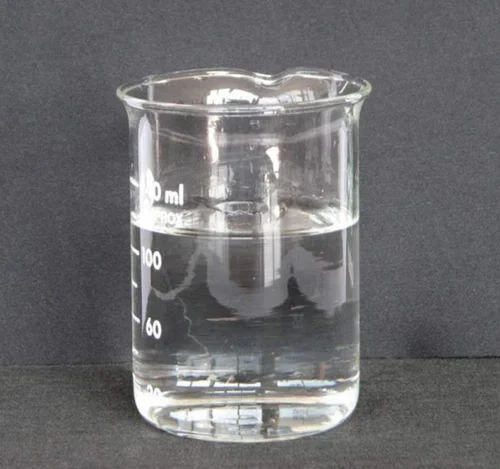
Phosphoric Acid (85%) (E338)
Found this useful?