China's Overcapacity Problem and What It Means for the West
China's industrial overcapacity has become one of the most important structural issues facing global chemical markets.
The problem is not simply that China is producing more chemicals. The deeper issue is that new production capacity has expanded faster than domestic demand in several parts of the industry, leaving producers with greater incentives to export surplus material into overseas markets.
China's chemical industry is expected to remain under pressure from overcapacity and weak domestic demand in 2026, even as Beijing pushes an "anti-involution" campaign aimed at improving industrial efficiency and addressing excessive competition.
For Western chemical producers, the consequences can extend well beyond lower prices. Persistent Chinese oversupply can influence plant utilization, margins, investment decisions, trade policy, M&A activity and the long-term viability of domestic manufacturing.
Why China's Overcapacity Matters
Chemical production requires enormous capital investment.
Once a plant is built, shutting it down is often economically painful because companies need to consider:
Fixed costs
Debt obligations
Employment
Customer commitments
Feedstock contracts
Local economic interests
Asset replacement value
As a result, producers may continue operating even when margins are weak.
When multiple producers behave this way simultaneously, supply can remain above demand for an extended period.
That creates a market where volume growth does not necessarily translate into healthy profitability.
China's Domestic Demand Is Not Absorbing All New Capacity
One of the central problems is the mismatch between production capacity and domestic consumption.
China's property-sector slowdown has weakened several traditional demand drivers, while investment in manufacturing capacity has remained strong.
The result is particularly challenging for industries where new plants can produce large standardized volumes.
When domestic demand cannot absorb the additional output, producers increasingly look toward export markets.
That is where China's overcapacity problem becomes a Western industry problem.
Export Pressure Is Increasing
The export channel can help Chinese producers utilize excess capacity.
Recent data provides a clear example in polymers.
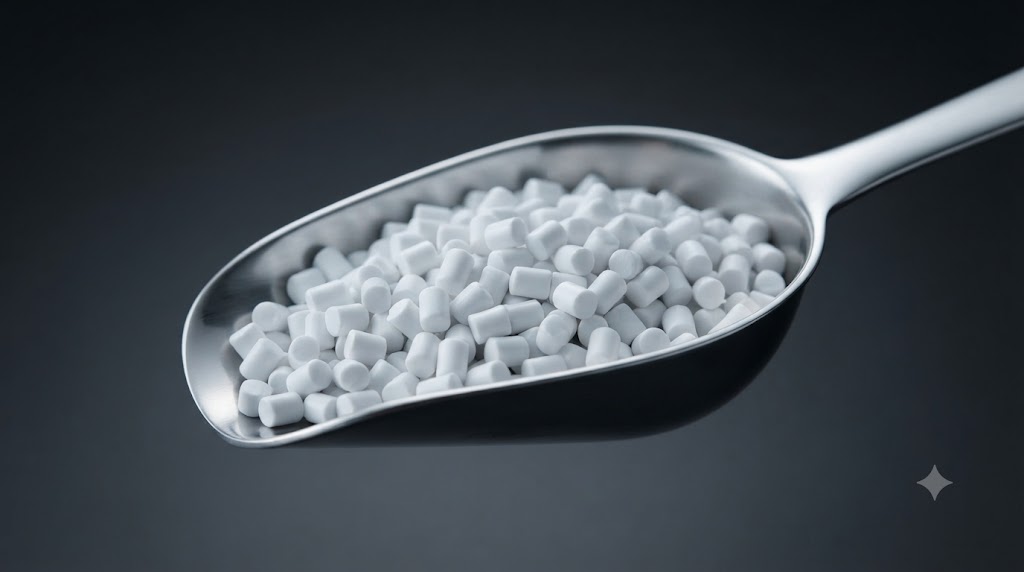
ICIS estimates that China's net polypropylene exports could reach roughly 4 million tonnes in 2026, assuming the January-May trend continues through the year.
That kind of export growth can place significant pressure on producers in other regions.
For Western manufacturers, the challenge is not necessarily that Chinese companies are selling at a loss.
Even when Chinese producers remain economically viable, their combination of scale, integrated supply chains and lower production costs can reset global price expectations.
The Price Effect
Persistent oversupply tends to create pressure throughout the value chain.
When additional material reaches international markets, buyers gain more negotiating power.
That can result in:
Lower spot prices
Reduced producer margins
Greater price competition
Higher customer switching
Lower plant utilization
Delayed investment
Increased pressure for restructuring
For consumers of chemicals, this can initially look positive.
Lower input prices can reduce manufacturing costs.
But the longer-term consequences are more complicated.
Cheap Chemicals Can Become a Strategic Problem
For Western manufacturers, cheap imports can provide an immediate cost advantage.
However, if domestic producers cannot earn adequate returns, they may reduce investment or close facilities.
That can gradually weaken the region's industrial base.
Europe is already experiencing this tension.
A recent Financial Times analysis highlighted how Chinese competition, high European energy costs and weak demand are putting pressure on European chemical production, with some facilities operating at reduced capacity and facing severe financial challenges.
The strategic question therefore becomes:
How much production capacity can the West afford to lose before low-cost imports become a dependency?
Europe Is Particularly Vulnerable
Europe combines several disadvantages.
Its chemical producers face:
High energy costs
Carbon-related expenses
Regulatory burdens
Aging infrastructure
Weak industrial demand
Global competition
High capital requirements
At the same time, Chinese producers benefit from enormous manufacturing scale and increasingly integrated domestic supply chains.
This creates a difficult competitive equation.
A European producer may have a technically efficient plant but still struggle to compete with an imported product produced in a lower-cost and much larger industrial ecosystem.
China's Scale Is Difficult to Replicate
One reason the overcapacity problem is so persistent is China's industrial scale.
Large chemical complexes can integrate:
Feedstocks → intermediates → polymers → downstream products → logistics
This reduces dependence on external suppliers and can improve cost competitiveness.
The scale advantage becomes especially powerful when multiple plants are located within the same industrial cluster.
Western producers may have individual advantages in technology or product quality, but matching the entire ecosystem is considerably more difficult.
The Problem Extends Beyond Commodity Chemicals
The concern is no longer limited to traditional commodity products.
China is increasingly moving into higher-value chemical and materials segments.
This creates a more significant long-term challenge.
Historically, Western producers could defend their businesses by moving toward:
Specialty chemicals
Advanced materials
High-performance formulations
Technical services
Proprietary technologies
But if Chinese producers continue moving up the value chain, that defensive strategy becomes more difficult.
The concern is increasingly about specialty-market competition, not just commodity oversupply.
China's EV and Renewable-Energy Expansion Complicates the Picture
There is an important nuance.
China's industrial investment is not universally irrational.
Some new capacity is tied to rapidly growing sectors such as:
Electric vehicles
Batteries
Solar equipment
Energy-storage technologies
Advanced materials
The American Chemical Society notes that demand for materials connected to EVs and solar technologies is expected to grow rapidly even while traditional chemical segments remain affected by overcapacity.
This means the issue is not simply "China produces too much of everything."
The more precise issue is whether capacity growth is aligned with sustainable demand and profitable economics.
Beijing Is Aware of the Problem
China has recognized that excessive industrial competition can undermine profitability.
Beijing's "anti-involution" campaign seeks to address destructive price competition and excessive capacity.
However, industry analysts remain skeptical about how quickly these efforts can change the underlying supply-demand balance.
The challenge is structural.
Capacity reductions can be politically and economically difficult when factories support employment, local tax revenue and regional investment.
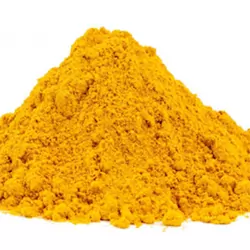
Aluminium Chloride
Why Capacity Cuts Are Difficult
Closing chemical plants is not like turning off a light.
Companies and local governments have to consider:
Workers
Debt
Environmental liabilities
Local tax revenue
Supplier networks
Infrastructure investment
Asset values
A producer may therefore prefer to operate at a low margin rather than permanently shut down.
This can keep excess capacity in the market for longer than traditional economic models would suggest.
Western Producers Face a Margin Squeeze
The most immediate consequence for Western chemical companies is likely to be margin pressure.
Imagine a Western producer with:
High energy costs
High environmental compliance costs
Aging equipment
Relatively expensive labor
Now compare it with an integrated Chinese producer benefiting from:
Large-scale production
Lower feedstock costs
Industrial clustering
Domestic supply-chain integration
Strong export infrastructure
Even if both producers have similar technology, their cost structures can be dramatically different.
That difference eventually shows up in margins.
The Investment Problem
Overcapacity can create a vicious cycle.
Step 1
New capacity pushes prices lower.
Step 2
Lower prices reduce producer margins.
Step 3
Lower margins discourage new investment in Western plants.
Step 4
Existing Western facilities become older and less competitive.
Step 5
More capacity is closed or divested.
Step 6
The region becomes increasingly dependent on imports.
This is one of the biggest strategic concerns surrounding persistent Chinese overcapacity.
M&A Will Become More Important
Overcapacity is also likely to accelerate chemical-sector consolidation.
Companies may acquire competitors to:
Reduce duplicate capacity
Improve utilization
Strengthen regional market share
Gain specialty products
Access technology
Expand downstream integration
At the same time, weaker producers may become acquisition targets because their assets can be purchased below replacement cost.
That makes distressed chemical M&A an increasingly important part of the industry's restructuring cycle.
Western Governments Are Responding
Trade policy is becoming one of the primary responses.
Governments can use:
Anti-dumping investigations
Countervailing duties
Tariffs
Import monitoring
Strategic subsidies
Domestic investment incentives
Carbon-related trade measures
These policies can protect domestic producers from certain forms of unfair competition.
But they also create complications.
Protection can support local capacity while increasing costs for downstream manufacturers that depend on imported materials.
Europe Faces a Difficult Trade-Off
European policymakers are effectively balancing two objectives:
Affordable chemical inputs
versus
Strategic industrial capacity
Protecting domestic production may increase prices for downstream users.
But allowing domestic capacity to disappear could create long-term dependence on imports.
There is no simple answer.
The policy challenge is identifying which chemical capabilities are strategically important enough to preserve.
The UK Provides an Early Warning
The UK's chemical sector shows what can happen when industrial capacity declines for multiple reasons.
Recent research cited by the Financial Times found that chemical-company closures in the UK doubled between 2020 and 2025, with specialty chemical production particularly affected by high electricity costs, regulation, aging infrastructure and competition from China.
The concern goes beyond commercial profitability.
Chemical production supports downstream industries including:
Pharmaceuticals
Electronics
Aerospace
Defense
Automotive
Agriculture
Losing chemical capacity can therefore create vulnerabilities elsewhere in the economy.
Supply Security Is Becoming More Valuable
The overcapacity problem is happening at the same time as Western governments are becoming more concerned about supply-chain resilience.
That changes the value equation.
A chemical may be cheaper to import from China today.
But if geopolitical tensions, tariffs or shipping disruptions suddenly restrict supply, replacing that material can be difficult.
This means domestic or regional capacity can have strategic value beyond its immediate economic return.
Procurement Teams Need a Different Strategy
Chemical buyers should not automatically assume that the cheapest supplier represents the best long-term option.
Procurement teams increasingly need to evaluate:
Supplier concentration
Geographic exposure
Trade-policy risk
Production redundancy
Financial health
Freight exposure
Inventory requirements
Alternative suppliers
The optimal strategy may involve paying a modest premium for regional supply in critical materials.
Dual Sourcing Could Become Standard
Companies dependent on Chinese chemical imports may increasingly adopt dual-sourcing strategies.
For example:
Primary supplier: China
Secondary supplier: Europe, North America, India or another Asian market
This approach increases procurement complexity but provides an alternative if trade restrictions or supply disruptions emerge.
For critical chemicals, that redundancy can be worth the additional cost.
India Could Benefit
India is one potential beneficiary of supply-chain diversification.
As Western companies seek alternatives to China, Indian chemical producers may gain opportunities in:
Specialty chemicals
Pharmaceutical intermediates
Agrochemical intermediates
Contract manufacturing
Industrial chemicals
However, India also faces infrastructure, energy, environmental and scale constraints.
It may therefore complement Chinese supply rather than replace it entirely.
Southeast Asia Could Also Gain
Other Asian manufacturing hubs may benefit from companies seeking diversified production.
Potential beneficiaries include:
Vietnam
Indonesia
Malaysia
Thailand
But moving chemical production requires more than simply relocating a factory.
Companies need:
Feedstock access
Ports
Utilities
Skilled labor
Environmental approvals
Supplier ecosystems
Downstream customers
That makes chemical supply-chain relocation considerably slower than relocation in some other industries.
Western Specialty Chemicals Have an Opportunity
There is still an important defensive strategy for Western chemical companies.
Instead of competing solely on volume, producers can focus on:
Proprietary chemistry
High-purity materials
Technical support
Application development
Customer qualification
Regulatory expertise
Specialized manufacturing
These characteristics can create barriers that are harder to overcome through simple capacity expansion.
The strongest Western businesses may therefore be those that combine technical differentiation with reasonable cost competitiveness.
The Risk of Deflation
Persistent Chinese overcapacity could contribute to chemical price deflation.
This can initially benefit downstream manufacturers.
But prolonged deflation can damage the producers needed to maintain a healthy supply base.
Deloitte's 2026 chemical outlook identifies overcapacity, weak demand and uncertainty as major challenges for the global industry.
Recent European results have also shown that companies remain concerned about renewed overcapacity and potentially deflationary chemical pricing as the year progresses.
What Investors Should Watch
Investors should focus on several indicators.
Chinese Capacity Utilization
Low utilization suggests that excess capacity remains unresolved.
Chinese Export Volumes
Rising exports can indicate that domestic demand is insufficient to absorb production.
Regional Price Spreads
Large differences between Chinese and Western prices can reveal competitive pressure.
Plant Closures
Western closures may indicate that overcapacity is causing structural damage.
Trade Measures
New anti-dumping cases and tariffs can materially change market economics.
M&A Activity
Increasing distressed transactions can signal that the downturn is becoming structural.
The Bigger Strategic Question
The debate around China's overcapacity is ultimately not just about China.
It is about what kind of chemical industry the West wants to have.
A system based almost entirely on cheap imports may maximize short-term efficiency.
A system with substantial domestic and regional production may cost more.
But it can provide:
Supply security
Strategic autonomy
Employment
Technical capabilities
Innovation
Emergency capacity
Support for downstream industries
The challenge is determining where that resilience is worth paying for.
What This Means for the West
The West is unlikely to completely decouple from China.
The Chinese chemical industry is simply too large and too integrated into global supply chains.
Instead, Western companies and governments are likely to pursue a more selective approach.
That could mean:
China remains a major supplier
while
Western markets become more diversified and protective of strategic capacity.
This would produce a more fragmented global chemical market.
Looking Ahead
China's overcapacity problem is likely to remain one of the defining structural forces in global chemicals.
The combination of large-scale capacity expansion, weak domestic demand and rising exports is putting pressure on chemical producers outside China. Industry analysts expect overcapacity to remain a major issue through 2026, while China's export growth is already becoming increasingly visible in products such as polypropylene.
For Europe and the United States, the challenge is particularly difficult because domestic producers are already dealing with high energy costs, regulation and weak industrial demand.
The Western response will probably not be a complete rejection of Chinese chemicals.
Instead, it will involve trade defenses, regional production, supplier diversification, strategic inventory and greater focus on specialty products.
The central lesson for chemical companies is straightforward:
China's overcapacity may create cheaper chemicals today, but excessive dependence on that capacity could create strategic vulnerability tomorrow.
For procurement teams, the goal is therefore not simply to find the lowest-cost source.
It is to build a supply chain that remains competitive when global chemical markets are no longer predictable.
Key Takeaways
China's chemical industry continues to face significant overcapacity and weak domestic demand in 2026.
Rising exports can transfer China's domestic supply-demand imbalance into international markets.
China's polypropylene exports could reach around 4 million tonnes of net exports in 2026 if current trends continue.
European producers face additional pressure from high energy costs, regulation and weak industrial demand.
Persistent Chinese oversupply can contribute to lower global chemical prices and weaker Western producer margins.
Trade defenses may protect domestic manufacturers but can also increase costs for downstream industries.
Western companies may increasingly prioritize dual sourcing, regional production and strategic inventory.
Specialty chemicals and differentiated materials may offer greater protection from commodity-style competition.
The long-term issue is not simply Chinese exports, but whether Western economies retain enough chemical capacity to maintain strategic supply security.
Found this useful?