
CO₂-Based Surfactant Recreaire 17RC28 Enters the Personal-Care Market
A new generation of personal-care ingredients is moving beyond conventional fossil and oleochemical feedstocks. Recreaire 17RC28, an ultra-mild CO₂-based surfactant from Econic Technologies, contains 28% captured carbon by weight and offers an approximately 25% lower carbon footprint compared with standard surfactants.
The launch gives personal-care formulators another route toward lower-carbon ingredients without requiring them to sacrifice core formulation performance. The material targets lotions, creams, shampoos, conditioners and other skin and hair-care products where emulsification, stability and mildness remain critical.
For chemical traders and procurement teams, the development also signals a broader shift in the surfactant market. Captured carbon is moving from an emissions-management concept into a feedstock opportunity for commercially relevant chemical ingredients.
Captured CO₂ Moves Into Surfactant Production
Traditional surfactant supply chains often depend on fossil-derived or oleochemical carbon sources. Econic's Recreaire platform takes a different approach by incorporating captured carbon dioxide into carbonate ethoxylate surfactant structures.
This approach turns captured CO₂ into a useful carbon input rather than treating it only as an emissions stream. Econic describes Recreaire as a platform that can produce both conventional workhorse surfactants and tailored molecules for different applications.
For personal-care manufacturers, the significance goes beyond the origin of the carbon. A lower-carbon ingredient still needs to meet formulation requirements for texture, stability, processing and finished-product quality.
Recreaire 17RC28 has been developed specifically for emulsification and uses a higher molecular weight suited to personal-care formulations. That positioning makes it relevant to manufacturers seeking alternatives to established surfactant systems rather than simply adding a sustainability claim to a formulation.
Why Recreaire 17RC28 Matters for Personal Care
Personal-care products place several demands on surfactants and emulsifiers. Ingredients must perform consistently during manufacturing, storage and use while supporting the desired appearance and physical properties of the finished product.
Econic's testing compared Recreaire 17RC28 with a widely used fatty alcohol ethoxylate system. Formulations using the CO₂-based material maintained substantially more consistent viscosity over 40 days while matching the benchmark on appearance and three-cycle freeze-thaw stability.
The formulations also demonstrated strong long-term storage stability over 140 days at 40°C. These results matter for procurement teams because ingredient substitution depends on more than the environmental profile of a raw material.
Key formulation considerations include:
Emulsification: The material's higher molecular weight supports its use in emulsifying personal-care formulations.
Physical stability: Consistent viscosity can help manufacturers maintain product specifications during storage.
Temperature resilience: Freeze-thaw testing provides an indication of formulation stability under changing conditions.
Compatibility: Recreaire 17RC28 can be used independently or combined with bio-based surfactants.
These characteristics could make captured-carbon surfactants more practical for manufacturers that want to reduce feedstock-related emissions while keeping existing product performance targets.
The Carbon Advantage Behind the New Surfactant
The central commercial proposition of Recreaire 17RC28 is its carbon content. The material incorporates 28% CO₂ by weight, providing a direct route for captured carbon to enter a personal-care ingredient.
Econic reports that Recreaire 17RC28 delivers an approximately 25% reduction in carbon footprint compared with standard surfactants.
This creates a different sustainability proposition from simply switching between conventional feedstocks. Instead of relying exclusively on traditional fossil or oleochemical carbon sources, manufacturers can incorporate carbon captured from another source into the chemical production pathway.
Econic's wider Recreaire platform is designed around the use of CO₂ instead of fossil-based and oleo-based carbon. The company says its technology can provide lower emissions while supporting nonionic, anionic and cationic formulations across multiple applications.

Where CO₂-Based Surfactants Can Be Used
Recreaire 17RC28 enters the market through personal-care applications where emulsification and mildness are important. Econic specifically identifies lotions, creams, shampoos and conditioners among the intended uses.
That application range gives manufacturers several possible entry points for testing the ingredient. Formulators can evaluate it as a standalone ingredient or combine it with bio-based surfactants to adjust the balance between performance and sustainability objectives.
Potential commercial applications include:
Skin-care formulations: Creams and lotions can use emulsifiers to maintain consistent mixtures of ingredients that otherwise separate.
Hair-care products: Shampoos and conditioners require carefully controlled formulation properties and stable ingredient systems.
Personal-care emulsions: Products requiring smooth and stable oil-water systems can provide a useful testing area for the material.
Hybrid formulations: Manufacturers can combine Recreaire 17RC28 with bio-based surfactants to develop customized feedstock strategies.
This flexibility could be particularly relevant to brand owners that are pursuing incremental reductions in product carbon footprints rather than replacing entire ingredient systems at once.
What the Launch Means for Chemical Procurement
For buyers, the introduction of a captured-carbon surfactant changes the sourcing conversation. Procurement teams increasingly need to consider not only price and technical specifications but also the carbon characteristics of raw materials.
Recreaire 17RC28 gives buyers another specification category to evaluate when comparing surfactant options. Instead of looking exclusively at conventional fatty alcohol ethoxylate systems or bio-based alternatives, buyers can also consider a captured-carbon route.
Procurement teams should assess several factors when evaluating this type of ingredient:
Technical performance: Compare viscosity, appearance, stability and formulation behavior against the incumbent surfactant.
Carbon content: Review the proportion of captured carbon incorporated into the ingredient.
Footprint reduction: Assess the reported carbon-footprint advantage against the company's sustainability targets.
Supply arrangements: Determine availability, production capacity and commercial supply plans before committing to larger volumes.
Formulation flexibility: Evaluate whether the material can work alone or alongside existing bio-based ingredients.
For traders and distributors, the product also represents an emerging category with potential demand from personal-care manufacturers seeking differentiated lower-carbon raw materials.
Supply Chain Opportunities for Surfactant Traders
The commercial availability of lower-carbon surfactants could create new opportunities across specialty chemical distribution. Personal-care manufacturers often need reliable access to ingredients that satisfy both technical and sustainability requirements.
Econic states that its Recreaire technology is available for licensing worldwide and that the company is working with surfactant manufacturers and brand owners to scale Recreaire commercially.
That model means the near-term market opportunity may extend beyond direct ingredient trading. Technology licensing, regional production partnerships and formulation development could all influence how captured-carbon surfactants enter international supply chains.
For importers and exporters, the key issue will be the development of dependable regional supply. Buyers will need clarity around production locations, lead times, minimum order quantities, technical documentation and commercial availability as adoption expands.
Traders that build relationships with manufacturers early may be better positioned to serve customers looking for alternatives to conventional surfactants.
Sustainability Is Becoming a Feedstock Question
The surfactant industry's sustainability discussion increasingly reaches upstream into raw-material selection. Companies can improve the environmental profile of finished products only if they can identify practical ways to reduce the footprint of the ingredients used to manufacture them.
Captured carbon offers one potential route. Econic's broader Recreaire technology was developed to replace portions of traditional carbon sources with captured CO₂ while maintaining useful surfactant performance.
The approach also differs from agricultural feedstock strategies because captured CO₂ does not require food-producing land. This gives manufacturers another option when balancing renewable-carbon objectives against concerns around land use and feedstock competition.
For personal-care brands, that distinction can become commercially important as sustainability claims increasingly depend on measurable changes throughout the supply chain.
Commercial Scale Will Shape Market Adoption
The next stage for Recreaire 17RC28 will depend on how quickly manufacturers and brand owners move from formulation testing to commercial-scale adoption. Laboratory and stability results establish a technical basis, but procurement decisions ultimately depend on supply reliability, economics and consistent quality.
Econic is expanding its surfactant platform into personal and home-care applications and is working with manufacturers and brand owners to scale the technology.
For the wider market, successful scale-up could encourage additional investment in captured-carbon chemistry. It could also make CO₂-derived ingredients more familiar to procurement teams that traditionally source surfactants according to established petrochemical or oleochemical supply chains.
The commercial case will therefore depend on three connected factors: performance, availability and carbon efficiency. If these three areas align, captured-carbon surfactants could move from specialty innovation toward a more established procurement category.
What Buyers Should Do Now
Personal-care manufacturers and chemical buyers can begin preparing by treating captured-carbon surfactants as a formulation and sourcing opportunity rather than only a sustainability experiment. Recreaire 17RC28 provides a practical example of how captured CO₂ can become part of an ingredient designed for established personal-care applications.
Buyers evaluating the material should begin with controlled formulation trials and compare it with their current surfactant system. The objective should be to assess technical performance alongside supply economics and carbon-reduction potential.
For distributors, the launch creates an opportunity to engage customers that are actively looking for lower-carbon ingredients. Building technical knowledge around CO₂-derived surfactants can help traders explain the differences between conventional, bio-based and captured-carbon feedstocks.
As more manufacturers seek measurable reductions in product footprints, feedstock choice will become an increasingly important part of procurement strategy. Recreaire 17RC28 shows that captured carbon can enter this discussion through a commercially relevant personal-care ingredient rather than remaining solely within carbon-management projects.
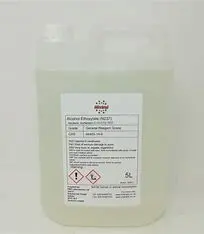
Fatty Alcohol Ethoxylate - India
Found this useful?