Covestro Opens a Leverkusen Pilot for Chemical Recycling of Vulkollan
Covestro Opens a Leverkusen Pilot for Chemical Recycling of Vulkollan
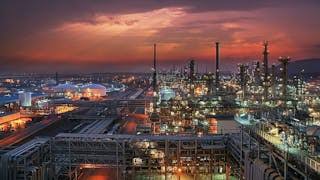
Covestro has opened a new pilot plant at its Leverkusen site in Germany to advance the chemical recycling of high-performance elastomers, with the initial focus on Vulkollan®. The double-digit million-euro project moves Covestro’s recycling technology from laboratory development into pilot-scale operation and represents an important step toward developing circular solutions for demanding elastomer applications.
The company says the new facility is one of the first pilot plants of its kind worldwide for this material class. Its objective is not simply to demonstrate that Vulkollan can be recycled, but to generate the technical data, process knowledge and operational experience needed to evaluate future industrial-scale applications.
What Is Vulkollan?
Vulkollan is a high-performance polyurethane elastomer known for its durability, elasticity, abrasion resistance and ability to perform under demanding operating conditions. These properties make it suitable for applications where long service life and mechanical reliability are critical.
The material is used in products such as forklift wheels, railway buffer elements, automotive jounce bumpers and vibration-control components. Because these applications are designed for demanding environments, recycling the material at the end of its useful life presents a greater technical challenge than recycling many conventional plastics.
The challenge is particularly relevant to the transition toward a circular economy. High-performance materials need to retain their technical properties while manufacturers increasingly look for ways to reduce dependence on fossil-based virgin raw materials.
Moving From Laboratory Research to Pilot Operation
Covestro has been developing its chemical recycling process for Vulkollan for several years. In December 2024, the company announced plans to invest in a double-digit million-euro pilot plant in Leverkusen to develop and demonstrate the technology.
The facility is now operational, allowing Covestro to move beyond laboratory experiments and conduct testing under pilot-scale conditions.
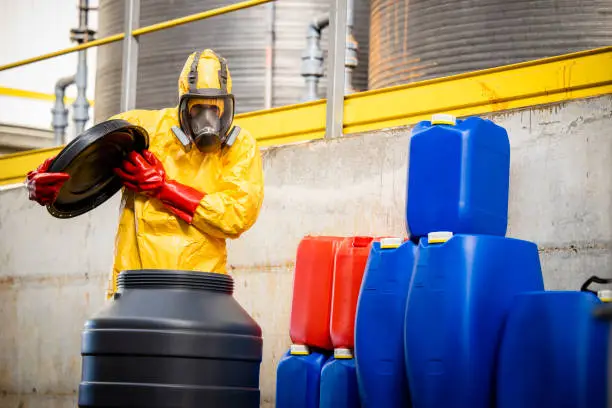
According to Covestro, its chemical recycling process breaks selected end-of-life Vulkollan material down into purified chemical building blocks. These recovered building blocks can then potentially be used again as raw materials for new polyurethane products.
This approach differs from mechanical recycling, where a material is generally processed into a secondary material without breaking it down into its original or intermediate chemical components.
More Than 90% Material Recovery Potential
One of the key figures associated with the new technology is the potential to recycle more than 90% by mass of selected end-of-life Vulkollan material.
Covestro also reports that the process can reduce the carbon footprint by up to two-thirds compared with fossil-based virgin material. The actual environmental benefit will depend on factors such as the specific waste stream, process conditions, energy sources and the eventual industrial configuration.
These figures are significant because they address two challenges simultaneously: improving material circularity and reducing the carbon intensity associated with producing new raw materials.
However, the pilot stage remains important. The reported performance relates to selected end-of-life material and does not yet mean that all Vulkollan waste can be recycled at the same recovery rate under commercial-scale conditions.
Why Chemical Recycling Matters for Elastomers
Elastomers are essential across the automotive, transportation and industrial sectors because they combine flexibility with strength and durability. Those same characteristics can make end-of-life recovery difficult.
Mechanical recycling can be limited when the original material needs to maintain demanding performance characteristics. Chemical recycling offers another pathway by using chemical processes to break polymers down into usable building blocks.
For Covestro, the goal is to recover valuable components from used elastomers and return them to the material production cycle. If successfully scaled, this could reduce the need for virgin fossil-based feedstocks while creating a more circular supply chain for high-performance polyurethane materials.
The approach also reflects a broader shift within the chemical industry: recycling is increasingly being developed not only for commodity plastics but also for technically demanding specialty materials.
Building a Circular Value Chain
Technology alone is not enough to create a circular recycling system. End-of-life products must first be collected, transported, sorted and prepared before they can become suitable recycling feedstock.
Covestro is therefore working with customers, recyclers, waste collectors, logistics providers and other partners to develop collection and return systems for end-of-life elastomers.
These partnerships could become particularly important as the technology progresses toward larger-scale operation.
A successful closed-loop system requires consistent feedstock quality. Contamination, mixed materials, additives and different product compositions can all influence the performance and economics of a chemical recycling process.
Developing reliable collection and sorting systems alongside the recycling technology will therefore be an important part of commercialization.
Leverkusen as a Circular Materials Innovation Hub
The new pilot plant also strengthens the role of Covestro’s Leverkusen site as a location for materials research and process development.
The company has been expanding its work across several chemical recycling technologies. Its 2025 annual report noted the development of an innovative chemical recycling process for Vulkollan materials and the construction of the Leverkusen pilot plant. Covestro is also developing other recycling technologies, including chemical recycling of polycarbonate and smart pyrolysis for selected polyurethane waste streams.
This combination of laboratory research, pilot-scale testing and industrial infrastructure allows Covestro to evaluate whether new recycling processes can eventually meet the technical and economic requirements of commercial production.
Potential Expansion Beyond Vulkollan
Although Vulkollan is the initial focus, Covestro sees potential applications for the technology beyond this single material.
The company says the pilot plant will also be used to explore circular solutions for selected specialty cast elastomers and thermoplastic polyurethanes (TPUs).
This could broaden the relevance of the technology across multiple polyurethane applications.
The ability to use one pilot platform to investigate several material streams may also help Covestro understand which elastomer products are most suitable for chemical recycling and what process adaptations are required for different formulations.
Implications for the Chemical Industry
Covestro’s project highlights a broader trend in the chemical industry: the transition from linear production models toward circular feedstock systems.
Traditional chemical manufacturing largely follows a linear pathway in which fossil-based raw materials are converted into products that eventually become waste. Chemical recycling attempts to introduce an additional loop by recovering molecules or chemical building blocks from end-of-life materials.
For high-performance elastomers, this is particularly relevant because the original products can have long service lives and contain significant material value.
If recycling technologies can be scaled economically, manufacturers could potentially create new supply streams from materials that would otherwise require disposal or lower-value recovery routes.
At the same time, commercial success will depend on more than technical feasibility. Recycling economics, energy consumption, feedstock availability, product quality, logistics and regulatory requirements will all influence whether these technologies can compete with conventional raw-material production.
From Pilot Plant to Industrial Scale
The Leverkusen facility should therefore be viewed as an intermediate step rather than the final stage of commercialization.
Covestro says the pilot plant will allow it to test different waste streams, refine the recycling process and generate the data required for potential future industrial scale-up.
This stage is critical because laboratory performance does not always translate directly into commercial production. Larger equipment can introduce new challenges involving heat transfer, reaction control, purification, process efficiency and continuous operation.
The pilot plant gives Covestro an opportunity to identify and address these issues before making decisions about larger-scale facilities.
A Step Toward Circular High-Performance Materials
The opening of the Leverkusen pilot plant represents a significant development in Covestro’s efforts to create circular solutions for high-performance elastomers.
By targeting Vulkollan, the company is addressing a material where durability and performance are essential and where end-of-life recycling can be technically challenging. The reported ability to recycle more than 90% of selected material by mass and potentially reduce its carbon footprint by up to two-thirds compared with fossil-based virgin material demonstrates the potential of the approach.
The next challenge will be translating pilot-scale results into economically viable industrial processes and establishing the collection infrastructure required to supply consistent end-of-life feedstocks.
If those challenges can be addressed, chemical recycling could become an important pathway for keeping high-performance polyurethane materials in circulation for longer and reducing reliance on fossil-based virgin resources.
Covestro’s Leverkusen project therefore represents more than the opening of a new pilot facility. It is a practical test of how advanced chemistry, recycling infrastructure and industry partnerships can work together to move high-performance elastomers toward a more circular materials economy.
Acesulfame Potassium (E950)
Found this useful?