Cross-Border CCS: How Yara and Northern Lights Are Linking Dutch Ammonia to Norwegian CO2 Storage
Yara’s Sluiskil ammonia and fertilizer complex in the Netherlands has become the starting point for a major European carbon capture and storage chain. The project captures up to 800,000 tonnes of CO2 per year, liquefies it and sends it by ship to Northern Lights facilities in Norway for permanent geological storage.
This cross-border CCS model matters because the location of an industrial emitter does not always match the location of suitable geological storage. By connecting Dutch ammonia production with Norwegian offshore storage, Yara and Northern Lights are showing how capture, shipping and permanent storage can operate as one commercial value chain.
Why Cross-Border CCS Matters for Ammonia Production
Ammonia production can generate significant volumes of concentrated CO2, particularly where natural gas based processes such as steam methane reforming supply hydrogen for ammonia synthesis. This makes ammonia facilities strong candidates for carbon capture because the sector already has experience with capturing, handling and using CO2.
For chemical producers, CCS can therefore provide a route to lower the carbon intensity of existing production while maintaining established plants and supply chains. It also creates an opportunity to offer lower-carbon ammonia and fertilizer products to customers that are increasingly evaluating emissions alongside price, quality and reliability.
Yara’s Sluiskil facility demonstrates this approach at commercial scale. The project was officially inaugurated in September 2026 and establishes what Yara describes as the world’s first complete cross-border industrial CO2 capture, transport and permanent storage value chain.
How the Yara and Northern Lights CCS Chain Works
The process connects several stages across two countries rather than treating carbon capture as an isolated plant upgrade.
Capture at Sluiskil: CO2 from ammonia production is captured at Yara’s Dutch facility and processed for transport.
Liquefaction: The captured gas is liquefied so it can be handled efficiently for maritime transport.
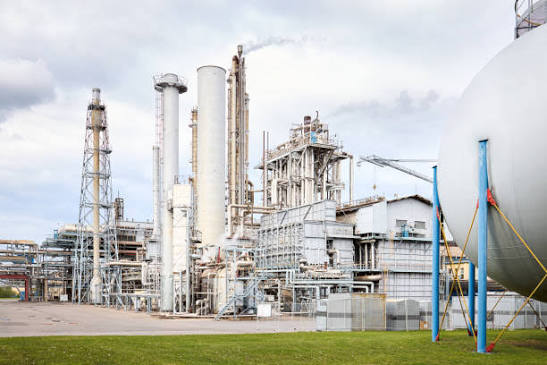
Temporary storage: Yara stores the liquefied CO2 in tanks at the Sluiskil site before shipment.
Marine transport: Northern Lights vessels move the liquefied CO2 from the Netherlands to its receiving terminal at Øygarden on the Norwegian west coast.
Permanent storage: The CO2 moves through an offshore pipeline and enters a geological storage reservoir approximately 2,600 metres beneath the seabed.
Yara plans to capture up to 800,000 tonnes annually, while the company has expanded its liquefaction capacity to support the handling of 12 million tonnes of CO2 over 15 years. Northern Lights is responsible for the transport and permanent storage portion of the chain.
Regulatory Cooperation Opens the Carbon Transport Route
The physical infrastructure represents only one part of the project. Cross-border CCS also requires governments and regulators to coordinate how captured CO2 moves between jurisdictions and how permanent storage is recognized.
Yara’s Sluiskil project involved cooperation between the Netherlands and Norway to establish a framework for moving CO2 across national borders. Yara’s project documentation describes this regulatory work as a key breakthrough because the framework treats CO2 as a transportable resource rather than simply as waste.
This distinction has major implications for industrial buyers and producers. A company considering CCS needs confidence that captured CO2 can legally move from its plant to a storage location in another country without regulatory gaps disrupting the supply chain.
The Sluiskil model could help establish a blueprint for other European industrial sites that lack nearby geological storage. It also shows why future CCS projects will require cooperation among emitters, shipping operators, storage developers and national authorities.
What the Project Means for Chemical Supply Chains
For chemical traders and procurement teams, the project signals a broader shift in how carbon intensity may become part of product sourcing decisions.
Lower-carbon ammonia could become increasingly relevant in sectors such as:
Fertilizers: Producers can use CCS to reduce emissions associated with conventional ammonia production while retaining established manufacturing infrastructure.
Shipping fuels: Ammonia is being evaluated as a lower-carbon marine fuel, increasing interest in ammonia with reduced lifecycle emissions.
Industrial feedstocks: Chemical manufacturers can consider lower-carbon ammonia as part of efforts to reduce emissions across their raw material supply chains.
Energy applications: Low-carbon ammonia may support emerging energy and power applications where emissions performance influences purchasing decisions.
Yara states that the Sluiskil CCS project will support lower-carbon ammonia for energy, shipping and industrial applications alongside its fertilizer portfolio.
For buyers, this means the definition of a competitive chemical product may gradually expand beyond specifications, origin, availability and price. Carbon intensity, traceability and the credibility of emissions reduction could become additional procurement considerations.
CO2 Shipping Creates a New Industrial Logistics Market
The project also highlights the emergence of a dedicated logistics market for captured CO2. Unlike conventional pipeline-only CCS models, shipping allows emitters located far from storage sites to connect with offshore geological reservoirs.
Northern Lights has built its business model around CO2 transport and storage as a service. Liquefied CO2 arrives at its Norwegian receiving terminal before moving through a pipeline to permanent storage offshore.
This approach can make CCS more flexible because industrial emitters do not necessarily need to build their own long-distance pipeline to a storage reservoir. Instead, they can connect their capture facilities to a shared transport and storage network.
For procurement teams, that creates a new category of infrastructure dependency. Reliable shipping capacity, storage availability, loading infrastructure and receiving-terminal capacity can all influence the practicality and economics of future CCS contracts.
Capacity Expansion Could Broaden the CCS Market
The Yara project is part of a wider expansion of Northern Lights infrastructure. Northern Lights initially developed transport and storage capacity of 1.5 million tonnes per year and is expanding toward a minimum capacity of 5 million tonnes annually.
The expansion reflects growing interest from European emitters. Northern Lights has commercial agreements with companies including Yara in the Netherlands, Ørsted in Denmark and Stockholm Exergi in Sweden.
This scaling could be important for chemical manufacturers because CCS economics improve when transport and storage infrastructure can serve multiple industrial customers. Shared infrastructure can help distribute capital requirements across a larger network rather than requiring every emitter to develop a standalone storage solution.
The emergence of larger CO2 transport fleets also gives the market greater logistical flexibility. Northern Lights has stated that larger CO2 vessels are planned as part of its expansion from 2028 onward.
Procurement Risks to Watch in Cross-Border CCS
Although CCS can create a new decarbonization route, chemical companies still need to evaluate the reliability of the complete chain rather than focusing only on capture equipment.
Key procurement considerations include:
Capture reliability: The capture system must consistently deliver CO2 at the required quality and volume for downstream transport.
Storage capacity: Long-term access to suitable geological storage remains essential because captured volumes require dependable permanent disposal.
Transport availability: Ships, loading systems and receiving terminals must operate as an integrated logistics network.
Regulatory continuity: Cross-border transport requires stable rules between the countries involved.
Contract structure: Emitters need clear commercial terms covering transport, storage, volumes, service levels and responsibilities across the chain.
Emissions accounting: Buyers of lower-carbon chemicals need credible information showing how captured and stored CO2 affects the product’s overall emissions profile.
These factors mean CCS procurement is different from buying a conventional chemical input. The buyer is effectively assessing an interconnected infrastructure service as well as an emissions reduction pathway.
The Wider Signal for European Chemical Industry
The Sluiskil project sends a strong signal to European chemical producers operating assets that are difficult to electrify or replace quickly. CCS can provide a way to reduce emissions from existing production while companies develop longer-term changes to energy sources, process technology and feedstocks.
It also strengthens the case for building regional carbon management networks. Industrial clusters can potentially share CO2 transport systems, storage services and supporting infrastructure, creating economies of scale that individual facilities may struggle to achieve alone.
The commercial agreement between Yara and Northern Lights was signed in 2023, with the companies targeting the capture and storage of approximately 800,000 tonnes of CO2 annually. The project has now moved into industrial operation, turning that commercial framework into a functioning cross-border value chain.
What Buyers Should Do Now
Chemical procurement teams should begin treating carbon intensity as a potential sourcing variable alongside traditional commercial criteria. This is especially relevant for buyers of ammonia, fertilizers and chemical intermediates where production emissions can represent a significant part of the product footprint.
The Yara and Northern Lights model also demonstrates why future sourcing strategies may depend on infrastructure beyond the producer’s factory gate. Buyers evaluating lower-carbon chemicals should examine the capture technology, transport arrangement, storage destination and emissions accounting behind any carbon-reduced product claim.
For chemical traders, the development creates another opportunity to connect producers with buyers seeking differentiated products. As cross-border CO2 networks expand, low-carbon ammonia and other lower-emission chemicals could develop into increasingly important categories within international chemical trade.
The broader lesson is that industrial decarbonization is becoming a supply-chain issue rather than a standalone environmental project. Cross-border CCS gives European producers a way to connect industrial emissions with offshore storage while creating a commercial model that other hard-to-abate sectors can potentially use.
Ammonia Anhydrous
Found this useful?