CSRD First Crisis Test: Reporting 2026 Chemical Sustainability Performance Under Disruption
The 2026 reporting cycle represents a historic milestone for the global chemical industry. Companies must now publish Corporate Sustainability Reporting Directive (CSRD) compliant sustainability statements covering a period of severe operational disruption. The 135-day Hormuz crisis fundamentally altered supply chains and emissions profiles across the entire sector. This unprecedented event serves as the first true stress test for European sustainability frameworks. Procurement managers and sustainability directors face critical interpretation questions regarding how to present this complex data. Regulators expect absolute transparency rather than convenient omissions. Navigating this intricate landscape requires a highly strategic approach to data collection and narrative framing. Companies must treat the disruption as standard business context rather than a reporting exception. Failing to do so invites severe regulatory penalties and audit qualifications.
Integrated Reporting Versus Crisis Exception Reporting
Early guidance from the European Financial Reporting Advisory Group (EFRAG) provides clear direction on this reporting dilemma. CSRD mandates integrated reporting rather than isolated crisis exception reporting. Companies cannot simply separate crisis period performance from normal operations to hide negative variances. The regulatory framework requires a holistic view of the entire fiscal year.
However, integrated reporting does not mean hiding the disruption. Companies must provide enhanced disclosure detailing exactly how the disruption affected each material sustainability matter. This approach ensures stakeholders understand the full operational context. It prevents the masking of critical supply chain vulnerabilities behind aggregated annual averages.
Integrated reporting requires companies to show the full year trajectory including the disruption period.
Enhanced disclosures must explicitly link the logistical crisis to specific sustainability metric deviations.
Management commentary must explain the strategic decisions made during the disruption period.
Addressing Mid-Year Double Materiality Reassessment
The Hormuz crisis fundamentally shifted stakeholder priorities during the active reporting year. Supply chain resilience and crisis period emissions accounting suddenly carried immense financial and impact materiality. Companies must explicitly document this mid-year double materiality reassessment in their 2026 statements.
Ignoring this shift violates the current year relevance standard of CSRD. Sustainability teams should detail the specific stakeholder engagement activities conducted after the disruption began. This documentation proves that the company actively monitors and responds to evolving risk landscapes. It transforms a potential compliance weakness into a powerful demonstration of robust corporate governance.
Investors and downstream buyers now prioritize operational continuity over theoretical sustainability goals. Companies must reflect this reality in their updated materiality matrices. Failing to update these matrices will result in immediate auditor pushback during the assurance phase.
Force Majeure and the Explanation of Failure Requirement
Many chemical companies hope that force majeure declarations will excuse the non-achievement of 2026 sustainability targets. This assumption is dangerously incorrect under current regulatory interpretations. Force majeure does not automatically trigger an exemption from CSRD explanation of failure requirements.
Regulators view severe supply chain disruptions as a definitive test of corporate resilience rather than a valid excuse for inaction. Companies must explain exactly why targets were missed and what specific mitigation strategies were deployed. Blaming external factors without detailing internal management responses will invite severe auditor scrutiny. The burden of proof rests entirely on the reporting entity.
Auditors will specifically look for evidence of proactive crisis management. Companies that merely accepted the disruption without attempting mitigation will face harsh criticism. The explanation of failure must be comprehensive, data-driven and forward-looking.
Preparing for 2026 CSRD Assurance Reviews
External assurance providers will rigorously test the integrity of 2026 sustainability disclosures. Chemical companies must prepare comprehensive documentation to withstand this intense scrutiny. Auditors will look for a clear logical chain connecting the disruption to the reported outcomes.

Companies must structure their assurance preparation around four critical documentation pillars. First, they must detail the specific crisis impact on each material topic. Second, they must outline the precise management actions taken to mitigate these impacts. Third, they must quantify the exact deviation from the original target trajectory. Finally, they must present a revised pathway to the original commitment endpoint.
This structured approach satisfies the rigorous demands of external auditors. It demonstrates that the company maintains control over its sustainability data even during extreme volatility. Preparation must begin now to ensure all supporting evidence is readily available.
Documenting the Revised Pathway to Commitment Endpoints
Missing a 2026 target does not invalidate the long-term 2030 commitment. However, companies must mathematically demonstrate how they will recover the lost ground. This requires a credible and fully funded revised pathway.
Sustainability teams should collaborate closely with finance and operations to model this recovery. The revised pathway must account for the new baseline established by the crisis. It should also include specific capital expenditure plans for supply chain diversification. Auditors will reject vague promises in favor of concrete operational milestones.
The recovery plan must also detail specific operational changes. This includes qualifying alternative low-carbon feedstocks and investing in regional logistics hubs. These tangible actions prove to auditors that the company is actively correcting its trajectory. This forward-looking perspective is essential for maintaining investor confidence.
Strategic Implications for Chemical Procurement Teams
Procurement professionals play a vital role in this complex reporting ecosystem. The data they collect directly feeds into the Scope 3 emissions and supply chain resilience disclosures. Buyers must ensure their suppliers provide accurate and timely crisis period data.
Relying on estimated or missing data creates significant assurance risks for the entire organization. Procurement teams should update their vendor questionnaires to include specific crisis response metrics. This proactive data gathering simplifies the year-end reporting process immensely. It also strengthens the overall credibility of the corporate sustainability statement.
Contractual agreements must now include explicit clauses regarding sustainability data delivery during force majeure events. Buyers cannot afford to lose visibility into their carbon footprint simply because a supplier claims operational hardship. Establishing these requirements now prevents data black holes during future supply chain shocks. Suppliers who cannot provide this data represent a compliance risk. Buyers must factor this reporting capability into their long-term sourcing strategies.
What Buyers Should Do Now
Chemical companies must act immediately to align their reporting frameworks with EFRAG expectations. Sustainability and procurement leaders should conduct a comprehensive gap analysis of their current 2026 data collection processes. They must identify any missing crisis impact metrics and initiate corrective data gathering.
Treating the Hormuz disruption as a standard business context is the only viable compliance strategy. Companies that embrace this transparency will build lasting trust with investors and regulators. Those that attempt to obscure the data will face costly audit qualifications and severe reputational damage.
Ready to source Caustic Soda Pearls - China from verified global suppliers? Explore competitive offers on our platform today.
Sources
https://www.efrag.org/sites/default/files/2026/csrd-crisis-reporting-guidance.pdf
https://www.chemicalwatch.com/regulatory/2026/double-materiality-reassessment-hormuz-disruption
https://www.kpmg.com/chemicals/insights/2026/csrd-assurance-preparation-crisis-period
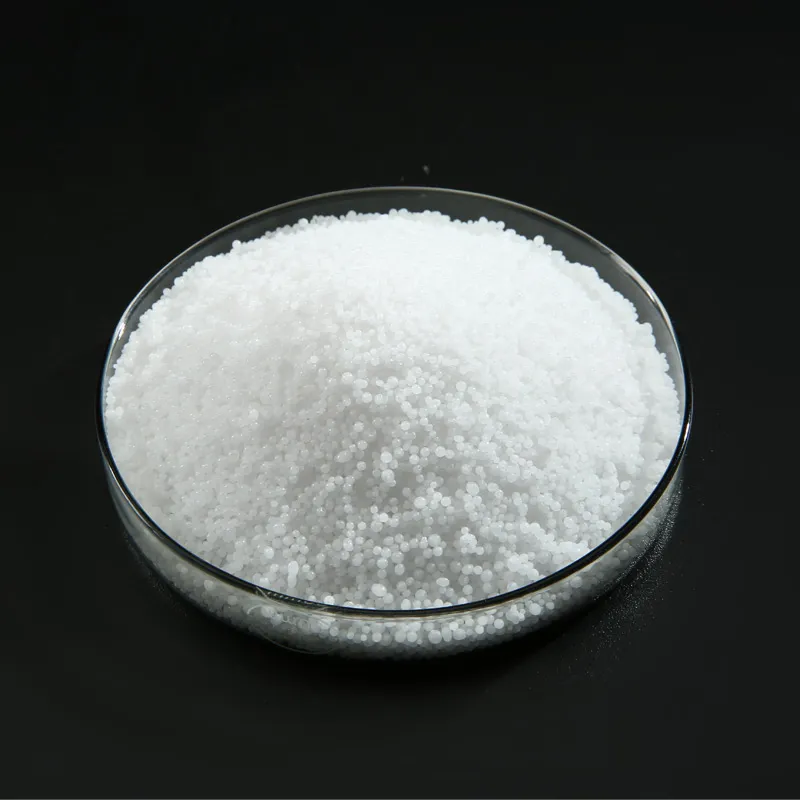
Caustic Soda Pearls - China
Found this useful?