Danish eSAF Project Secures 40,000 t/y Long-Term Offtake From Uniper
A 40,000-tonne-per-year eSAF offtake agreement has given Denmark's Project Endor a major commercial anchor as Europe prepares for greater demand for lower-emission aviation fuels. Uniper and Arcadia eFuels have agreed a long-term purchase arrangement covering more than a decade, with deliveries expected to begin in the early 2030s once the facility enters commercial operation.
For chemical traders, energy companies and procurement teams, the agreement signals more than a future fuel purchase. It shows how long-term offtake contracts can connect renewable power, hydrogen, carbon feedstocks, fuel production and downstream aviation demand into a single commercial supply chain.
Project Endor Puts eSAF Supply on a Long-Term Commercial Path
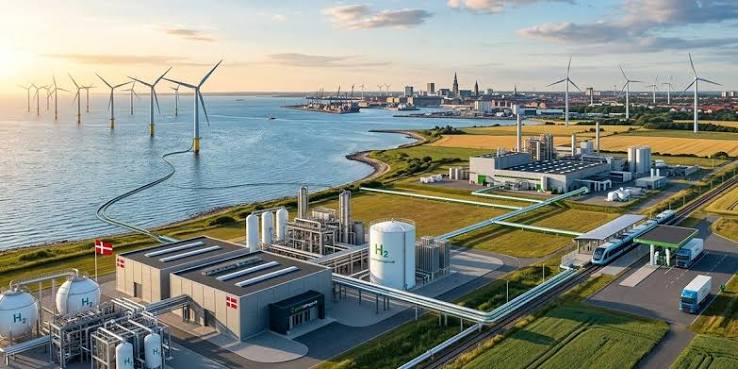
Project Endor, developed by Arcadia eFuels in Vordingborg, Denmark, is designed to produce synthetic sustainable aviation fuel using a Power-to-Liquid route. The project combines renewable electricity with green hydrogen and captured carbon dioxide to manufacture fuel suitable for the aviation market.
The agreement with Uniper provides a committed buyer for 40,000 tonnes of eSAF every year for more than ten years. That creates greater visibility around future demand and gives the project a stronger commercial foundation as it moves toward construction, financing and eventual production.
The timing also matters. European aviation faces increasing pressure to reduce emissions while maintaining conventional flight capacity, making scalable low-carbon fuel supply a strategic priority.
Why the 40,000 t/y eSAF Offtake Matters to Buyers
Long-term offtake agreements can play an important role in emerging chemical and energy markets because they provide a clearer connection between future production and customer demand. For Project Endor, the Uniper contract establishes a substantial volume commitment before commercial production begins.
The agreement can influence the broader eSAF market in several ways:
Greater supply visibility: A committed annual volume gives downstream buyers a clearer indication of future European eSAF availability.
Project financing support: Long-term purchase commitments can strengthen the commercial foundation needed for major capital-intensive facilities.
Market confidence: A substantial agreement with an established energy company can encourage other participants to assess eSAF opportunities.
Supply-chain development: Production requires coordination across renewable electricity, hydrogen, carbon dioxide, processing equipment and fuel distribution.
For procurement managers, this development highlights the importance of looking beyond today's spot market. Future aviation fuel sourcing will increasingly depend on production capacity that has been contracted years before physical deliveries begin.
How Project Endor Connects Renewable Energy With Aviation Fuel
eSAF differs from conventional jet fuel because its production pathway begins with renewable energy and alternative carbon inputs rather than crude oil refining alone. Project Endor is planned around green hydrogen production, captured CO2 and synthetic fuel processing.
Arcadia eFuels completed Front-End Engineering Design for the Vordingborg project in 2024. The planned facility uses electrolysis, synthesis and refining technologies to produce eSAF at industrial scale.
This structure creates a supply chain in which electricity becomes a central industrial input. Renewable power availability therefore becomes just as important to future eSAF producers as conventional feedstock access is to traditional petrochemical manufacturers.
For chemical traders, that changes how future supply opportunities may need to be evaluated. Instead of focusing only on physical feedstock availability, buyers will also need to consider renewable electricity sourcing, hydrogen production capacity, carbon sourcing and the infrastructure connecting these inputs.
What the Uniper Agreement Means for European eSAF Supply
Europe's aviation sector needs additional sustainable fuel production capacity, and projects such as Endor are designed to address part of that future requirement. The Uniper agreement gives Project Endor a defined route into the market instead of relying entirely on future spot demand.
The 40,000-tonne annual commitment also represents a meaningful industrial volume. The companies describe the arrangement as one of the largest announced eSAF offtake agreements to date, while the contracted quantity corresponds to the fuel requirements of approximately 1,000 Boeing 787-9 flights between Düsseldorf and Abu Dhabi each year.
That scale matters because aviation fuel procurement operates on large volumes and strict specifications. Producers need confidence that customers will accept the fuel, while buyers need confidence that new facilities can deliver consistent volumes when contracted supply becomes available.
The agreement therefore illustrates an important commercial principle for emerging chemical markets: future supply capacity becomes more investable when credible buyers commit to long-term purchasing.
Procurement Challenges Behind Future eSAF Availability
The announcement does not remove the operational challenges associated with building a new eSAF supply chain. Project development still depends on the facility reaching commercial operation and satisfying the agreed conditions attached to the offtake arrangement.
For procurement teams evaluating future synthetic aviation fuel supply, several issues deserve close attention:
Production timing: Deliveries are planned for the early 2030s, so buyers need to align future fuel requirements with project commissioning schedules.
Volume commitments: Long-term contracts can provide security but may also reduce flexibility if demand changes.
Feedstock security: Renewable electricity, green hydrogen and captured CO2 must remain available at the required scale.
Specification compliance: Aviation fuels require tight quality controls and regulatory compliance throughout production and distribution.
Logistics: Storage, transportation and airport delivery infrastructure must support the movement of synthetic fuel from production sites to end users.
These considerations make eSAF different from conventional commodity procurement. Buyers will increasingly need to assess the entire production chain rather than evaluating the fuel only at the point of delivery.
eSAF Creates New Opportunities Across the Chemical Supply Chain
The growth of synthetic aviation fuel could generate demand across several industrial inputs and services. Although eSAF itself sits within the fuel sector, its production relies on technologies and materials that overlap with the wider chemical and energy industries.
Electrolysis creates demand for hydrogen production infrastructure and water treatment systems. Carbon capture and processing create additional requirements for gas handling, purification and chemical processing equipment.
Fuel synthesis also brings opportunities for technology providers, engineering contractors and industrial suppliers. As more projects progress, procurement teams may see new sourcing requirements extending beyond the finished fuel.
This creates several potential areas of interest for chemical and industrial traders:
Hydrogen-related chemicals and processing inputs.
Water treatment chemicals and purification technologies.
Carbon capture and CO2 handling systems.
Catalysts and process materials used in synthetic fuel production.
Storage and transportation infrastructure for renewable fuels.
The commercial impact could therefore extend beyond aviation fuel itself. A larger eSAF project pipeline can support an interconnected industrial ecosystem involving chemicals, energy, engineering and logistics.
Regulatory Demand Can Strengthen the eSAF Market
Regulation is another important driver behind the development of sustainable aviation fuel capacity in Europe. The European framework is creating defined demand for SAF while increasing the role of synthetic fuels within the wider aviation transition.
The Uniper and Arcadia agreement comes against this broader policy backdrop. The eSAF produced by Project Endor is designed to meet EU sustainable aviation fuel requirements, giving regulatory compatibility an important role in the project's future market position.
For buyers, regulatory alignment can influence the commercial value of a fuel. A product that meets applicable sustainability and aviation requirements can offer greater certainty for airlines, fuel suppliers and other downstream customers planning future procurement.
Chemical traders entering this market should therefore monitor both physical supply and regulatory developments. Changes in sustainability rules, certification requirements or eligible production pathways can affect purchasing strategies and contract structures.
Why Long-Term Contracts Could Shape eSAF Pricing
eSAF pricing will depend on a different cost structure from conventional aviation fuel. Renewable electricity, electrolyzers, hydrogen production, captured carbon dioxide, synthesis equipment and plant financing all contribute to the economics of synthetic fuel.
Long-term offtake contracts can help manage some of this uncertainty by connecting future production with committed demand. They may also support investment decisions because producers can demonstrate a clearer route to market before a facility begins operating.
For procurement professionals, this means future eSAF purchasing may increasingly involve structured contracts rather than short-term commodity buying. Contract duration, volume flexibility, delivery schedules and sustainability requirements could become major components of negotiations.
The Uniper agreement demonstrates how an early buyer can secure future supply while a producer gains commercial certainty. Similar structures could become more common as other eSAF projects move toward final investment decisions.
What the Project Endor Deal Signals for 2030 and Beyond
The Endor agreement points toward a European eSAF market that is moving from project announcements toward long-term commercial commitments. A decade-long purchase arrangement gives the project a defined customer relationship and supports the wider objective of scaling synthetic aviation fuel production.
For the chemical and energy trading community, the development also highlights the growing importance of cross-sector procurement. Renewable energy, hydrogen, carbon dioxide and synthetic fuel will increasingly interact within integrated industrial supply chains.
The early 2030s may therefore look significantly different from today's aviation fuel market. Buyers that require sustainable aviation fuel at scale will need to secure relationships with producers well before new facilities reach full commercial output.
The Bottom Line for eSAF Procurement Teams
The agreement between Uniper and Arcadia eFuels gives Project Endor a significant long-term demand commitment for 40,000 tonnes of eSAF per year. With deliveries expected from the early 2030s, the deal demonstrates how advance purchasing can help establish the commercial foundations for new synthetic fuel capacity.
For procurement teams, the key lesson is that future eSAF supply will depend on early planning, reliable production partners and clear contractual structures. Companies evaluating this market should monitor project progress, production capacity, regulatory requirements and feedstock availability as they develop long-term sourcing strategies.

Methanol
Found this useful?