Dry Rhine Pattern Signals Structural Chemical Supply Chain Risk
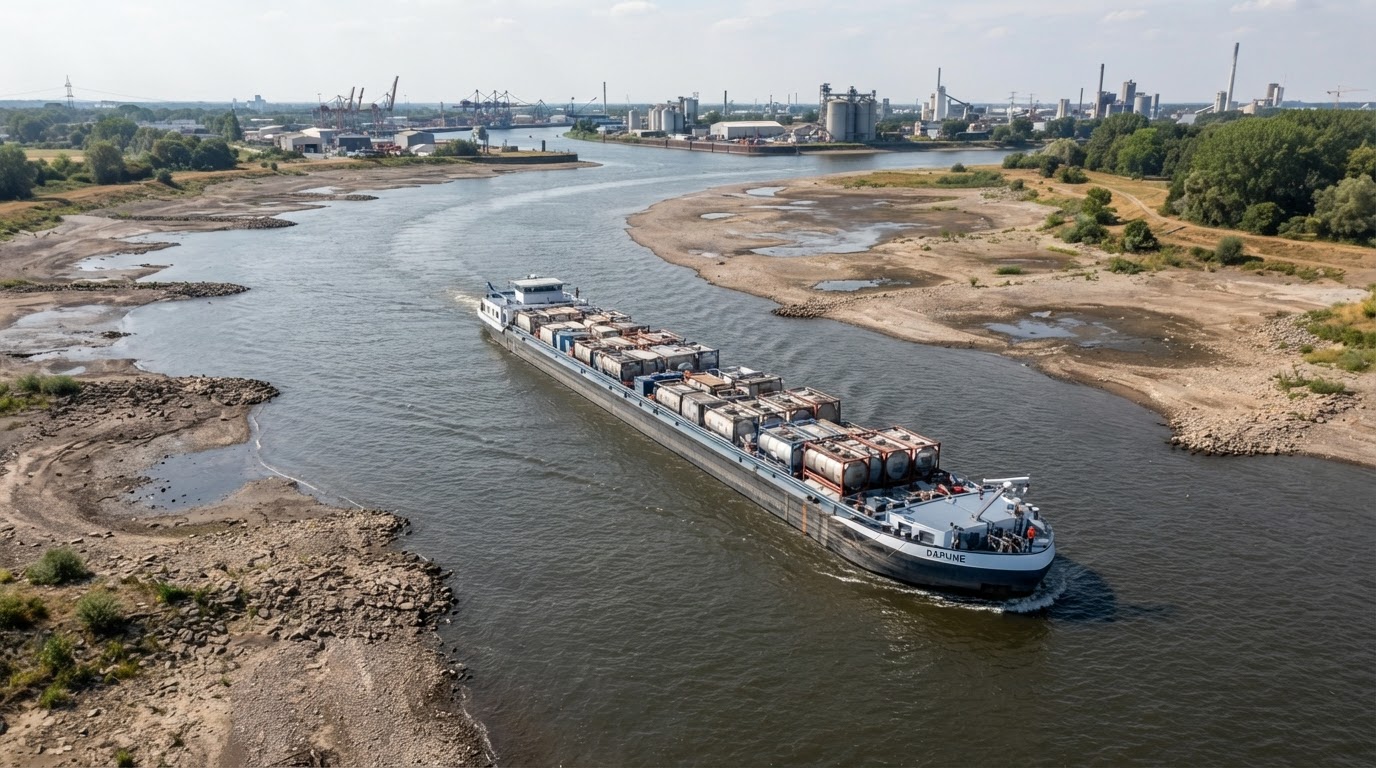
A recurring dry Rhine pattern is forcing chemical buyers to rethink a risk that was once easier to classify as seasonal disruption. The Rhine remains an important transport corridor for European industry, so repeated periods of restricted navigation can affect chemical movements, production planning and delivery reliability.
The latest pattern matters because disruption has affected multiple chemical makers across the summer. For procurement teams, the issue is no longer simply whether low water will delay one shipment, but whether recurring river constraints should become a permanent variable in sourcing and inventory decisions.
Why Rhine Logistics Risk Is Becoming a Structural Issue
Chemical supply chains often depend on predictable movement between production sites, storage terminals, distribution hubs and industrial customers. When river conditions deteriorate repeatedly, that predictability weakens even when individual disruption periods appear manageable.
The recurrence of Rhine-related problems across the summer changes the planning equation. Buyers cannot treat each interruption as an isolated event if similar constraints continue to emerge within the same operating season.
A structural risk does not necessarily mean continuous disruption. It means procurement teams need to account for the possibility of repeated constraints when they build purchasing schedules, safety stocks and transportation plans.
What Repeated Dry Conditions Mean for Chemical Makers
Chemical manufacturers operating around the Rhine face a particularly important planning challenge because river transport can connect large industrial production and consumption areas. When navigation becomes more difficult, the impact can extend beyond the cargo directly affected by low water.
Several consequences can emerge across the supply chain:
Delivery schedules can become less predictable. Cargo that normally moves according to established river schedules may require alternative arrangements or longer lead times.
Inventory requirements can increase. Buyers may need additional stock to protect production against uncertain replenishment windows.
Alternative transport can become more important. Road and rail capacity may gain strategic value when river movements face restrictions.
Regional supply balances can change. Delays in one part of the network can affect availability for downstream industrial users.
The important point for procurement teams is that these effects can compound. A short disruption may appear manageable in isolation, but repeated events can create a broader planning burden.
How the Risk Reaches Chemical Procurement Teams
The Rhine is not simply a transportation route. For chemical buyers, it can form part of the connection between suppliers, terminals, warehouses and end users.
When river conditions deteriorate, procurement teams may have to manage a wider set of variables at the same time. Delivery timing, transportation mode, storage capacity and supplier flexibility can all become more important.
This makes logistics resilience a commercial consideration rather than a purely operational issue. A supplier offering an attractive price may become less competitive if repeated river restrictions make deliveries difficult to predict.

Procurement Strategies for a More Uncertain Rhine
Chemical buyers can respond to structural logistics risk by changing how they evaluate supply rather than relying only on traditional price comparisons.
A more resilient procurement approach can include:
Reviewing supplier geography. Buyers should understand how much of a supplier's delivery route depends on Rhine transport and which alternative routes exist.
Assessing lead-time flexibility. A supplier that can adjust shipping schedules or transportation modes may provide greater value during periods of restricted navigation.
Building practical inventory buffers. Additional stock can protect production when replenishment becomes less predictable, particularly for critical chemicals with limited substitution options.
Maintaining multiple sourcing options. Alternative suppliers can reduce dependence on a single production or transportation corridor.
Monitoring logistics conditions earlier. Procurement teams that track river conditions alongside supplier and market information can identify potential problems before they become urgent purchasing issues.
These measures do not eliminate logistics exposure. They can, however, make the supply chain less dependent on perfect river conditions.
Why Chemical Buyers Should Look Beyond Spot Price
Price remains a central consideration in chemical procurement, but recurring transportation risk can change the real cost of a supply decision.
A lower quoted price may not remain attractive if the buyer faces repeated delays, emergency freight requirements or production interruptions. Procurement teams should therefore consider delivered reliability alongside the nominal chemical price.
This broader assessment can include:
Expected delivery lead time and its variability
Dependence on river transportation
Availability of road or rail alternatives
Supplier inventory position
Geographic diversification
Ability to respond to sudden logistics constraints
For traders and importers, the same principle applies. A competitive offer becomes more valuable when the seller can provide dependable delivery options during periods of transport disruption.
Rhine Exposure and the Importance of Alternative Transport
Road and rail can provide alternatives when river movements become constrained, but switching modes may introduce capacity, cost and scheduling challenges of their own.
That means chemical companies should avoid treating alternative transport as an emergency solution that can always be activated immediately. Resilience depends on knowing which alternatives are available, how quickly they can be arranged and whether they can handle the required volumes.
For procurement managers, this creates an opportunity to discuss logistics contingency plans with suppliers before disruption occurs. Asking about alternative transportation routes during normal market conditions can reveal which suppliers have genuine flexibility and which depend heavily on a single logistics pathway.
What the Pattern Means for Chemical Traders
Chemical traders operate between producers and industrial buyers, so repeated Rhine disruption can influence both sourcing and sales strategies.
Traders may need to place greater emphasis on supplier diversification and regional availability. A sourcing strategy that relies heavily on one production cluster or one transportation corridor can become more vulnerable when recurring logistics constraints affect that route.
The situation can also create opportunities for suppliers with flexible logistics networks. Buyers facing uncertainty may value dependable alternatives even when those offers carry a different freight structure.
This makes logistics capability part of the commercial proposition. Traders who can coordinate supply from multiple origins and transportation routes may be better positioned to serve customers during periods of constrained river movement.
Building Rhine Risk Into 2027 Procurement Planning
The recurrence of disruption across the summer provides a reason for buyers to incorporate Rhine exposure into forward planning rather than waiting for the next low-water period.
Procurement teams can review contracts, supplier portfolios and inventory policies with a specific focus on transportation dependence. The objective should not be to overreact to every dry period, but to determine where repeated disruption could materially affect production or customer commitments.
Forward planning can focus on three questions:
Which critical chemicals depend heavily on Rhine-linked supply routes?
Which suppliers can provide credible alternative transportation?
How much additional inventory would protect operations against repeated delays?
The answers can help companies distinguish between manageable logistics exposure and genuine supply chain vulnerability.
A New Risk Lens for European Chemical Supply Chains
The significance of the dry Rhine pattern extends beyond individual shipping delays. When the same logistics corridor creates repeated challenges for multiple chemical makers, buyers need to consider how transportation conditions interact with sourcing concentration and inventory strategy.
This does not mean river transport loses its importance. Instead, the changing risk profile makes diversification more valuable.
Chemical companies can continue using established Rhine logistics networks while developing practical alternatives. A balanced strategy can preserve transportation efficiency under normal conditions while providing options when river conditions become restrictive.
What Buyers Should Do Now
For chemical procurement teams, the most useful response is to turn Rhine exposure into a measurable sourcing consideration.
Buyers should identify critical products linked to Rhine-dependent supply routes, discuss contingency options with suppliers and assess whether current inventory levels provide enough protection against repeated delays. They should also compare suppliers on logistics flexibility rather than evaluating offers on price alone.
Chemical traders and importers can strengthen their position by maintaining relationships with suppliers from different regions and understanding the transportation options behind each offer. This approach can improve supply continuity when one corridor becomes difficult to use.
The broader lesson is clear: recurring Rhine disruption deserves a place in routine procurement planning. Treating each event as a one-off can leave buyers exposed to the same problem repeatedly, while a structural risk approach encourages better sourcing decisions, stronger inventory planning and greater transportation flexibility.
Ready to source Ammonia Anhydrous from verified global suppliers? Explore competitive offers on our platform today.
Ammonia Anhydrous
Found this useful?