German Agrochemical Intermediate Producers Face the Same Sector Contraction as Broader Chemicals
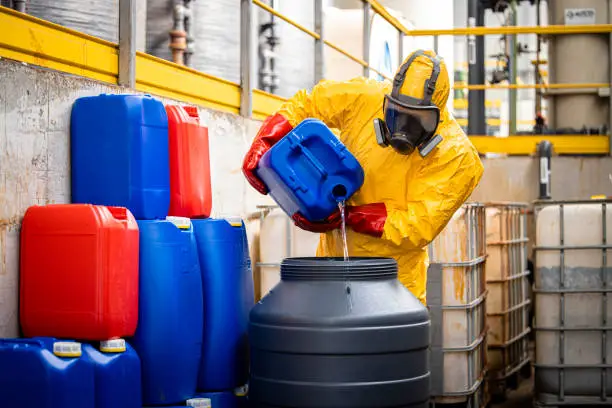
German Agrochemical Intermediate Producers Face the Same Sector Contraction as Broader Chemicals
Introduction
Germany's chemical industry is continuing to face a difficult structural environment, and the pressure is increasingly relevant to producers of agrochemical intermediates. The country's broader chemical sector is dealing with weak European demand, elevated energy and production costs, global overcapacity, and stronger competition from Asia. Germany's chemical industry association VCI expects chemical production, including pharmaceuticals, to decline by 1.5% in 2026.
For agrochemical intermediate manufacturers, these pressures matter because many production sites operate within highly integrated chemical clusters. When capacity is reduced, plants are consolidated, or investment shifts toward lower-cost regions, the impact can extend beyond one product to upstream feedstocks, utilities, logistics and downstream active-ingredient supply.
Germany's Chemical Contraction Is Becoming Structural
Germany's chemical sector has experienced several years of pressure rather than a single temporary downturn. In May 2026, the ifo Institute reported that the business climate index for Germany's chemical industry had fallen to -30.2 points, while expectations deteriorated further to -42.0 points. Companies viewed the improvement in current activity as temporary.
The industry's challenges include:
High energy and utility costs
Weak European industrial demand
Global chemical overcapacity
Increasing competition from Asia
Slower investment in European production
Higher regulatory and operating costs
Logistics vulnerabilities
BASF's 2026 reporting also shows the regional imbalance. While global chemical production increased in the first half of 2026, EU production declined by 3.6% year-on-year in the first quarter before recovering by approximately 1.5% in the second quarter.
This means that a temporary improvement in utilization should not automatically be interpreted as a reversal of the longer-term contraction.
Why Agrochemical Intermediates Are Exposed
Agrochemical intermediates occupy an important position between basic chemicals and finished active ingredients. They can include aromatic compounds, halogenated intermediates, solvents, acids, amines and other building blocks used to manufacture crop-protection products.
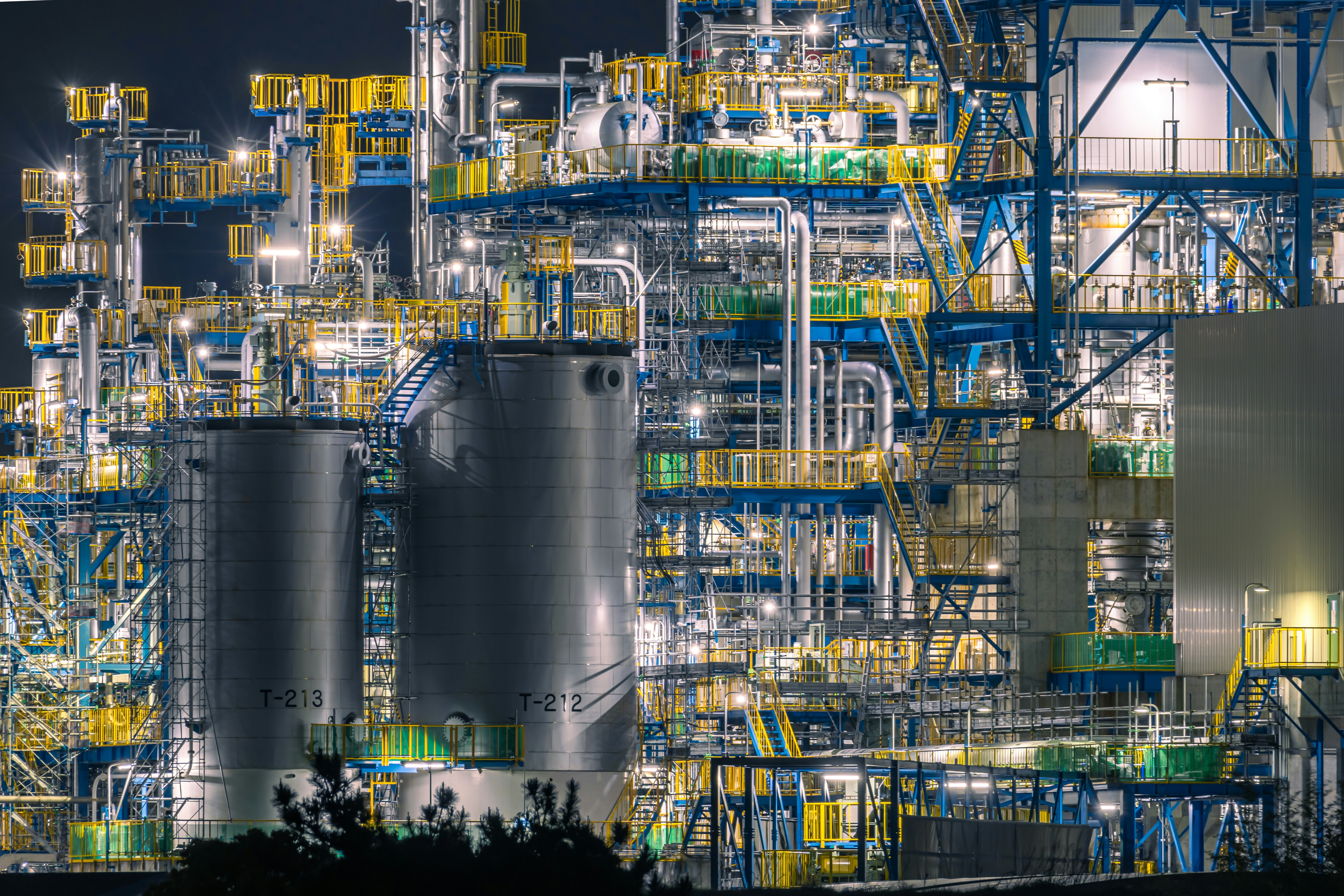
Their production is particularly exposed to Germany's chemical-sector challenges because many facilities depend on integrated infrastructure. Large chemical complexes can share steam, electricity, feedstocks, pipelines, wastewater treatment and logistics systems.
The BASF SE Ludwigshafen complex illustrates this model. The site has historically operated as a highly interconnected production network, allowing multiple products to be manufactured from a relatively small number of basic raw materials.
When utilization falls or individual units are closed, the consequences can therefore extend across the production chain. A reduction in one intermediate can affect downstream formulation or active-ingredient manufacturing even when the downstream facility itself remains operational.
BASF Shows Both Contraction and Selective Investment
The situation is not simply one of shutting down German production. BASF continues to invest selectively in strategically important businesses.
For example, BASF announced modernization of its Intermediates production in Germany that is expected to increase production capacity for chloroformates and acid chlorides by approximately 30%. The company describes the investment as supporting long-term supply security and growing global demand.
This illustrates an important distinction for agrochemical procurement: German chemical capacity is not disappearing uniformly.
Instead, producers are increasingly likely to:
Retain strategically competitive products
Modernize high-value facilities
Reduce structurally uncompetitive capacity
Outsource selected products
Shift investment toward Asia and other growth regions
Improve productivity at remaining European sites
For buyers, this creates a more complicated sourcing environment than a simple "Germany is reducing capacity" narrative.
Asia's Growing Role Changes the Sourcing Equation
One of the strongest structural trends is the geographic shift of chemical investment toward Asia.
BASF has indicated that Asia Pacific, particularly China, is making a major contribution to global chemical-market growth and expects more than 80% of chemical-industry growth through 2035 to be concentrated in the region.
For agrochemical intermediates, this could accelerate the development of sourcing networks connecting European buyers with manufacturers in China, India and other Asian markets.
However, replacing German supply is not simply a matter of finding a lower-priced supplier. Buyers must also evaluate:
Product quality
Manufacturing consistency
Regulatory documentation
Batch-to-batch performance
Production capacity
Lead times
Export restrictions
Shipping routes
Minimum order quantities
Intellectual-property considerations
Supplier financial stability
The result could be a more geographically diversified intermediate-sourcing model rather than complete replacement of German suppliers.
Logistics Add Another Layer of Risk
The contraction of German chemical production is occurring alongside logistics challenges.
The Rhine remains a critical transportation corridor for Germany's chemical industry. In July 2026, extremely low water levels disrupted inland shipping and created additional pressure on chemical manufacturers along the river. BASF warned that continued deterioration could cause supply disruptions and shortages of individual raw materials.
For agrochemical intermediate buyers, this demonstrates that supply risk can arise from several layers simultaneously:
Plant capacity → feedstock availability → utilities → inland logistics → export logistics → downstream production
Even when a German producer remains operational, transportation constraints can increase delivered costs or extend lead times.
Procurement Implications for Agrochemical Buyers
The changing German chemical landscape makes traditional supplier qualification insufficient.
Buyers should increasingly monitor individual product-level capacity, rather than assuming that a company's overall production position represents the availability of every intermediate.
A procurement dashboard should track:
Procurement Indicator | Why It Matters |
|---|---|
Production site | Identifies geographic concentration |
Product capacity | Shows available supply depth |
Plant utilization | Indicates potential shortage risk |
Feedstock dependence | Reveals upstream vulnerability |
Energy exposure | Helps estimate cost pressure |
Logistics routes | Identifies Rhine, port and road dependencies |
Alternative suppliers | Measures substitution potential |
Lead time | Supports inventory planning |
MOQ | Affects sourcing flexibility |
Regulatory status | Determines market usability |
Price trend | Identifies cost escalation |
Capacity announcements | Signals future supply changes |
This approach allows buyers to distinguish between temporary market tightness and structural capacity withdrawal.
Opportunity for Chemical Marketplaces
The contraction also creates an opportunity for chemical marketplaces and procurement-intelligence platforms.
Instead of simply listing suppliers, a marketplace can connect capacity, pricing and risk information around each intermediate. Buyers could see which manufacturers are operating, which facilities are expanding or reducing capacity, and where alternative production exists.
A useful marketplace model could connect:
German producer → European alternative → Chinese supplier → Indian supplier → logistics provider → buyer
The platform could then provide supplier comparisons based on:
Delivered price
Production location
Available capacity
Lead time
Quality certifications
Regulatory documentation
Historical reliability
Logistics risk
Feedstock exposure
Alternative-product availability
This would be particularly valuable for agrochemical manufacturers that need continuity of supply even when individual European plants become less competitive.
Outlook
Germany is unlikely to lose its importance in specialty and high-value chemicals immediately. Its technical expertise, integrated production systems, engineering capabilities and established customer relationships remain significant advantages.
However, the direction of travel is becoming clearer. The German chemical industry is facing a combination of weak demand, cost pressure and increasing Asian competition, while companies selectively protect competitive assets and reduce structurally disadvantaged capacity. The recent improvement in BASF's Ludwigshafen utilization demonstrates that temporary supply disruptions can improve European operating conditions, but BASF itself has characterized the underlying challenges as longer-term.
For agrochemical intermediate buyers, the strategic response should therefore be diversification rather than immediate replacement.
Conclusion
German agrochemical intermediate producers are increasingly experiencing the same structural forces affecting the broader German chemical industry. Energy costs, weak European demand, global overcapacity, Asian competition and logistics constraints are changing the economics of domestic production.
The key implication for agrochemical procurement is that supply risk should be evaluated at the individual intermediate, production site and logistics-route level.
Some German capacity will remain strategically important, while other products may increasingly be sourced from Asia or other lower-cost regions. For buyers, maintaining multiple qualified sources and continuously monitoring capacity changes will become more important than relying on historical supplier relationships.
This creates a growing role for chemical market-intelligence platforms that can connect capacity, supplier quality, pricing, logistics and geopolitical risk into a single procurement view.
Aspartame (E951)
Found this useful?