Germany's Postwar Chemical Logistics Infrastructure Still Underpins Modern Production
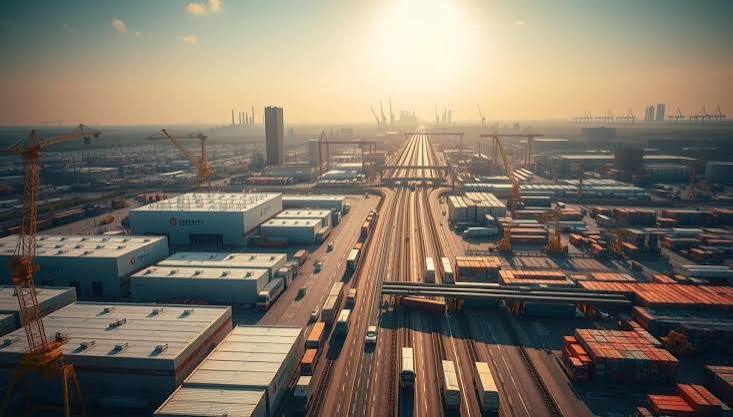
The chemical infrastructure developed around Ludwigshafen after BASF's 1952 founding continues to play a major role in Germany's industrial supply network. Pipelines, transport links, storage facilities and interconnected production assets created around the site have developed into infrastructure that supports far more than individual manufacturing units.
That legacy matters as German chemical production enters a period of structural adjustment. Even when individual plants reduce output or operating capacity, the surrounding logistics network can retain strategic value for moving raw materials, intermediates and finished chemicals.
For procurement managers and chemical traders, the Ludwigshafen model demonstrates why industrial logistics infrastructure can remain commercially important even when production footprints change.
How Ludwigshafen Became a Chemical Logistics Hub
Ludwigshafen developed as a highly integrated chemical production location where manufacturing assets could share utilities, feedstocks, storage and transportation infrastructure. This integration helped companies coordinate the movement of materials between different stages of industrial production.
Over time, the surrounding network became an important connection between chemical production and broader German logistics systems.
Its significance comes from the combination of multiple infrastructure functions:
Pipelines: Interconnect production assets and provide efficient movement of chemical feedstocks and intermediates.
Rail infrastructure: Supports movement of materials that cannot rely exclusively on inland waterways or road freight.
Storage facilities: Provide buffering capacity between production and downstream demand.
Road connections: Support flexible distribution to customers and industrial sites.
River access: Connects inland chemical production with wider European logistics networks.
This integrated architecture can retain value even when individual production units change.
Why Infrastructure Can Outlast Production Cycles
Chemical production capacity can expand and contract according to energy costs, demand, competitiveness and corporate strategy. Infrastructure tends to evolve more slowly because major logistics systems require substantial capital and long development periods.
That creates an important distinction for industrial procurement. A plant closure does not necessarily mean that the surrounding chemical logistics ecosystem immediately loses its strategic relevance.
Infrastructure can continue supporting:
Remaining production facilities.
Imported chemical feedstocks.
Third-party manufacturing activity.
Storage and distribution operations.
Regional industrial customers.
Alternative sourcing arrangements.
This creates a form of industrial resilience embedded in physical infrastructure.
BASF's Legacy and the Changing Production Footprint
The infrastructure around Ludwigshafen reflects decades of chemical industry development. BASF's presence helped establish an integrated industrial ecosystem where production, utilities and logistics could operate in close proximity.
The current challenge is that infrastructure designed around large-scale production must continue generating value even as some parts of the production system contract.
That creates a strategic question for the broader German chemical sector. Can existing logistics assets support a more diversified industrial model if traditional production volumes decline?
The answer depends on how effectively companies use existing connections for new supply patterns, imported materials and changing production requirements.
Integrated Logistics Reduces Chemical Supply Chain Friction
Chemical production depends on reliable movement between multiple stages. A feedstock may arrive at an industrial site, move through several processing stages and then leave as an intermediate or finished product.
Integrated infrastructure reduces the physical distance and handling requirements between these stages. That can improve efficiency while reducing the number of external logistics transfers required.
For procurement teams, this can affect total delivered cost. A supplier located within an integrated industrial network may offer advantages that are not immediately visible when buyers compare only the headline product price.
The relevant calculation can include transport, handling, storage and delivery reliability.
What Happens When Production Scale Contracts?
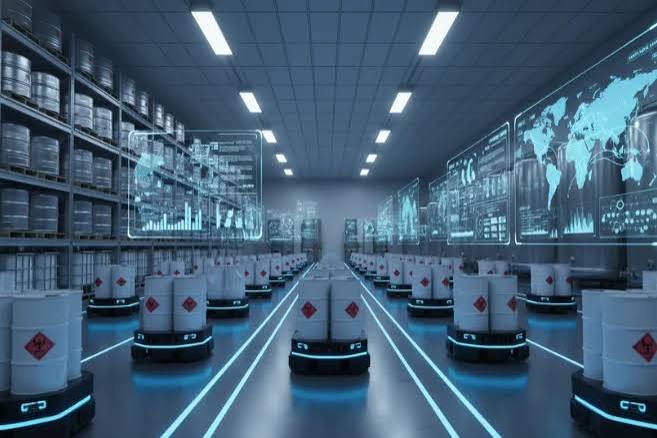
A reduction in production does not automatically eliminate the need for logistics infrastructure. Instead, it can change how the infrastructure creates value.
Lower production volumes may reduce utilization of certain assets while increasing the importance of flexible logistics capabilities. Companies may need to use existing infrastructure for more varied material flows rather than relying on a single high-volume production model.
This transition can create opportunities for:
Importing feedstocks that were previously produced locally.
Increasing third-party chemical distribution.
Using storage capacity to support regional supply.
Connecting alternative suppliers to established industrial customers.
Repurposing logistics assets for changing chemical markets.
The infrastructure therefore becomes an asset that can support transition rather than simply a legacy of previous production levels.
Germany's Chemical Corridor Depends on Interconnected Assets
Ludwigshafen does not operate in isolation. Its strategic relevance comes partly from its connection to Germany's wider industrial and transportation network.
Chemical manufacturing depends on links between production centres, ports, inland terminals, warehouses and customers. A strong logistics network can allow companies to compensate for changes at individual sites by shifting material flows elsewhere.
This becomes particularly important when European chemical producers face cost pressures and restructuring.
A connected logistics system gives procurement teams more options when selecting suppliers, transportation modes and inventory locations. It can also make regional distribution more resilient when individual plants experience disruption.
Procurement Should Evaluate Infrastructure, Not Just Suppliers
Supplier qualification usually focuses on production capacity, quality, financial stability and delivery performance. For chemicals, the infrastructure surrounding a supplier can be equally relevant.
A supplier operating within a well-connected industrial corridor may have more options for sourcing and distribution than a producer dependent on one isolated route.
Procurement teams should therefore examine:
The supplier's access to rail, road, river and pipeline networks.
Availability of nearby storage capacity.
Dependence on a single transportation route.
Connections to alternative feedstock sources.
Ability to maintain deliveries during production changes.
Regional concentration of critical infrastructure.
This broader assessment can improve understanding of actual supply resilience.
Logistics Infrastructure Can Support Industrial Transition
Germany's chemical industry faces pressure to adapt its production model while maintaining industrial competitiveness. Existing logistics infrastructure can help that transition by providing connections that new industrial activities can use without requiring entirely new transport systems.
That is particularly valuable when companies shift feedstocks, alter production portfolios or increase reliance on imported materials.
Infrastructure can also support industrial clustering. When multiple chemical businesses share transportation and storage systems, companies can potentially access services that would be more expensive to develop independently.
For Germany, maintaining these connections could therefore matter even when individual production assets become less competitive.
The Strategic Value of Long-Lived Chemical Assets
The Ludwigshafen example highlights an important principle for chemical procurement and investment decisions. Production capacity and logistics infrastructure should not always be evaluated as the same asset.
A manufacturing unit can become economically unattractive while the surrounding logistics network remains useful. Pipelines, terminals, rail connections and storage assets can continue supporting new commercial relationships and changing material flows.
This distinction matters when companies assess European chemical capacity reductions. A contraction in production does not necessarily translate into an equivalent contraction in the region's ability to trade, store and distribute chemicals.
What Buyers Should Do Now
Procurement teams sourcing chemicals from Germany should look beyond individual plant capacity when assessing long-term supply resilience. Understanding the logistics ecosystem around major chemical clusters can reveal alternative routes, storage options and sourcing flexibility that a supplier-level assessment may miss.
Ludwigshafen demonstrates how infrastructure created during earlier phases of chemical industry expansion can continue supporting modern production even as the scale and composition of that production change.
For buyers, the practical lesson is to evaluate industrial infrastructure as part of supply security. A mature chemical corridor can provide logistical advantages that remain valuable through restructuring, capacity reductions and changes in sourcing patterns.
Germany's chemical industry may be changing its production footprint, but the infrastructure built around its historic chemical centres continues to connect manufacturers, suppliers and customers. That enduring network can remain an important competitive asset as the industry adapts to its next phase.
Soda Ash Dense - India
Found this useful?