Global Production: The World Just Got Its First Enhanced Oil Recovery Standard
The global oil industry has reached a significant standardization milestone with the release of the world's first international enhanced oil recovery standard. ISO 25206-1 establishes common terms and definitions for major EOR approaches, creating a shared technical language for companies operating across different oil-producing markets.
The standard comes from ISO/TC 67/SC 10 under the leadership of China National Petroleum Corporation, or CNPC. For chemical traders, procurement managers and oilfield service companies, the development matters because standardized terminology can make technical specifications, supplier discussions and international project coordination more consistent.
What the New Enhanced Oil Recovery Standard Covers
ISO 25206-1, titled Oil and gas industries including lower carbon energy, Enhanced oil recovery terms and definitions Part 1: General vocabulary, focuses on terminology rather than prescribing a single EOR technology or commercial product. It organizes definitions across four major recovery approaches: chemical flooding, gas flooding, thermal recovery and microbial oil recovery.
This distinction matters for international procurement. EOR projects often involve multiple technical disciplines, including reservoir engineering, chemical supply, injection systems and field operations.
A common vocabulary can help companies describe technologies and materials more consistently when they prepare tenders, evaluate suppliers or exchange technical documents. It also creates a foundation for future standards covering more detailed aspects of EOR operations.
Why EOR Standardization Matters for Global Oil Production
Enhanced oil recovery becomes increasingly important when conventional production methods leave recoverable hydrocarbons in mature reservoirs. Operators can use different injection strategies to alter reservoir conditions and improve the movement of oil toward production wells.
The new standard provides a common terminology framework for the global oil and gas industry. ISO/TC 67/SC 10 has participation from 20 major oil and gas producing countries and has already initiated 11 international standards intended to develop a broader EOR standards system.
For international businesses, standardization can support several commercial objectives:
Technical alignment: Buyers and suppliers can work from clearer definitions when discussing EOR methods and related services.
Specification development: Procurement teams can structure technical requirements more consistently across tenders and sourcing projects.
International communication: Common terminology can reduce confusion between companies operating under different national or regional practices.
Supplier evaluation: Clearer terminology can help buyers compare proposals based on the same technical concepts.
The impact will depend on how widely the terminology enters project specifications and commercial workflows. However, establishing a recognized international vocabulary gives the industry a stronger foundation for that transition.
Chemical Flooding Creates Opportunities for Specialty Suppliers
Chemical flooding is one of the EOR categories specifically addressed by the new standard. The approach can involve polymers, surfactants and other chemicals designed to improve oil displacement and control the movement of injected fluids through a reservoir.
For chemical traders, this area connects oilfield demand with specialty chemical supply chains. Product performance can depend heavily on factors such as reservoir temperature, salinity, formation characteristics and compatibility with other materials used during injection.
Polyacrylamide represents one important product category associated with polymer-based EOR applications. Polymer solutions can modify the flow behavior of injected water and help improve sweep efficiency under appropriate reservoir conditions.
Procurement teams therefore need to evaluate more than the headline product name. Important commercial considerations can include:
Polymer grade and molecular characteristics
Product purity and consistency between batches
Packaging and handling requirements
Compatibility with field water and reservoir conditions
Supply reliability for large-scale injection programs
Technical documentation and quality specifications
The new EOR vocabulary may make discussions around these requirements more structured as international projects become increasingly standardized.

Gas, Thermal and Microbial Recovery Expand the EOR Landscape
Chemical flooding represents only one part of the EOR landscape covered by ISO 25206-1. The standard also addresses gas flooding, thermal recovery and microbial oil recovery, reflecting the diversity of technologies used to improve hydrocarbon recovery from challenging reservoirs.
Gas-based approaches can involve injecting gases into reservoirs to influence pressure, fluid behavior or oil displacement. Carbon dioxide has also become increasingly relevant to discussions around lower-carbon oil production and carbon management, although the suitability of any injection strategy depends on reservoir-specific technical conditions.
Thermal recovery takes a different approach by using heat to change the properties and mobility of heavy crude. Steam-based processes are particularly associated with reservoirs where higher temperatures can improve oil flow.
Microbial recovery introduces biological mechanisms into the EOR toolbox. These approaches can involve microorganisms or biological processes intended to alter reservoir conditions and improve hydrocarbon displacement.
The inclusion of these categories in a single terminology framework highlights an important point for international buyers: EOR is not one product market. It represents a collection of technologies that require different chemicals, equipment, engineering capabilities and operating conditions.
What the Standard Could Mean for Chemical Procurement
Standardized terminology can influence procurement well before a chemical reaches an oilfield. The first stage often involves technical specifications, where engineering and purchasing teams translate a project's EOR requirements into supplier documentation.
Clear terminology can help procurement teams reduce ambiguity during this process. Buyers may be better positioned to request comparable information from multiple suppliers instead of receiving specifications built around inconsistent terminology.
For chemical suppliers, the development also creates an incentive to strengthen technical documentation. Product data sheets, quality certificates, handling information and application guidance can become more valuable when buyers use increasingly structured procurement processes.
Suppliers targeting international EOR projects should pay particular attention to:
Consistent product naming and technical descriptions
Clear quality and performance specifications
Reliable batch-to-batch quality
Export packaging and documentation
Ability to support large-volume supply programs
Technical communication with oilfield engineering teams
This does not mean the standard automatically changes product specifications. Instead, it creates a common foundation that companies can use when developing those specifications.
CNPC and the Development of a Broader EOR Standards System
The standard also reflects a wider effort to build an international framework for EOR. ISO/TC 67/SC 10 was established in 2022 with its secretariat hosted by CNPC Daqing Oilfield Company, and the committee operates through five international working groups.
The committee has involved 20 major oil and gas producing countries and has initiated 11 international standards. According to the published information, the broader system is intended to address basic terminology, key products and engineering solutions while providing technical and regulatory support for the EOR industry.
That direction could prove commercially important. Terminology represents only the first layer of standardization, while future standards covering products, engineering practices or technical requirements could have a more direct influence on procurement.
For chemical suppliers, this creates a reason to monitor developments around EOR standards rather than treating ISO 25206-1 as an isolated publication.
How Traders and Buyers Can Prepare for the New EOR Framework
Chemical traders do not need to redesign their entire supply strategy around one new standard. They can, however, use the development as an opportunity to improve how they present products and communicate with oilfield customers.
A practical approach starts with understanding where individual products fit within EOR applications. Suppliers should distinguish between products used for chemical flooding and materials associated with supporting operations, water treatment or other oilfield processes.
Procurement teams can also strengthen their sourcing process by asking suppliers for information that connects product specifications with the intended application. This can make supplier comparisons more meaningful, particularly when purchasing materials for projects involving international partners.
The most useful preparation steps include:
Map relevant products to EOR applications. Identify which chemicals in the portfolio could support polymer flooding, water management or other enhanced recovery processes.
Standardize internal product descriptions. Use consistent terminology across quotations, technical sheets and commercial documentation.
Review supplier documentation. Check whether manufacturers can provide stable quality data, specifications and appropriate shipment documentation.
Monitor international standards. Track developments from ISO/TC 67/SC 10 as additional EOR standards emerge.
Strengthen technical communication. Procurement decisions increasingly depend on whether suppliers can communicate product capabilities clearly to engineering and field teams.
These actions can help companies respond more effectively as international EOR projects adopt more consistent technical frameworks.
The Bottom Line for Global EOR Procurement
The first international enhanced oil recovery standard represents an important step toward greater consistency across a technically diverse oilfield sector. ISO 25206-1 brings chemical flooding, gas flooding, thermal recovery and microbial oil recovery into a common terminology framework, giving companies a shared reference point for international communication.
For chemical traders and procurement professionals, the commercial opportunity lies beyond terminology itself. Better-defined technical language can support clearer specifications, more comparable supplier proposals and stronger coordination between chemical manufacturers, distributors, oilfield service providers and operators.
The next stage of EOR standardization could prove even more significant if international standards expand into specific products and engineering solutions. Companies that already maintain strong documentation, dependable supply chains and clear application knowledge will be better positioned as the market develops.
For buyers, the immediate priority is to understand how standardized EOR terminology affects supplier discussions and product specifications. For traders, it is an opportunity to align product portfolios with a more structured international market and build stronger relationships with oilfield customers.
Ready to source Polyacrylamide from verified global suppliers? Explore competitive offers on our platform today.
Source:
CNPC-led ISO issues first international EOR standard, chemXplore
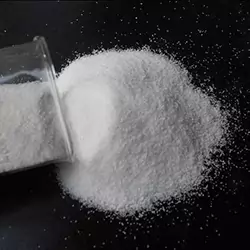
Polyacrylamide
Found this useful?