Glyoxal: Applications in Textiles, Paper and Chemical Manufacturing
Glyoxal: Applications in Textiles, Paper and Chemical Manufacturing
Glyoxal is an important industrial chemical used in textile finishing, paper production, polymer manufacturing and chemical synthesis. Its reactive aldehyde groups allow it to participate in crosslinking and condensation reactions, making it valuable for modifying the properties of fibres, cellulose-based materials, resins and other industrial products.
Manufacturers use glyoxal to improve fabric wrinkle resistance, enhance paper strength, modify polymer performance and produce specialised chemical intermediates. It is also used in selected applications involving adhesives, coatings, leather processing and oilfield chemicals.
However, its industrial value comes with important handling considerations. Glyoxal can cause skin and eye irritation, respiratory irritation and skin sensitisation. Appropriate storage, ventilation, protective equipment and exposure controls are therefore essential.
What Is Glyoxal?
Glyoxal, also known as ethanedial or oxaldehyde, is the simplest aliphatic dialdehyde. Its chemical formula is C₂H₂O₂, and its molecular weight is approximately 58.04 g/mol.
Commercial glyoxal is commonly supplied as an aqueous solution, particularly at approximately 40% concentration by weight. Its two aldehyde groups make it reactive with compounds containing suitable functional groups, including hydroxyl and amino groups.
Key characteristics include:
Chemical name: Glyoxal
IUPAC name: Ethanedial
CAS number: 107-22-2
Chemical formula: C₂H₂O₂
Molecular weight: 58.04 g/mol
Commercial form: Commonly supplied as an aqueous solution
Primary industrial function: Crosslinking agent and chemical intermediate
Glyoxal's ability to react with polymers and other chemical compounds is central to its industrial applications.
Major Applications of Glyoxal in the Textile Industry
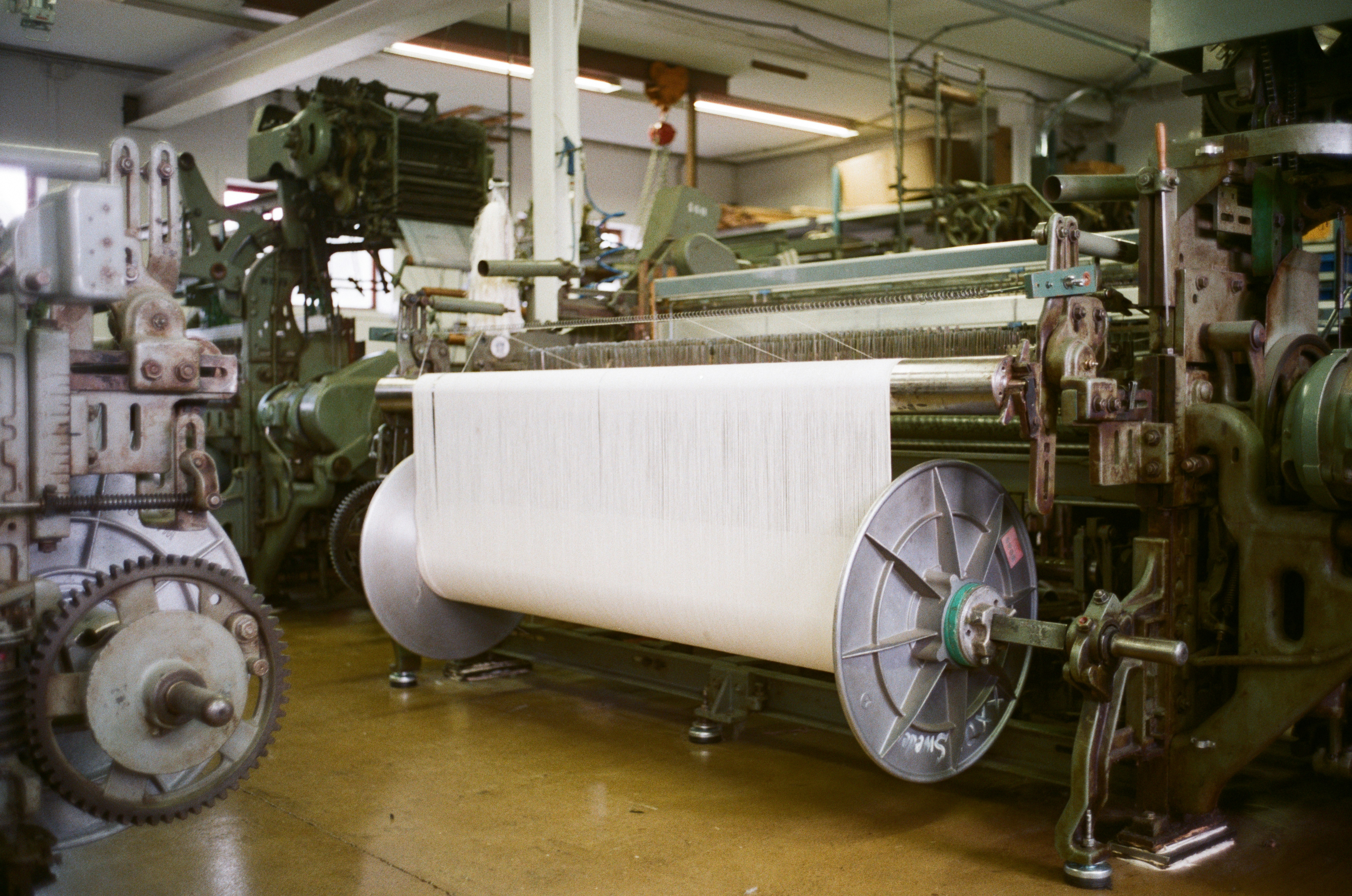
The textile industry uses glyoxal in finishing formulations to modify fabric performance. Its crosslinking properties help improve dimensional stability and reduce creasing in selected textile materials.
Wrinkle-Resistant and Permanent-Press Finishing
One important application is the production of wrinkle-resistant and permanent-press fabrics.
Glyoxal can participate in crosslinking reactions involving cellulose-based fibres. These reactions help modify the fibre structure, reducing the tendency of fabrics to crease during use and laundering.
Potential benefits include:
Improved wrinkle resistance
Better dimensional stability
Reduced fabric shrinkage
Improved shape retention
Enhanced performance of selected textile finishes
The final performance depends on the finishing formulation, fabric composition and processing conditions.
Cotton and Cellulose Fibre Treatment
Cotton and other cellulose-based materials contain hydroxyl groups that can participate in chemical reactions with suitable crosslinking systems.
Glyoxal-based formulations can be used to modify these materials and improve selected performance characteristics.
Textile manufacturers must balance wrinkle resistance with other properties, particularly fabric strength, flexibility and softness.
Textile Dyeing and Processing
Glyoxal also has applications in selected dyeing and textile-processing systems. Its reactivity can support the modification or stabilisation of certain formulations and materials.
The suitability of glyoxal depends on the dye chemistry, fibre type and processing requirements.
Applications of Glyoxal in the Paper Industry
Paper manufacturing is another important application area for glyoxal. It is used in selected paper coatings, wet-strength and dry-strength systems, and polymer formulations designed to improve paper performance.
Wet-Strength and Dry-Strength Enhancement
Paper products can lose strength when exposed to moisture. Glyoxal-crosslinked polymers can help improve the performance of paper by modifying interactions within the paper structure.
Depending on the formulation, these systems may support:
Improved wet strength
Enhanced dry strength
Better resistance to handling damage
Improved performance of speciality paper grades
These properties are important in packaging, industrial paper and other applications where paper must retain its mechanical performance under demanding conditions.
Paper Coatings and Surface Treatment
Glyoxal is also used in polymer systems for paper coatings and surface treatments.
Crosslinking can help improve coating integrity and the performance of selected paper formulations. The resulting properties depend on the polymer system, glyoxal concentration and processing conditions.
Adhesives and Paper-Based Products
Glyoxal can participate in crosslinking systems used in adhesives and other cellulose-based materials.
Its ability to react with suitable polymers and functional groups makes it useful in selected adhesive formulations, including systems designed for paper and wood-related applications.
Glyoxal in Chemical Manufacturing
Beyond textiles and paper, glyoxal is an important intermediate and functional ingredient in chemical manufacturing.
Polymer and Resin Production
Glyoxal is used as a crosslinking agent in several polymer systems. It can react with functional groups in materials such as starch, cellulose, polyvinyl alcohol, proteins and polyacrylamide.
These reactions can modify properties such as:
Mechanical strength
Water resistance
Structural stability
Viscosity
Film performance
Glyoxal-based crosslinking systems are used in selected coatings, adhesives, construction materials and speciality polymer applications.
Chemical Intermediates and Pharmaceutical Manufacturing
Glyoxal is used as a starting material or intermediate in the production of other chemicals, including glyoxylic acid and selected pharmaceutical and dyestuff intermediates.
Its two reactive aldehyde groups make it useful in organic synthesis and condensation reactions.
The exact application depends on the required reaction pathway and the purity specifications of the supplied glyoxal.
Coatings and Adhesives
Glyoxal is used in the production of selected amino crosslinking resins and other polymer-based coating systems.
For example, BASF identifies its glyoxal product as a raw material for glycoluril-based amino crosslinking resins used in powder coatings, liquid can coatings and coil coatings.
Such systems can be designed to modify film properties and support the performance requirements of industrial coatings.
Oil and Gas Applications
Glyoxal also has applications in oilfield chemistry.
Its ability to act as a sulphur scavenger makes it useful in selected natural gas treatment and oilfield applications involving hydrogen sulphide management.
Glyoxal-crosslinked polymer systems can also be used in drilling-fluid formulations to modify viscosity and fluid performance.
Other Industrial Applications
Glyoxal's reactivity supports applications beyond its major textile, paper and chemical manufacturing markets.
Examples include:
Leather processing: Used in selected tanning and crosslinking formulations.
Water treatment: Used in certain biocidal applications.
Wood treatment: Applied in selected systems to improve moisture resistance.
Personal care formulations: Used in specific polymer-crosslinking applications.
Disinfection: Present in certain disinfectant formulations.
The suitability of glyoxal in each application depends on the formulation, concentration, exposure conditions and relevant regulatory requirements.

Safe Handling and Storage of Glyoxal
Glyoxal requires appropriate industrial safety controls. Its hazards depend partly on the concentration and formulation supplied.
Safety information identifies potential skin and eye irritation, respiratory irritation and skin sensitisation. Workers may be exposed through contact with the liquid, aerosols or vapours.
Personal Protective Equipment
PPE should be selected according to the product-specific Safety Data Sheet (SDS) and workplace risk assessment.
Depending on the task, protective measures may include:
Chemical-resistant gloves
Chemical safety goggles
Face protection where splashing is possible
Protective clothing
Suitable safety footwear
Appropriate respiratory protection when required
Glove material and replacement frequency should be selected using supplier compatibility information.
Ventilation and Exposure Control
Glyoxal handling operations should be designed to minimise worker exposure.
Recommended controls include:
Adequate general ventilation
Local exhaust ventilation at transfer and filling points
Closed transfer systems where practical
Splash prevention during handling
Appropriate procedures for sampling and container opening
Regular inspection of transfer equipment and connections
Respiratory protection should supplement, rather than replace, effective engineering and process controls.
Storage Requirements
Glyoxal should be stored in properly labelled, compatible and tightly closed containers.
Storage arrangements should follow the supplier's recommendations and consider:
Temperature conditions
Container compatibility
Ventilation
Protection from contamination
Safe transfer and handling arrangements
Separation from incompatible substances
Commercial glyoxal solutions may change appearance or develop deposits during storage. Any unusual changes should be assessed against the supplier's technical guidance rather than assuming that the material remains suitable for use.
Spill Response and Emergency Measures
Spills should be managed by trained personnel following the SDS and the facility's emergency response procedure.
Important precautions include:
Restricting access to the affected area
Avoiding direct contact with the liquid
Preventing uncontrolled release into drains
Using appropriate protective equipment
Collecting spilled material with compatible equipment
Managing contaminated absorbents as chemical waste
Obtaining medical attention after significant exposure
Facilities should maintain suitable spill-response equipment and ensure that workers understand the procedures for accidental releases.
Quality Control and Procurement Considerations
Industrial buyers should evaluate glyoxal according to the requirements of their manufacturing process.
Product consistency is important because variations in concentration, impurities and acidity can influence reaction performance.
Concentration and Purity
Commercial glyoxal is frequently supplied as a 40% aqueous solution. Buyers should verify the actual concentration and permitted tolerance against the approved product specification.
Appearance and Colour
Appearance can be an important quality parameter for applications involving coatings, textiles and speciality chemicals.
Buyers may specify limits for colour, clarity and visible impurities.
Acidity and Impurity Levels
Acidity and trace impurities can affect formulation stability and process performance.
Depending on the application, relevant quality parameters may include:
Glyoxal concentration
Acidity
Ash content
Colour
Density
Relevant trace impurities
Certificate of Analysis
A Certificate of Analysis (COA) should be requested for each relevant batch.
The COA should provide test results against the agreed product specification and include batch identification and supplier information.
Buyers should also request the current SDS, technical data sheet, recommended storage conditions and product shelf-life information.
Environmental and Sustainability Considerations
Glyoxal-based formulations are sometimes explored as alternatives to other crosslinking chemistries, including certain formaldehyde-based systems. However, this does not mean that glyoxal is hazard-free or automatically a safer or more sustainable substitute.
Environmental performance should be evaluated across the complete formulation and manufacturing process.
Important considerations include:
Chemical consumption and process efficiency
Worker exposure and emissions
Wastewater composition
Residual chemical levels in finished materials
Treatment and disposal of process waste
Environmental performance of alternative formulations
Paper and textile manufacturers should evaluate both the performance benefits and the environmental profile of glyoxal-containing finishing systems before adopting them.
Best Practices for Industrial Glyoxal Buyers and Manufacturers
Reliable glyoxal sourcing and application require coordination between procurement, production, quality assurance and workplace safety teams.
Recommended practices include:
Define the application: Confirm whether glyoxal is required for textile finishing, paper production, coatings or chemical synthesis.
Select the correct grade: Match concentration and impurity specifications to the intended process.
Verify supplier documentation: Request a current SDS, technical data sheet and batch-specific COA.
Check formulation compatibility: Evaluate interactions with polymers, fibres, additives and other process chemicals.
Establish handling controls: Provide suitable ventilation, transfer systems and PPE.
Monitor process performance: Evaluate crosslinking efficiency, product strength and other relevant finished-product properties.
Manage chemical waste: Control wastewater, residues and contaminated packaging.
Maintain traceability: Record batch details, quality results and supplier information.
Industrial Outlook for Glyoxal
Glyoxal continues to serve a range of industrial markets because of its versatility as a chemical intermediate and crosslinking agent.
Its applications in wrinkle-resistant textiles, speciality paper, polymer systems, coatings, adhesives and oilfield chemicals demonstrate the importance of its reactive chemistry across manufacturing sectors.
For industrial buyers, the main priorities are selecting the appropriate concentration, maintaining consistent product quality and ensuring safe handling throughout the supply chain.
As manufacturers continue to develop advanced materials and improve production efficiency, glyoxal remains a relevant chemical for specialised industrial formulations and crosslinking applications.
Sources:
https://downloads.regulations.gov/EPA-HQ-OAR-2019-0424-0265/content.pdf?
Diethylene Glycol
Found this useful?