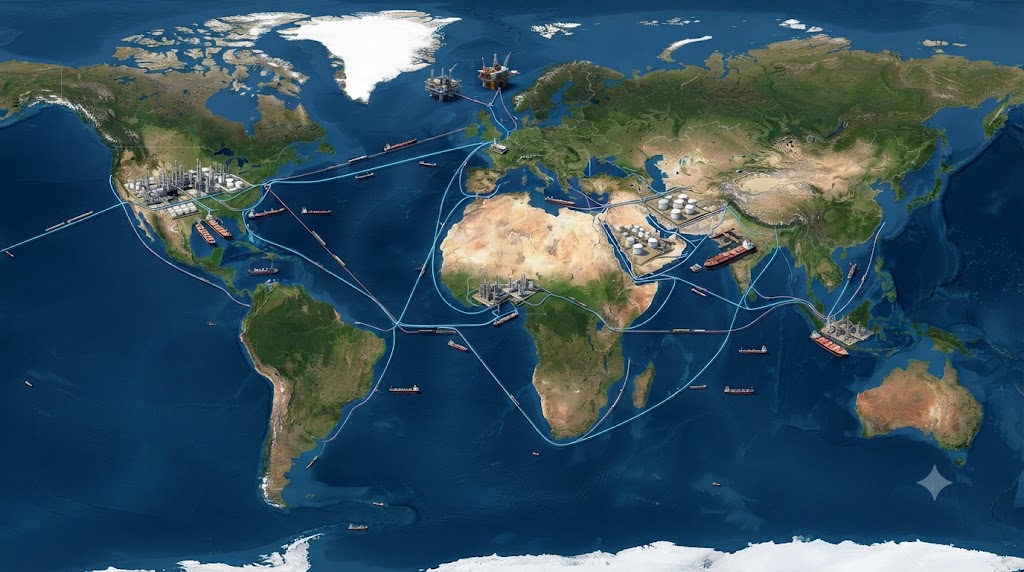
The International Energy Agency's July 2026 Oil Market Report documented a meaningful supply rebound during June, with global oil production climbing 4.1 million barrels per day to reach 98.8 million barrels per day. Yet despite this recovery, total supply remains approximately 9.4 million barrels per day below pre-war levels, a shortfall roughly equivalent to the entire daily output of Saudi Arabia or the combined production of Iraq, UAE and Kuwait.
For chemical procurement teams managing naphtha-based petrochemical supply chains, this persistent supply gap matters as much as the headline crude price. The shortfall keeps refinery utilization tight, limits naphtha availability for chemical use and sustains premium pricing for aromatics, olefins and downstream derivatives.
Putting 9.4 Million Barrels Per Day in Context
To understand the scale, the 9.4 million barrel daily shortfall represents nearly 10% of normal global oil consumption.
Several reference points help:
US total oil production averages roughly 12-13 million barrels per day, so the gap equals about 70-80% of entire American output
OPEC spare capacity historically ranges 2-4 million barrels per day, meaning the current shortfall far exceeds normal market balancing mechanisms
Refining capacity globally totals around 100-105 million barrels per day of crude input, so the supply gap forces refiners to operate well below optimal rates
This is not a marginal tightness. This is a structural deficit that cannot be quickly remedied through production increases or inventory draws.
Where the Missing Barrels Went
The 9.4 million barrel gap reflects several disrupted supply sources that have not yet returned to full operation.
Primary contributors to the shortfall:
Gulf region exports through Hormuz that remain severely constrained despite some resumption
Russian flows to European and Asian markets affected by sanctions, redirected routes or production declines
Venezuelan and Iranian production that operated at reduced levels due to sanctions or technical constraints
Libyan and Nigerian volumes affected by security situations or infrastructure damage
Additionally, some producing fields may have suffered damage or neglect during disrupted periods that prevents immediate return to full capacity even when political or logistics barriers ease.
The June rebound of 4.1 million barrels per day suggests some of these sources are recovering, but the pace remains far slower than demand would prefer.
What This Means for Refinery Operations
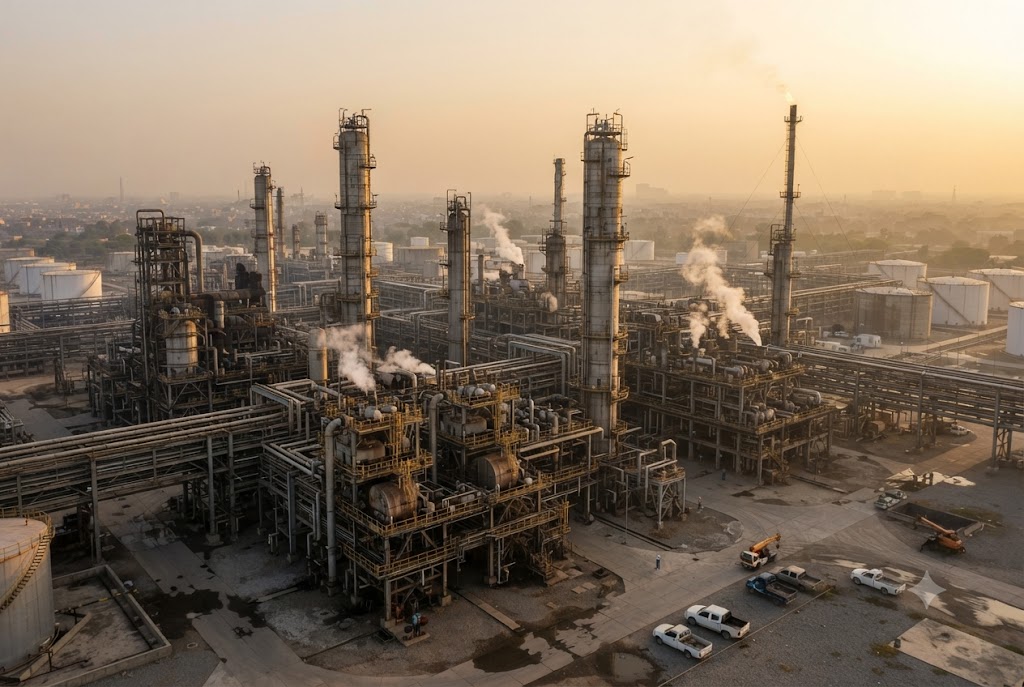
Refineries globally cannot run at optimal rates when crude supply sits 9.4 million barrels per day short of normal levels.
Refining implications include:
Reduced throughput as refiners cannot secure enough crude feedstock to maintain historical run rates
Margins that look attractive on paper because refined product prices rise faster than available crude costs
Product slate distortions where refiners optimize for gasoline and diesel rather than maximizing naphtha or other petrochemical feeds
Regional disparities where some refineries access crude more easily than others creating competitive imbalances
For naphtha and petrochemical feedstock buyers, this matters because:
Refiners prioritize high-value transportation fuels over petrochemical feeds when crude is scarce
Naphtha availability tightens even when crude prices appear manageable
Quality and specification consistency decline as refiners process different crude slates than normal
Long-term supply agreements become less reliable as refiners invoke force majeure or allocation clauses
Regional Supply Distribution and Chemical Impacts
The 9.4 million barrel shortfall does not distribute evenly across global markets. Some regions face acute deficits while others adapt more successfully.
Asia Pacific:
Heaviest impact given dependence on Gulf and Russian crude imports
Refineries in Japan, South Korea and Taiwan face sustained high crude costs
Naphtha crackers compete harder for limited petrochemical feedstock
Some facilities consider extended maintenance or reduced operating rates
Europe:
Russian crude diversions force expensive North Sea, North African and Atlantic basin alternatives
Refinery margins improve but absolute volumes decline
Petrochemical integration suffers as refiners prioritize fuel production
Some older refineries facing permanent closure accelerate shutdown decisions
North America:
Least affected given domestic crude production and Western Hemisphere sources
US Gulf Coast refiners gain competitive advantage
Export economics improve for both refined products and petrochemicals
Capacity utilization higher than global average
Middle East:
Domestic crude availability remains strong
Export logistics constrained more than production
Local petrochemical producers maintain feedstock advantage while export revenues suffer
For procurement teams, these regional differences dictate where to source materials, how much premium to pay and which suppliers face most stress.
Naphtha-Specific Market Tightness
Naphtha markets feel the oil supply shortfall more acutely than crude price alone would suggest.
When refiners operate at reduced rates and optimize for transportation fuels, naphtha becomes:
Relatively scarce compared to gasoline and diesel output
More expensive as petrochemical buyers compete for limited barrels
Less consistent in quality as refiners process varied crude slates
Subject to allocation when long-term contracts cannot be fully honored
Current market indicators show:
Naphtha cracks (spread versus crude) trading at elevated levels reflecting tightness
Asian naphtha benchmarks at premiums to historical norms even adjusting for crude costs
European naphtha experiencing similar constraints
US naphtha relatively advantaged but still affected by global price linkages
For European and Asian naphtha crackers already struggling with high energy costs, sustained naphtha tightness compounds margin pressure and threatens production viability.
Aromatics and Derivatives Under Sustained Pressure
Benzene, toluene and xylenes production depends heavily on naphtha cracking and reforming. The sustained oil supply gap keeps aromatics markets tight.
Aromatics market dynamics:
Benzene for styrene, phenol and cumene sees production costs elevated from expensive naphtha
Paraxylene feeding PET and polyester chains experiences similar feedstock-driven tightness
Reformate production from refineries declines when crude runs are reduced
Coal-to-aromatics routes in China gain competitiveness versus oil-linked alternatives
Derivative producers face:
Styrene margins compressed between expensive benzene and limited ability to raise prices
Phenol and acetone economics deteriorating
PET and polyester chains feeling cumulative impact through both PX and MEG
Solvent markets adjusting with substitution toward non-aromatic alternatives where feasible
Procurement teams managing aromatics-heavy portfolios should expect sustained tightness and premium pricing until oil supply returns closer to pre-war levels.
Alternative Feedstock Routes Gain Relative Advantage
When oil-derived feedstocks remain expensive due to sustained supply shortfalls, alternative production routes improve their competitive positioning.
Coal-based routes:
Coal-to-olefins and coal-to-aromatics in China look more economic versus $80+ crude
Previously viewed as high-cost and environmentally problematic, these routes now offer supply security
Expansion plans that were marginal suddenly appear more viable
Gas-based routes:
Natural gas-to-liquids (GTL) plants gain margin as crude prices stay elevated
Methanol-to-olefins (MTO) economics improve relative to naphtha crackers
Ethane and propane dehydrogenation (PDH) maintain advantages if LPG remains available
Bio-based routes:
Renewable naphtha and bio-based chemicals that cost premiums at low oil prices become competitive
Sustainability drivers combine with economics to accelerate adoption
Supply remains limited but investment interest increases
Recycling and circular routes:
Chemical recycling of plastic waste to feedstock becomes more economic
Mechanical recycling economics improve as virgin polymer costs rise
Circular economy initiatives accelerate driven by both policy and economics
For procurement teams, this suggests diversifying beyond oil-linked supply where technically and economically viable, building resilience against sustained petroleum market disruption.
When Does Supply Return to Normal
The critical question is whether the 9.4 million barrel daily shortfall represents temporary war-related disruption or more permanent supply loss.
Optimistic recovery scenario:
Hormuz transit normalizes allowing Gulf exports to resume
Damaged infrastructure gets repaired within 6-12 months
Production returns to pre-war levels by late 2026 or early 2027
Oil prices moderate and petrochemical feedstock costs follow
Pessimistic structural change scenario:
Hormuz remains constrained by geopolitical tensions or policy
Some production capacity suffered permanent damage or abandonment
Investment in new production was deferred during disruption creating longer-term supply constraints
Supply deficit persists through 2027 and potentially beyond
Most likely middle scenario:
Gradual recovery over 18-24 months
Supply returns to 95-100 million barrels per day by mid-2027
Some permanent capacity loss offset by new production and efficiency gains
Oil markets remain tighter than 2020-2023 but avoid worst-case sustained shortage
Procurement strategies must work across all scenarios, building flexibility to adapt as actual trajectory becomes clearer.
Strategic Procurement Responses
The persistent oil supply shortfall demands strategic adjustment beyond tactical spot market management.
Portfolio diversification:
Reduce concentration in oil-linked feedstocks where alternatives exist
Qualify coal, gas or bio-based materials even if current pricing is less attractive
Build supplier relationships across multiple feedstock platforms
Accept some cost increase for supply security and flexibility
Contract structure evolution:
Move away from purely oil-indexed pricing toward hybrid formulas
Include supply security provisions alongside price mechanisms
Build in volume flexibility allowing adjustments if costs become uneconomic
Extend contract durations with reliable suppliers to secure allocation
Geographic rebalancing:
Shift sourcing toward regions less affected by oil supply constraints
Develop US Gulf Coast and other Western Hemisphere sources for Atlantic basin buyers
Consider domestic options that avoid international logistics even at cost premiums
Build multi-region supplier portfolios rather than concentrating in single region
Inventory strategy:
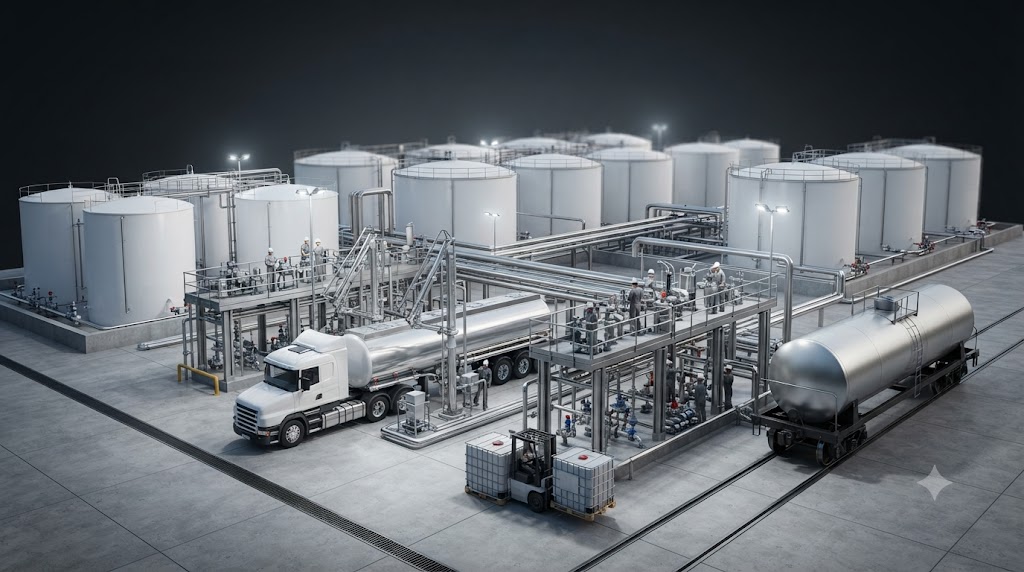
Maintain higher safety stock for critical oil-derived materials
Build strategic inventory during any temporary price weakness
Invest in storage capacity where justified by sustained market volatility
Balance carrying costs against shortage risk and price spike exposure
What the June Rebound Tells Us
The 4.1 million barrel per day increase during June provides some important signals.
Positive indicators:
Supply is recovering, not deteriorating further
Some disrupted sources are returning online
Market mechanisms and policy adjustments are having effect
Trend direction is toward improvement not deeper crisis
Concerning aspects:
Recovery pace is slow relative to the 9.4 million barrel total deficit
At June's recovery rate, returning to pre-war levels would take 2-3 months more
Yet June may represent one-time catch-up not sustained monthly increases
No guarantee next months show similar gains
Procurement implications:
Expect gradual cost moderation not sudden collapse back to pre-war levels
Plan for sustained tight markets through rest of 2026 and into 2027
Any significant price declines likely create buying opportunities worth capturing
Supplier stress will persist requiring careful financial monitoring
Supplier Financial Health Monitoring
Sustained high oil prices and tight feedstock availability create financial stress across chemical supply chains.
Suppliers facing pressure:
Naphtha crackers in Europe and Asia with no feedstock cost relief
Refineries in regions with limited crude access operating below break-even
Derivative producers unable to pass through feedstock costs to customers
Smaller independent producers lacking financial resources to weather extended downturn
Warning signs to monitor:
Payment term requests lengthening
Quality or delivery consistency declining
Key personnel departures or reorganizations
Credit rating downgrades or covenant waiver requests
Force majeure declarations or allocation notices
Proactive risk management:
Diversify suppliers to reduce single-source dependencies
Monitor financial health through credit reports and industry intelligence
Build relationships with financially stronger alternative suppliers
Consider advance payments or supply chain financing to support critical suppliers facing temporary stress
The next 6-12 months will determine which suppliers survive and which exit or consolidate, reshaping supply chains for years afterward.
The Bottom Line for Chemical Procurement
The IEA's confirmation that global oil supply sits 9.4 million barrels per day below pre-war levels despite a 4.1 million barrel daily June rebound means petrochemical feedstock markets face sustained tightness through at least late 2026 and likely into 2027.
For naphtha-based chemical supply chains, this translates into:
Continued elevated feedstock costs as refiners operate below optimal rates and prioritize fuels over petrochemical feeds. Supply allocation and reliability challenges as long-term contracts face stress and force majeure becomes more common. Regional competitive shifts favoring US and domestic Middle East producers while pressuring Asian and European operations. Strategic need to diversify beyond oil-linked feedstocks toward gas, coal, bio-based or circular routes.
Procurement teams must move beyond crisis management into strategic adaptation for extended period of structurally tight oil and derivative markets. Those who build flexible portfolios, diversify suppliers and feedstock platforms, and maintain financial discipline will navigate successfully. Those who assume quick return to pre-war normalcy will face repeated supply and cost shocks.
The oil supply deficit is real, large and persistent. Your procurement strategy must match that reality.
Ready to source Monoethylene Glycol from verified global suppliers? Explore competitive offers on our platform today.