India's Solar Materials Opportunity: Why Japanese Chemical Makers See a Market China Can't Offer
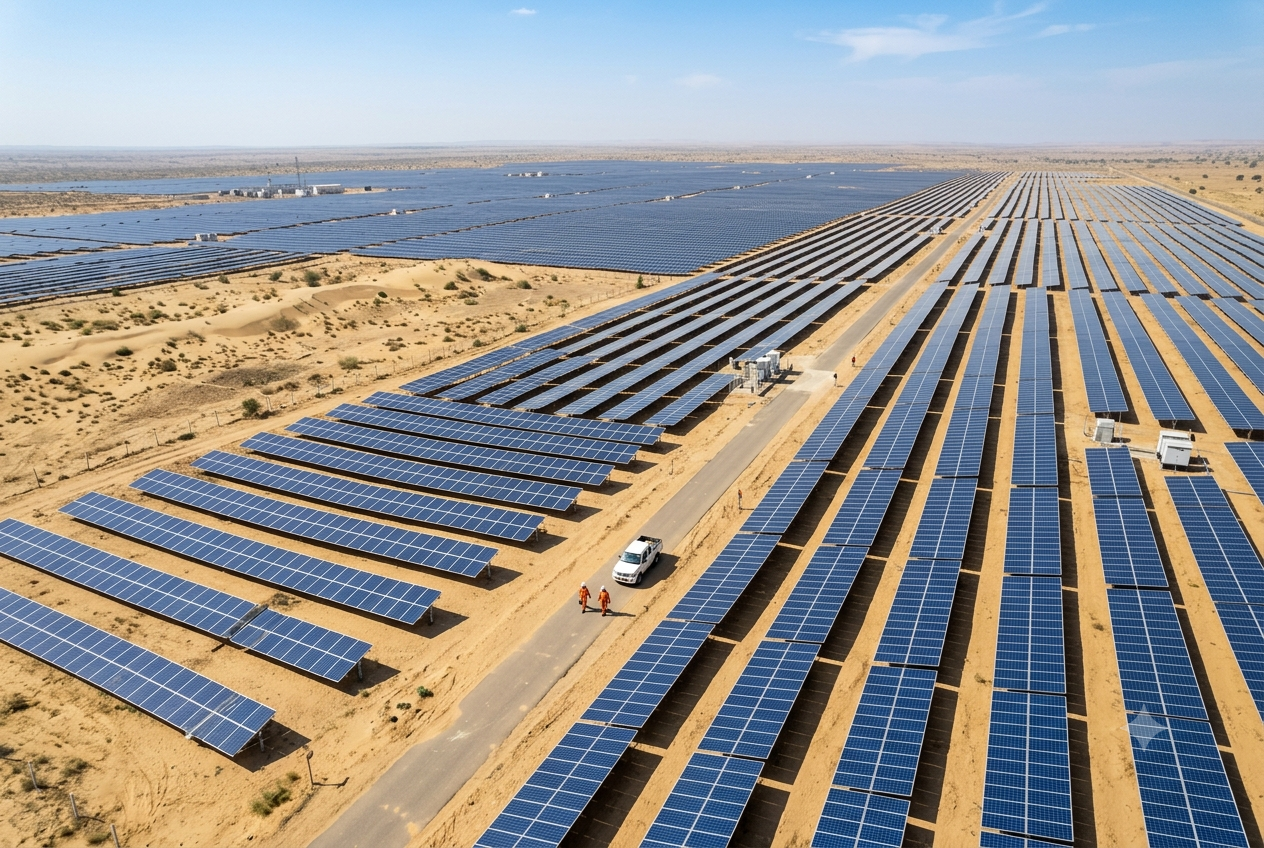
Japanese chemical companies are redirecting investment and strategic focus toward India's rapidly expanding solar materials market after years of deepening but increasingly frustrating engagement with China. India's ambitious renewable energy targets requiring 280 gigawatts of solar capacity by 2030 create massive demand for specialty polymers, encapsulation films, backsheet materials and other chemical products that Japanese manufacturers excel at producing. For procurement teams sourcing materials for solar module production or managing specialty polymer supply chains, this Japanese pivot toward India signals emerging supply options, potential quality improvements in non-Chinese materials and shifting competitive dynamics across solar component markets.
The opportunity extends beyond simple geographic diversification. India offers operating conditions, policy incentives and market access terms that China increasingly denies foreign chemical producers. Japanese companies see India as a market where technical expertise and quality differentiation can command value rather than competing primarily on price against subsidized domestic Chinese competitors in markets where regulatory barriers favor local players.
India's Solar Capacity Buildout and Materials Demand
India's solar installation targets translate directly into chemical materials demand across multiple product categories. Each gigawatt of solar capacity requires roughly 5 to 6 million square meters of photovoltaic modules. These modules consume ethylene vinyl acetate (EVA) copolymer for encapsulation, multilayer polymer films for backsheets, junction box materials, frame components and specialized adhesives and sealants.
EVA serves as the primary encapsulant protecting solar cells from moisture, mechanical stress and environmental exposure while maintaining optical transparency for light transmission. The material must withstand decades of UV exposure, temperature cycling and humidity without degrading, yellowing or delaminating. High-performance EVA formulations require precise control of vinyl acetate content, molecular weight distribution and additive packages including UV stabilizers and crosslinking agents.
Backsheet films provide rear-surface protection using multilayer structures combining polyester, fluoropolymer or other specialty films with specific thermal, mechanical and weathering properties. These materials must reflect light back through cells to improve efficiency while preventing moisture ingress and resisting decades of outdoor exposure.
Specialty adhesives bond frame components, attach junction boxes and seal module edges. These materials require compatibility with multiple substrates including aluminum, glass, polymers and electronic components while maintaining adhesion and flexibility through temperature extremes.
India's domestic production of these specialized solar materials remains limited, creating dependence on imports primarily from China. The Indian government views this import dependency as strategic vulnerability and has implemented policies encouraging domestic production through the Production Linked Incentive (PLI) scheme and import duties on solar components.
Japanese Technical Advantages in Solar Polymers
Japanese chemical companies bring decades of expertise in specialty polymer formulation, film manufacturing and precision additives that create performance advantages in solar applications. Companies including Mitsui Chemicals, Mitsubishi Chemical and others have developed EVA grades optimized for solar encapsulation with enhanced UV stability, faster curing and improved adhesion compared to commodity EVA formulations.
Film manufacturing capabilities enable production of multilayer backsheets with precise thickness control, low defect rates and consistent optical and barrier properties. Japanese manufacturers excel at coextrusion, coating and lamination technologies required for complex film structures.
Quality consistency matters significantly in solar applications where module warranties extend 25 years and where material failures create expensive field replacements. Japanese manufacturers' reputations for tight quality control and low variation between production batches provide competitive advantages that justify price premiums versus lower-cost alternatives with higher failure risk.
Technical service capabilities including application support, failure analysis and product development collaboration create value beyond commodity material supply. Solar module manufacturers qualifying new materials or troubleshooting production issues benefit from supplier engineering expertise that Japanese companies provide better than many competitors.
Why China Has Become Problematic for Japanese Producers
Japanese chemical companies operating in China face accumulating challenges that reduce returns and increase risks despite market scale that historically justified those difficulties. Regulatory unpredictability creates situations where environmental permits, production approvals or compliance requirements change without notice and get enforced selectively against foreign operations.
Technology transfer pressures through joint venture requirements or employee mobility to domestic competitors erode proprietary advantages Japanese companies invested decades developing. Former joint venture partners or employees launch competing businesses using knowledge and processes learned through collaborations.
Market access barriers prevent Japanese producers from competing on equal terms even in segments where they hold technical advantages. Domestic content preferences, qualification processes favoring Chinese suppliers and regulatory approvals that take months for domestic applicants but years for foreign companies tilt competitive playing fields.
Intellectual property protection remains inadequate despite legal frameworks that look acceptable on paper. Enforcement of foreign IP rights through Chinese courts rarely delivers satisfactory outcomes when defendants are domestic companies with political connections.
The combination makes China increasingly unattractive for new investment even as existing operations continue generating revenue. Japanese companies are maintaining but not expanding Chinese manufacturing while directing growth capital toward alternative locations including India.
India's Production Linked Incentive Scheme
India's PLI scheme for solar manufacturing offers financial incentives to companies establishing domestic production capacity for solar cells, modules and specific components including encapsulants and backsheets. The program provides subsidies linked to production volumes and domestic value addition with higher incentives for components currently imported.
Foreign companies including Japanese manufacturers can access PLI incentives by establishing Indian operations, partnering with domestic companies or licensing technology to Indian producers. The scheme explicitly encourages advanced technology deployment rather than simply replicating commodity production capabilities China already dominates.
PLI incentives can cover 20% to 40% of capital investment and provide ongoing production subsidies that improve project economics compared to standalone commercial ventures. These incentives help offset India's higher land, labor and logistics costs compared to China while accelerating returns on investment.
Qualification criteria require minimum investment thresholds, domestic content targets and technology transfer commitments. Japanese companies must structure arrangements to meet these requirements while protecting intellectual property and maintaining control over critical process knowledge.
The program creates time-limited opportunities with application windows and capacity allocation processes that favor early movers. Japanese companies evaluating Indian solar materials investment need to engage promptly to secure PLI benefits before allocated capacity gets fully subscribed.
Operating Environment Comparison
India offers several operating advantages versus China for Japanese chemical investors despite well-documented infrastructure and bureaucratic challenges. Regulatory frameworks operate under common law traditions with independent courts that provide more reliable legal recourse when disputes arise. Foreign companies can challenge regulatory decisions and enforce contracts through judicial processes that function more predictably than Chinese alternatives.
Intellectual property protection has improved substantially with patent enforcement, trademark protection and trade secret laws providing meaningful deterrent against violations. The gap between legal protections and practical enforcement continues narrowing as Indian courts gain experience with IP cases.
Political risk differs meaningfully between the two countries. India maintains difficult relations with China but positions itself as non-aligned in great power competition, reducing risks that Japanese investments become collateral damage. China's deteriorating relationships with Western economies create scenarios where trade restrictions or sanctions could disrupt supply chains affecting Japanese operations.
Market access generally allows foreign companies to compete on similar terms as domestic firms once local operations are established. While local content preferences exist, they are typically transparent and consistently applied rather than shifting unpredictably.
Labor regulations and union dynamics present challenges in India that China largely avoids through more controlled labor markets. However, Japanese companies generally view these challenges as manageable compared to risks around IP theft and regulatory unpredictability in China.
Specific Japanese Company Initiatives
Mitsui Chemicals has publicly discussed expanding specialty materials production in India with particular focus on solar applications. The company produces EVA copolymers for solar encapsulation in Japan and evaluates Indian capacity to serve local demand and potentially export to regional markets.
Mitsubishi Chemical Group assesses opportunities in performance films and specialty polymers for solar applications as part of broader India market strategies. The company's existing Indian presence in other chemical segments provides operational foundation for expanding into solar materials.
Toray Industries, a major producer of advanced films and polymers, evaluates Indian opportunities in backsheet films and other specialty materials where technical differentiation justifies local production despite higher costs versus Chinese manufacturing.
These initiatives typically involve measured investment rather than massive immediate commitments, reflecting Japanese corporate culture of careful risk management. However, the pattern across multiple companies and consistency of strategic messaging indicate serious intent beyond exploratory discussions.
Partnerships with Indian chemical companies provide alternative paths to market entry. Japanese firms bring technology and expertise while Indian partners contribute local knowledge, government relationships and established manufacturing infrastructure that accelerates deployment.
Supply Chain and Sourcing Implications
The Japanese investment in Indian solar materials creates new sourcing options for module manufacturers seeking to diversify beyond Chinese supply. Modules incorporating Indian-produced materials from Japanese technology can qualify for domestic content requirements in India and potentially receive preferential treatment in other markets implementing de-risking strategies around Chinese supply chains.
Quality and reliability profiles for Japanese-technology materials produced in India should approximate Japan-origin quality rather than Chinese commodity specifications, though buyers must verify this through qualification testing rather than assuming equivalence.
Pricing will likely exceed Chinese alternatives initially, with premiums of 10% to 25% depending on material category and specifications. These premiums may narrow over time as Indian operations scale and achieve manufacturing efficiency improvements.
Lead times from India to regional markets vary by destination. Indian production serves South Asian, Middle Eastern and potentially European markets with logistics advantages over Chinese supply, while distance to East Asian markets may favor Chinese sources for those regions.
Currency dynamics differ from Chinese sourcing, with rupee exchange rate volatility and trading patterns creating different hedging requirements than yuan-denominated purchases.
Raw Material Supply Chain Considerations
Japanese solar materials producers establishing Indian operations must source feedstocks including vinyl acetate monomer, polyester resins, specialty additives and various process chemicals. Some materials are available from Indian producers while others require imports creating dependency on global supply chains.
VAM availability in India is limited with most consumption currently met through imports. Japanese producers may need to secure long-term supply agreements with Middle Eastern or Asian VAM producers or potentially invest in Indian VAM capacity to support solar materials production.
Polyester resins for backsheet films can be sourced from Indian producers including Reliance Industries and others, providing local supply options that support domestic content requirements.
Specialty additives including UV stabilizers, antioxidants and processing aids typically require imports from Japan, Europe or other advanced chemical production regions. These represent small volume but high value components where sourcing complexity is manageable.
The overall feedstock supply chain for Indian solar materials production is feasible but requires more integration effort than operating in China where established chemical industry clusters provide ready access to most inputs.
Module Manufacturer Perspectives
Solar module manufacturers in India and export markets view Japanese entry into Indian solar materials production favorably as it diversifies supply beyond Chinese dominance and potentially improves material quality and consistency.
Indian module producers including Adani Solar, Vikram Solar and others seek domestic material sources to qualify for PLI incentives and meet evolving local content requirements. Japanese-technology materials produced in India satisfy these requirements while offering quality levels that support premium module positioning.
International module manufacturers operating in India or sourcing from India can utilize locally produced Japanese-technology materials to differentiate products and potentially command higher prices in markets valuing supply chain diversification away from China.
However, module makers also require cost competitiveness, meaning Japanese materials must deliver sufficient performance or strategic value to justify price premiums versus Chinese alternatives. In purely cost-driven segments, Chinese materials will retain advantages until Indian manufacturing achieves comparable scale economies.
Infrastructure and Logistics Realities
India's infrastructure challenges affect solar materials production and distribution though improvements in key industrial corridors reduce these barriers. Gujarat, Maharashtra and Tamil Nadu offer industrial zones with reliable power, water and proximity to ports enabling raw material imports and finished product distribution.
Road and rail networks in these regions handle chemical logistics adequately though transit times and costs exceed Chinese levels. Dedicated freight corridors under development will improve logistics efficiency over coming years.
Port capacity at Mundra, JNPT, Chennai and other facilities handles chemical imports and exports with growing sophistication though congestion during peak periods can create delays.
Utilities including electricity and industrial water are generally available in established industrial zones though quality and reliability require backup systems that add cost. Solar materials production facilities need stable power for continuous processing and climate control for polymer manufacturing.
The infrastructure gap versus China is narrowing in priority industrial regions while remaining significant in secondary locations. Japanese companies can mitigate infrastructure challenges through site selection in developed zones and investment in on-site backup systems.
Policy Stability and Long-Term Commitment
Japanese companies evaluating major Indian investments assess policy stability and government commitment to solar manufacturing support. PLI scheme design, funding commitment and administrative capacity to deliver promised incentives all factor into investment decisions.
India's track record includes both successful industrial policy initiatives and programs that failed to deliver promised benefits due to bureaucratic dysfunction or policy reversals. Japanese investors need confidence that solar manufacturing support will persist through multi-year investment payback periods.
The government's strategic interest in reducing Chinese supply chain dependence and building domestic renewable energy manufacturing capacity creates strong political logic supporting sustained policy commitment. However, specific program details including incentive levels and qualification criteria could change as political priorities shift.
Japanese companies typically structure investments in phases with initial limited commitments followed by expansion contingent on policy stability and market development meeting projections. This staged approach manages risk while maintaining option value for full-scale deployment if conditions prove favorable.
Competitive Response from Chinese Suppliers
Chinese solar materials producers will respond to Japanese entry into India through several potential strategies. Price competition represents the most direct approach with Chinese suppliers offering aggressive pricing to retain market share and prevent Japanese competitors from establishing strong positions.
Quality improvements and technical service enhancements could narrow performance gaps that Japanese producers exploit. Chinese companies have demonstrated ability to move upmarket in various industries when motivated by competitive threats.
Some Chinese producers may establish Indian operations themselves to access PLI incentives and serve Indian market demand. This complicates the competitive landscape as Japanese companies would face Chinese competitors with cost advantages from established global scale.
Strategic partnerships between Chinese materials suppliers and Indian module manufacturers could create integrated supply relationships that exclude Japanese entrants despite potential quality or service advantages.
The competitive dynamics will ultimately determine whether Japanese solar materials producers can establish sustainable profitable positions in India or whether Chinese scale and cost advantages eventually dominate even in this politically favored alternative market.
What Procurement Teams Should Monitor Through 2027
Chemical buyers managing solar materials or specialty polymer portfolios should track several indicators signaling progress of Japanese entry into Indian solar materials production. Watch for facility construction announcements, PLI incentive awards and commercial production startup dates that indicate projects moving from planning to operational phases.
Monitor customer qualification activities where module manufacturers test and approve Japanese-technology Indian-produced materials. These qualifications signal that materials will soon be available for commercial purchases.
Track pricing announcements and initial supply agreements that reveal whether Japanese-Indian materials can compete economically versus Chinese alternatives or require substantial premiums limiting market adoption.
Observe technical performance data from module manufacturers using Japanese-technology materials including warranty claim rates, efficiency degradation and field performance versus Chinese material benchmarks.
Follow policy developments including PLI program modifications, import duty changes and domestic content requirements that affect economics of various sourcing options.
The Strategic Stakes for Solar Supply Chains
Japanese chemical companies' India solar materials initiative represents one element in broader efforts to restructure solar supply chains away from Chinese dominance that creates both economic and strategic vulnerabilities. Success would demonstrate that alternative supply chains can function at commercial scale even if at higher costs than Chinese routes.
Failure would reinforce Chinese positions and potentially discourage other efforts to build alternative solar materials supply chains in other geographies. The stakes extend beyond commercial interests of individual companies to broader energy security and industrial policy objectives.
For procurement teams, the developments create opportunities to diversify supply, qualify alternative materials and potentially leverage competition between Chinese and Japanese-Indian sources to improve terms. However, buyers must also manage risks around new supply chain reliability, quality consistency during ramp periods and potential for geopolitical dynamics affecting availability.
The Indian solar materials opportunity represents genuine potential but faces substantial execution challenges around infrastructure, cost competitiveness and scale achievement. Japanese companies' track records and technical capabilities position them well to succeed if market and policy conditions cooperate. Procurement teams should monitor progress closely and engage early with successful entrants to access emerging supply options as they reach commercial maturity.
Ready to source Low Density Polyethylene (LDPE) from verified global suppliers? Explore competitive offers on our platform today.
Low Density Polyethylene (LDPE)
Found this useful?