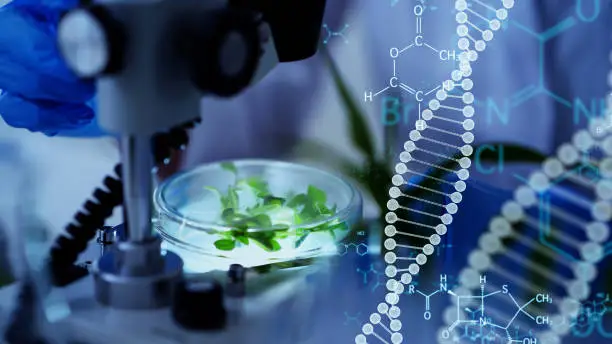
Insilico Medicine Leverages Generative AI to Accelerate Novel Drug Discovery

Insilico Medicine Leverages Generative AI to Accelerate Novel Drug Discovery
Introduction
Artificial intelligence is rapidly transforming pharmaceutical research, and Insilico Medicine has emerged as one of the industry's leading innovators. By combining generative AI with biology, chemistry, and machine learning, the company is reshaping how new drug candidates are discovered and developed. Traditional drug discovery can take more than a decade and require billions of dollars in investment, but AI-driven platforms are helping researchers identify promising therapeutic molecules in a fraction of the time.
For pharmaceutical manufacturers, biotech companies, contract research organizations (CROs), and procurement teams sourcing research materials, this shift represents more than a technological advancement—it signals a new era of faster innovation, improved R&D efficiency, and changing demand across the specialty chemicals and life sciences supply chain.
How Generative AI Is Changing Drug Discovery
Conventional drug discovery involves screening thousands—or even millions—of chemical compounds to identify potential candidates. This process is time-consuming, expensive, and often results in a high failure rate.
Generative AI changes this approach by:
Designing entirely new molecular structures.
Predicting how molecules will interact with biological targets.
Optimizing compounds for safety and efficacy.
Identifying potential drug candidates much earlier in the research process.
Reducing the number of laboratory experiments required.
Instead of relying solely on traditional trial-and-error methods, AI enables researchers to explore vast chemical spaces digitally before moving into laboratory validation.
Insilico Medicine's AI-Driven Platform
Insilico Medicine integrates multiple AI technologies throughout the drug discovery pipeline. Its platform combines deep learning, generative algorithms, and biological data analysis to accelerate every stage of early pharmaceutical research.
Key capabilities include:
AI-powered target identification
Novel molecule generation
Drug candidate optimization
Predictive toxicity analysis
Clinical trial support through data analytics
This integrated approach helps researchers move from disease identification to preclinical drug candidates significantly faster than conventional workflows.
Benefits for the Pharmaceutical Industry
The adoption of generative AI offers several strategic advantages for pharmaceutical companies.
Faster Research Timelines
AI dramatically reduces the time needed to identify promising compounds, allowing companies to begin laboratory testing sooner.
Lower Research Costs
By narrowing the pool of compounds before physical testing, organizations can reduce laboratory expenses and improve research efficiency.
Higher Success Rates
Machine learning models help predict molecular behavior, enabling scientists to prioritize candidates with stronger potential for clinical success.
Expanded Innovation
Generative AI can create entirely new molecules that may never have been considered through traditional discovery methods, opening opportunities for breakthrough therapies.
Supply Chain Implications
As AI accelerates pharmaceutical research, demand patterns across the life sciences supply chain are also evolving.
Suppliers may see increased demand for:
Specialty chemical intermediates
Research-grade reagents
Laboratory consumables
Active pharmaceutical ingredient (API) precursors
High-purity solvents
Analytical testing services
At the same time, procurement teams will need greater flexibility to support faster R&D cycles and shorter development timelines.
Challenges to Consider
Despite its advantages, generative AI does not eliminate the need for rigorous scientific validation.
Organizations must continue to address:
Regulatory compliance
Data quality and integrity
Experimental validation
Intellectual property protection
Ethical use of AI in healthcare
Laboratory testing, clinical trials, and regulatory approvals remain essential before any AI-designed drug reaches the market.
What This Means for Procurement Professionals
Procurement teams supporting pharmaceutical R&D should prepare for a more agile operating environment.
Key priorities include:
Building relationships with innovative research suppliers.
Improving sourcing flexibility for specialized materials.
Monitoring demand for AI-enabled research tools.
Strengthening partnerships with CROs and laboratory service providers.
Supporting digital transformation across procurement operations.
Organizations that align procurement strategies with AI-driven innovation will be better positioned to support accelerated drug development programs.
The Future of AI-Powered Drug Discovery
Generative AI is expected to become a core component of pharmaceutical innovation over the coming years. As algorithms continue to improve and biological datasets expand, AI will play an increasingly important role in identifying treatments for complex diseases, including cancer, rare disorders, and neurological conditions.
Rather than replacing scientists, AI serves as a powerful decision-support tool that enhances human expertise, accelerates discovery, and improves research productivity.
Conclusion
Insilico Medicine's use of generative AI demonstrates how advanced technologies are redefining modern drug discovery. By shortening research timelines, reducing development costs, and expanding opportunities for molecular innovation, AI is transforming the pharmaceutical landscape.
For specialty chemical suppliers, procurement professionals, and life sciences organizations, this evolution creates new opportunities to support a faster, more data-driven research ecosystem. Companies that adapt to these technological shifts will be well positioned to thrive in the next generation of pharmaceutical innovation.

Ammonium Sulphate - Taiwan
Found this useful?