Intelligence Check: How Many European Petrochemical Plants Has LyondellBasell Exited Since Mid-2025?
LyondellBasell's European portfolio reshaping provides a useful case study for tracking how major chemical producers are responding to weak regional economics, aging assets, high energy costs, and increasing decarbonization requirements.
In June 2025, LyondellBasell entered into an agreement and exclusive negotiations with AEQUITA for the sale of four European olefins and polyolefins assets located in Berre, France; Münchsmünster, Germany; Carrington, UK; and Tarragona, Spain. The assets had been identified through LyondellBasell's European strategic assessment.
The transaction subsequently closed in May 2026, with the divested business operating under the new name Velogy. LyondellBasell described the sale as an important step in concentrating its portfolio on assets with stronger long-term competitive advantages and returns.
This makes the four-site transaction an important starting point for measuring LyondellBasell's broader European capacity rationalization since mid-2025.
The Starting Point: Four European Sites
The most clearly identifiable European petrochemical exit in the period is the AEQUITA transaction.
The four sites span four countries:
Berre, France
Münchsmünster, Germany
Carrington, United Kingdom
Tarragona, Spain
Together, they represented a significant olefins and polyolefins platform with both integrated and non-integrated production facilities.
The portfolio included production associated with ethylene, propylene, polyethylene, polypropylene and other petrochemical products.
That makes the transaction more significant than a single-plant disposal.
It represented the transfer of an entire group of European operating assets.
How the Four Sites Fit Into LyondellBasell's Strategy
LyondellBasell's European strategic assessment was designed to determine which assets could remain competitive and which required alternative ownership or rationalization.
The company had previously identified several European facilities for different potential outcomes, including profitability improvements, alternative ownership, and rationalization.
Its 2024 strategic-review materials showed sites including Berre, Münchsmünster, Brindisi, Tarragona and Carrington under consideration.
The eventual AEQUITA transaction therefore represented the conversion of part of that strategic review into an actual portfolio exit.
Why Europe Has Become Difficult for Petrochemical Producers
European petrochemical producers face several structural disadvantages.
These include:
High energy costs
Expensive feedstocks
Aging production infrastructure
Environmental compliance requirements
Carbon-related costs
Weak regional demand
Competition from lower-cost production regions
Significant capital requirements for decarbonization
For older facilities, the economics can become particularly challenging.
A producer may face the choice between investing heavily to modernize a plant or transferring it to an owner with a different cost structure and investment strategy.
Berre Represents a Major Part of the Exit
The Berre complex in France was one of the largest assets included in the transaction.
Industry reporting identified production at Berre across several major petrochemical categories, including ethylene, polyethylene, polypropylene and propylene.
The site therefore represented a diversified petrochemical manufacturing platform rather than a narrowly focused facility.
Its transfer illustrates how European chemical companies can use portfolio transactions to reduce exposure to multiple interconnected commodity businesses at once.
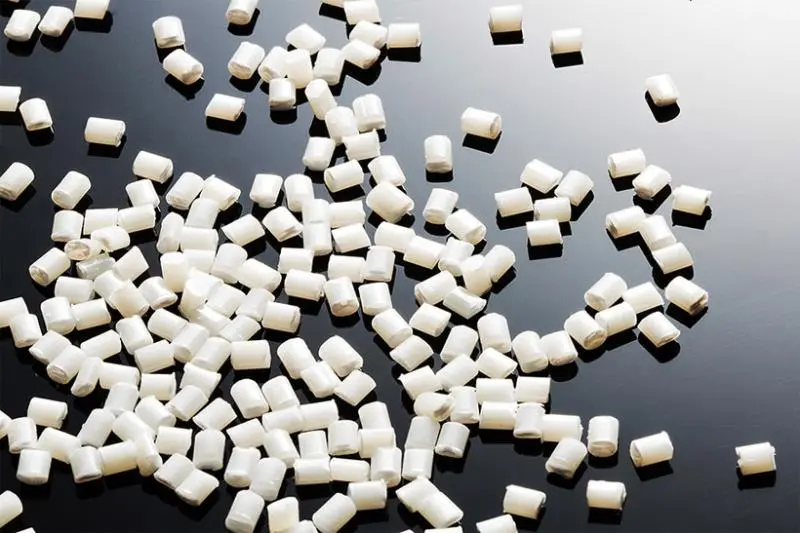
Acrylonitrile Butadiene Styrene (ABS)
Münchsmünster Adds German Petrochemical Capacity
The Münchsmünster site in Germany was another important part of the transaction.
The facility produces petrochemical products including ethylene and polyethylene, according to industry reporting.
Germany remains one of Europe's most important chemical manufacturing locations, but its producers have faced especially strong pressure from energy costs and industrial competitiveness concerns.
The transfer of Münchsmünster therefore has significance beyond LyondellBasell.
It is another example of petrochemical ownership moving toward alternative operators as multinational producers reassess European commodity capacity.
Carrington Expands the Geographic Scope
The Carrington facility in the United Kingdom further demonstrates the geographic breadth of LyondellBasell's restructuring.
Unlike a restructuring concentrated in continental Europe, the AEQUITA transaction covered assets across both EU and non-EU European markets.
This reinforces the idea that LyondellBasell's strategic assessment was focused primarily on asset economics rather than a single country's regulatory environment.
Tarragona Has an Important Qualification
Tarragona is particularly interesting because LyondellBasell retained its Advanced Polymer Solutions business at the site.
That means the transaction should not be interpreted as a complete withdrawal from Tarragona.
Instead, LyondellBasell transferred selected olefins and polyolefins activities while maintaining its specialty-oriented operations.
This distinction provides useful intelligence about the company's European strategy.
LyondellBasell is not simply leaving Europe.
It is attempting to shift its European portfolio toward businesses with stronger differentiation and potentially better long-term economics.
The Number to Track: Four Sites
If the question is how many major European petrochemical sites LyondellBasell exited through the AEQUITA process beginning in mid-2025, the clearest answer is:
Four production sites.
They are:
Berre + Münchsmünster + Carrington + Tarragona.
The transaction was announced in June 2025 and completed in May 2026.
This four-site figure provides the baseline for monitoring whether additional European exits follow.
Why the Tally Could Increase
The 2025 strategic review covered more European assets than the four ultimately transferred to AEQUITA.
LyondellBasell's earlier materials showed additional sites under strategic review, including Brindisi in Italy and Maasvlakte in the Netherlands, alongside the assets eventually included in the AEQUITA transaction.
This is important.
The four-site sale does not necessarily represent the end of LyondellBasell's European portfolio optimization.
It represents the clearest completed stage of the process.
Brindisi Remains Worth Watching
Brindisi was among the European sites identified during LyondellBasell's strategic review.
Its presence on the earlier review list means investors and industry observers should distinguish between:
Assets already exited
and
Assets that were historically under review.
That distinction prevents the European exit tally from being overstated.
The four AEQUITA sites are the clearest completed disposals in this particular process.
Maasvlakte Shows Why Ownership Counts Matter
The earlier review also included Maasvlakte in the Netherlands.
However, Maasvlakte involved a joint-venture structure, making it different from the wholly owned facilities included in the AEQUITA transaction.
This highlights an important issue when building an industry-intelligence database.
A simple plant count can be misleading unless ownership structures are also tracked.
The Transaction Was More Than a Cost-Cutting Exercise
LyondellBasell framed the transaction as part of its broader strategy to grow and upgrade the core.
The company said the divestment would allow it to concentrate on assets and businesses with durable competitive advantages and stronger long-term returns while improving financial flexibility and supporting disciplined capital allocation.
That makes the deal strategically different from an emergency asset sale.
It is better understood as a deliberate portfolio shift.
What LyondellBasell Is Keeping
The company's European strategy also reveals what it considers strategically attractive.
LyondellBasell said Europe remains an integral market and emphasized continued investment in:
Specialty polymers
Circular solutions
Low-carbon technologies
Renewable feedstocks
Technology and innovation
The Tarragona retention of its Advanced Polymer Solutions business provides a concrete example of this preference.
The message is relatively clear:
Commodity petrochemicals are becoming harder to justify, while differentiated materials and circular technologies remain strategic priorities.
Decarbonization Economics Matter
Older European petrochemical facilities face another challenge beyond conventional operating costs.
They may require substantial investment to comply with increasingly stringent environmental and decarbonization requirements.
C&EN reported that the assets sold to AEQUITA included aging facilities where LyondellBasell could avoid future capital expenditures and decarbonization costs through the transaction.
For asset owners, this creates an important strategic question.
Is it better to invest hundreds of millions into an older commodity facility, or transfer the asset to an owner with a different turnaround strategy?
The AEQUITA transaction demonstrates one answer.
Alternative Ownership Can Extend Asset Life
An important consequence of the transaction is that divestment does not necessarily mean immediate closure.
AEQUITA specializes in industrial turnarounds and carve-outs.
Following completion, the divested business was renamed Velogy and began operating as a standalone platform.
This creates a potentially different future for the facilities.
Under LyondellBasell, the assets were evaluated against the requirements of a global chemical major.
Under alternative ownership, the facilities may be managed according to a different cost base, investment strategy, and operating model.
Supply-Chain Implications
The transfer of four European petrochemical sites has implications for customers purchasing materials from the affected facilities.
Changes in ownership can affect:
Production planning
Contract structures
Product portfolios
Manufacturing priorities
Investment decisions
Logistics arrangements
Supplier relationships
Customers should therefore monitor ownership changes even when production continues.
A new owner may maintain existing products, but it may also rationalize lower-volume grades or change investment priorities over time.
Product Availability Is an Important Watchpoint
For customers purchasing petrochemical materials from European producers, portfolio changes can create uncertainty around specific grades.
This is especially relevant for products where:
Only a small number of European suppliers exist
Qualification takes significant time
Transportation costs are high
Customers depend on regional production
Technical specifications are difficult to replicate
Procurement teams should therefore treat large asset transfers as supply-chain intelligence events.
The European Petrochemical Footprint Is Being Rewritten
LyondellBasell's move is part of a wider European petrochemical restructuring trend.
Global chemical companies are increasingly separating assets into different categories:
Core Strategic Assets
Facilities with strong cost advantages, integration, technology, or differentiated products.
Turnaround Assets
Plants that may still have value under more specialized or lower-cost ownership.
Non-Core Assets
Facilities that no longer fit the multinational owner's long-term portfolio.
Rationalization Candidates
Sites where modernization costs or structural economics make continued operation difficult.
The AEQUITA transaction is particularly interesting because it moves four sites from the global-major category into an alternative-ownership model.
The Importance of Regional Cost Positioning
European petrochemical economics increasingly depend on relative cost position.
Producers with access to:
Lower-cost feedstocks
Integrated energy systems
Modern crackers
Efficient logistics
Renewable or circular feedstocks
Advanced technologies
have better opportunities to remain competitive.
Older facilities without those advantages can face increasing pressure.
This makes portfolio optimization an increasingly important part of chemical-company strategy.
Intelligence Check: What Should Be Counted?
For industry benchmarking, the cleanest methodology is to track three separate numbers.
Completed Exits
Assets where ownership has actually transferred.
Announced or Contracted Exits
Transactions that have been agreed but have not yet closed.
Assets Under Review
Facilities identified for potential sale, closure, or restructuring but without a completed transaction.
Using this framework, LyondellBasell's AEQUITA transaction contributes four completed European production-site exits to the tally.
Ranking the Divestment Event
Number of Sites
Very High
Four production sites changed ownership in a single strategic transaction.
Geographic Reach
Very High
The assets span France, Germany, the UK, and Spain.
Portfolio Impact
Very High
The transaction removes a significant portion of LyondellBasell's European olefins and polyolefins exposure.
Strategic Significance
Very High
The sale reinforces LyondellBasell's shift toward differentiated, higher-return businesses.
Future Exit Potential
Moderate to High
Earlier strategic-review materials identified additional European assets, meaning further changes remain worth monitoring.
What Investors Should Watch Next
Several indicators will determine whether the four-site transaction becomes the first stage of a much larger European restructuring.
Additional Asset Sales
New transactions would increase the completed-exit tally.
Brindisi
The Italian site appeared on earlier strategic-review materials and remains relevant when assessing the wider portfolio process.
European Capital Spending
Changes in capital expenditure can reveal which facilities LyondellBasell considers worth maintaining.
Specialty Polymer Investment
Continued investment in specialty polymers would reinforce the company's stated portfolio direction.
Circular and Low-Carbon Projects
Investment in these areas would demonstrate where LyondellBasell sees future European competitive advantage.
Looking Ahead
LyondellBasell's sale of four European petrochemical sites to AEQUITA provides a clear benchmark for measuring the company's European capacity rationalization.
The transaction began with the June 2025 announcement covering Berre, Münchsmünster, Carrington and Tarragona and was completed in May 2026.
So, for the completed divestment tally, the answer is four major European production sites.
But the broader intelligence picture is more nuanced.
LyondellBasell's earlier strategic review included additional facilities, meaning the four-site transaction should be viewed as one completed phase rather than necessarily the final word on its European footprint.
The most important signal is the type of assets being separated from the portfolio.
LyondellBasell is reducing exposure to challenging European commodity petrochemicals while retaining and emphasizing specialty polymers, circular solutions, technology, and innovation.
That suggests the company's European strategy is increasingly about quality of capacity rather than quantity of capacity.
For competitors, customers, investors, and procurement teams, tracking the next European asset move will therefore be just as important as counting the four sites already transferred.
Key Takeaways
LyondellBasell agreed in June 2025 to sell four European olefins and polyolefins assets to AEQUITA.
The four sites were Berre, Münchsmünster, Carrington, and Tarragona.
The transaction completed in May 2026.
The divested business now operates under the name Velogy.
The completed exit tally from this transaction is therefore four European production sites.
Tarragona is a partial exception because LyondellBasell retained its Advanced Polymer Solutions business there.
Earlier strategic-review materials identified additional European assets, including Brindisi and Maasvlakte, for potential alternative outcomes.
The transaction reduces LyondellBasell's exposure to challenging European olefins and polyolefins economics.
Alternative ownership may allow the facilities to pursue turnaround strategies rather than automatically leading to closure.
The transaction reinforces LyondellBasell's preference for specialty polymers, circular solutions, and higher-return businesses in Europe.
Procurement teams should monitor ownership changes for potential effects on product availability, manufacturing priorities, and supplier concentration.
Found this useful?