
Iron Oxide Pigments: Industrial Uses in Paints and Construction
Iron oxide pigments play an important role in the global paints, coatings and construction industries. Manufacturers use these inorganic colourants to produce durable red, yellow, black and brown shades across decorative finishes, protective coatings, concrete products and building materials.
Their popularity comes from their strong colour performance, chemical stability and resistance to sunlight and weather exposure. Unlike many organic colourants, iron oxide pigments maintain their appearance under demanding environmental conditions, making them suitable for both indoor and outdoor applications.
For chemical traders, procurement managers and industrial buyers, understanding iron oxide grades, applications and quality requirements helps improve purchasing decisions. Selecting the correct pigment can influence product appearance, manufacturing efficiency and the long-term performance of finished materials.
What Are Iron Oxide Pigments and How Are They Produced?
Iron oxide pigments are inorganic colourants made from iron and oxygen compounds. They occur naturally in mineral deposits and can also be manufactured through controlled chemical processes.
The most common pigment types include:
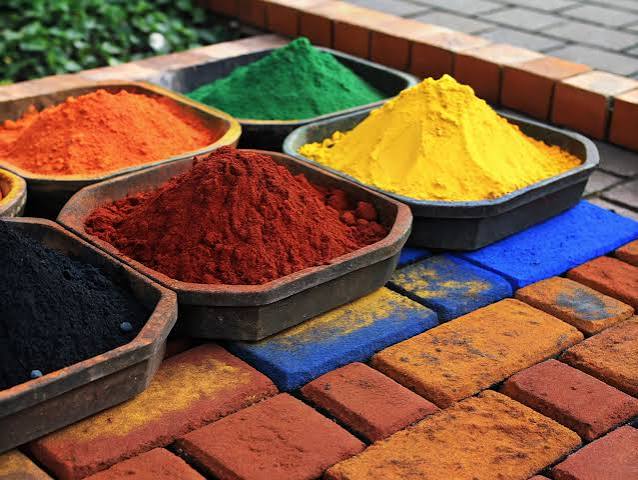
Red iron oxide: Primarily based on hematite (Fe₂O₃), widely used in paints, concrete and protective coatings.
Yellow iron oxide: Commonly based on goethite (FeOOH), used in decorative paints, tiles and construction materials.
Black iron oxide: Generally based on magnetite (Fe₃O₄), suitable for dark coatings, cement products and industrial applications.
Brown iron oxide: Produced through natural mineral combinations or blended pigment formulations to create earthy brown shades.
Natural and Synthetic Iron Oxides
Natural iron oxide pigments come from mineral deposits that undergo mining, crushing, grinding and purification. Their chemical composition and colour can vary depending on the mineral source and processing conditions.
Synthetic iron oxide pigments offer manufacturers greater control over colour strength, purity, particle characteristics and batch consistency. This makes them particularly useful for applications that require precise colour matching and repeatable production results.
Manufacturing Process
Synthetic production methods use controlled chemical reactions to form iron oxide particles with specific colour characteristics. Manufacturers then filter, wash, dry and mill the material to achieve the required particle size and powder properties.
Some producers also apply surface treatments or convert fine powders into granules to improve handling and dispersion. The final grade depends on the intended application and the performance requirements of the customer.
Iron Oxide Pigments in Paints and Industrial Coatings
Paint manufacturers rely on iron oxide pigments for stable colour, opacity and resistance to environmental exposure.
These pigments work in decorative and industrial coating systems where colour retention and long-term appearance matter. Their inorganic structure helps them withstand sunlight, moisture and many atmospheric conditions.
Decorative and Architectural Paints
Architectural coatings use iron oxide pigments to produce earthy shades for interior and exterior surfaces. Red, yellow and brown pigments create traditional finishes for residential buildings, commercial properties and public infrastructure.
Manufacturers also combine different pigment grades to develop customised colours. Consistent pigment quality helps maintain the same appearance across multiple production batches.
Industrial and Protective Coatings
Industrial coating manufacturers use iron oxide pigments in primers, machinery coatings, structural steel protection and equipment finishes.
Certain iron oxide formulations, particularly micaceous iron oxide, also serve specialised protective coating applications. Their flake-like particle structure can create a barrier effect that helps reduce moisture penetration through suitable coating systems.
Common applications include:
Anti-corrosion primers: Iron oxide pigments contribute colour and functional properties to protective primer formulations.
Automotive coatings: Selected grades provide colour in vehicle coatings and related industrial finishes.
Marine coatings: Suitable formulations help maintain protective and decorative finishes in demanding environments.
Metal coatings: Pigments support protective and decorative applications for industrial equipment and steel structures.
Water-Based and Solvent-Based Formulations
Iron oxide pigments are compatible with various coating systems, but manufacturers must select grades according to their formulation requirements.
Water-based paints require pigments with suitable wetting and dispersion characteristics. Solvent-based coatings need compatibility with the resin and solvent system to maintain stability and uniform colour.
Buyers should evaluate particle size, oil absorption, tinting strength and dispersion performance before approving a pigment for large-scale production.
Construction Applications of Iron Oxide Pigments
The construction industry represents one of the major consumption areas for iron oxide pigments.
Manufacturers add these pigments to cement-based products to create coloured building materials without relying entirely on surface coatings. The pigments distribute throughout the material, allowing the finished product to retain its colour even when the surface experiences normal wear.
Coloured Concrete and Cement Products
Concrete manufacturers use red, yellow, black and brown iron oxide pigments in decorative and architectural applications.
Common products include:
Concrete paving blocks: Pigments create coloured surfaces for walkways, driveways and public spaces.
Roofing tiles: Manufacturers use iron oxides to produce consistent colours in cement-based roof tiles.
Precast concrete: Coloured pigments improve the appearance of architectural panels, barriers and structural components.
Concrete bricks: Iron oxides provide different shades for decorative and conventional masonry products.
Ready-mix concrete: Suitable pigments create coloured concrete for landscaping and specialised construction projects.
Mortar, Plaster and Decorative Finishes
Iron oxide pigments also appear in mortar, grout, plaster and cement-based rendering materials. Builders use these products to create coloured walls, floors and decorative surfaces.
Pigment selection becomes particularly important when manufacturers supply large construction projects. Variations in shade between production batches can affect the appearance of completed buildings and paving installations.
Roads and Infrastructure
Construction contractors use iron oxide pigments in selected coloured asphalt and cement-based infrastructure products. Different shades can help distinguish pedestrian areas, cycling paths, parking spaces and designated traffic zones.
For infrastructure projects, buyers should consider colour consistency, resistance to outdoor exposure and compatibility with the complete construction material.
Key Performance Properties and Quality Requirements
The performance of iron oxide pigments depends on their chemical composition, particle structure and compatibility with the final formulation. Buyers should evaluate technical specifications rather than selecting products based on colour samples alone.
Colour Strength and Consistency
Colour strength determines how effectively a pigment produces the required shade at a particular concentration. High tinting strength can help manufacturers achieve target colours with controlled pigment quantities.
Batch consistency is equally important. Suppliers should provide samples and technical documentation that allow buyers to compare colour performance before approving commercial shipments.
Light and Weather Resistance
Iron oxide pigments generally offer strong resistance to ultraviolet exposure and outdoor weather conditions. This property supports their use in exterior paints, roofing tiles, concrete blocks and infrastructure products.
However, the performance of the complete material also depends on the binder, surface treatment, formulation and environmental exposure.
Chemical and Thermal Stability
Iron oxide pigments demonstrate good chemical stability in many industrial formulations. Their resistance to alkaline conditions makes suitable grades useful in cement and concrete applications.
Thermal stability also matters in industrial manufacturing. Buyers should confirm the temperature limits of individual grades, particularly when pigments enter processes involving heating or high-temperature curing.
Particle Size and Dispersion
Particle size influences colour strength, surface appearance and dispersion behaviour. Poor dispersion can produce uneven colouring, visible agglomerates and inconsistent finished products.
Procurement teams should request the following information:
Chemical composition and iron oxide content.
Particle size distribution.
Tinting strength and colour shade.
Oil absorption value.
Moisture content and water-soluble matter.
Lightfastness and weather resistance.
Technical Data Sheet (TDS) and Safety Data Sheet (SDS).
Factors Affecting Iron Oxide Pigment Procurement
Industrial buyers must consider more than the quoted price when sourcing iron oxide pigments. Differences in manufacturing methods, product grades and supplier quality can affect the final cost and production performance.
Grade Selection and Application Compatibility
The correct pigment depends on the intended application. Paint manufacturers may prioritise tinting strength, dispersion and colour consistency, while concrete producers focus on alkali resistance, weather durability and compatibility with cement.
Buyers should communicate their intended application clearly when requesting quotations. This helps suppliers recommend suitable grades rather than offering products based only on colour.
Supplier Reliability and Documentation
Reliable suppliers provide consistent material quality and maintain proper product documentation. Procurement teams should request:
Current product specifications and technical data.
Certificates of Analysis (COA) for supplied batches.
Safety documentation and handling instructions.
Sample quantities for production testing.
Information about packaging and storage conditions.
Packaging, Storage and Transportation
Iron oxide pigments commonly reach industrial buyers in bags or bulk packaging. Buyers should select packaging that protects the powder from moisture, contamination and damage during transportation.
Warehouses should maintain dry, clean and properly ventilated storage conditions. Staff should also follow the supplier's safety instructions and use appropriate protective equipment when handling fine pigment powders.
Supply Chain and Price Considerations
Pigment sourcing costs can change with raw material availability, energy expenses, manufacturing capacity and international freight conditions.
Importers should compare supplier quotations using consistent specifications. A lower-priced product may require higher dosage or additional processing, increasing its actual cost per finished tonne.
Establishing relationships with multiple qualified suppliers can also reduce dependence on a single source and support procurement continuity.
Environmental and Regulatory Considerations
Environmental compliance has become an important consideration for paint manufacturers, construction material producers and chemical distributors. Buyers must evaluate pigment composition, manufacturing standards and intended product applications.
Iron oxide pigments generally offer favourable durability characteristics. Their long-lasting colour performance can reduce the need for frequent repainting or surface replacement in suitable applications.
However, buyers should not assume that every grade has identical environmental or safety characteristics. Natural impurities, manufacturing residues, surface treatments and application-specific regulations can affect product suitability.
Procurement teams should check:
Applicable chemical registration and market-specific regulatory requirements.
Safety Data Sheets and handling classifications.
Heavy metal and impurity specifications where relevant.
Requirements for coatings and construction material applications.
Supplier environmental and quality management documentation.
Manufacturers should also assess dust exposure during pigment handling and introduce appropriate ventilation and workplace protection measures.
What Buyers Should Do Now
Demand from paints, protective coatings and construction materials creates several opportunities for iron oxide pigment suppliers and distributors. Buyers can strengthen their procurement strategies by focusing on technical suitability, reliable supply and consistent product performance.
Before placing bulk orders, procurement teams should request samples and test them in their actual production formulations. This helps identify potential problems with colour development, dispersion, processing behaviour and finished product quality.
For importers and distributors, comparing suppliers across different origins can improve sourcing flexibility. Maintaining approved alternative suppliers also helps manufacturers respond to changes in availability, shipping schedules and purchasing costs.
Chemical traders should understand the differences between red, yellow, black and brown grades so they can match customer requirements with suitable products. Strong supplier relationships and accurate technical documentation can support long-term business opportunities.
Potassium Fluorotitanate
Found this useful?