Demand for functional food ingredients continues to grow as manufacturers develop products that support healthier lifestyles without compromising texture or performance. Among the ingredients benefiting from this trend is konjac glucomannan, a naturally derived water-soluble dietary fibre valued for its thickening, gelling and water-binding properties. From reduced-calorie noodles to fibre supplements and fat-reduced foods, konjac glucomannan has become an important ingredient across multiple food categories.
For procurement professionals, sourcing konjac glucomannan requires more than comparing prices. Product quality depends on agricultural origin, processing technology and purification standards. Understanding the supply chain, particularly China's dominant role in cultivation and processing, is essential for qualifying suppliers and selecting the correct specification for each application.
What Is Konjac Glucomannan?
Konjac glucomannan is extracted from the tuber of Amorphophallus konjac, a perennial plant cultivated primarily in China and Japan.
The ingredient is prized because it absorbs large quantities of water, creating highly viscous solutions even at relatively low concentrations. These functional properties allow manufacturers to improve texture, stabilise formulations and increase dietary fibre content without significantly increasing calories.
Its versatility has made it a preferred ingredient in both conventional and health-focused food products.
Growing Demand in Functional Foods
Consumer interest in digestive health and reduced-calorie products continues to support demand for soluble dietary fibres.
Konjac glucomannan is widely used in:
Low-calorie shirataki noodles and rice alternatives.
Reduced-fat spreads and processed foods requiring texture enhancement.
Functional beverages with added dietary fibre.
Nutritional supplements and fibre powders.
Bakery and confectionery products designed to increase fibre content.
Because only small inclusion rates are often required, manufacturers can improve product functionality while maintaining efficient formulation costs.
Regulatory Acceptance Supports Global Markets
Regulatory approval has contributed significantly to the commercial growth of konjac glucomannan.
The ingredient is approved in the European Union as food additive E425 and holds Generally Recognised as Safe (GRAS) status in the United States for approved food applications.
These established regulatory frameworks provide confidence for manufacturers developing products intended for international markets while simplifying ingredient qualification for procurement teams.
China's Hubei Province Dominates Production
Although konjac is cultivated in several Asian regions, Hubei Province remains the world's leading production centre.
The province offers suitable growing conditions, established farming expertise and a mature processing industry capable of producing both conventional konjac flour and highly purified glucomannan powder.
This concentration creates manufacturing efficiencies but also means global buyers should closely monitor harvest conditions, regional weather patterns and agricultural output in Hubei when assessing future supply availability.
How Konjac Processing Influences Product Quality
Not all konjac ingredients are identical. Procurement teams should understand the difference between raw konjac flour and purified glucomannan because the processing method directly affects functionality, consistency and application suitability.
The production process generally includes:
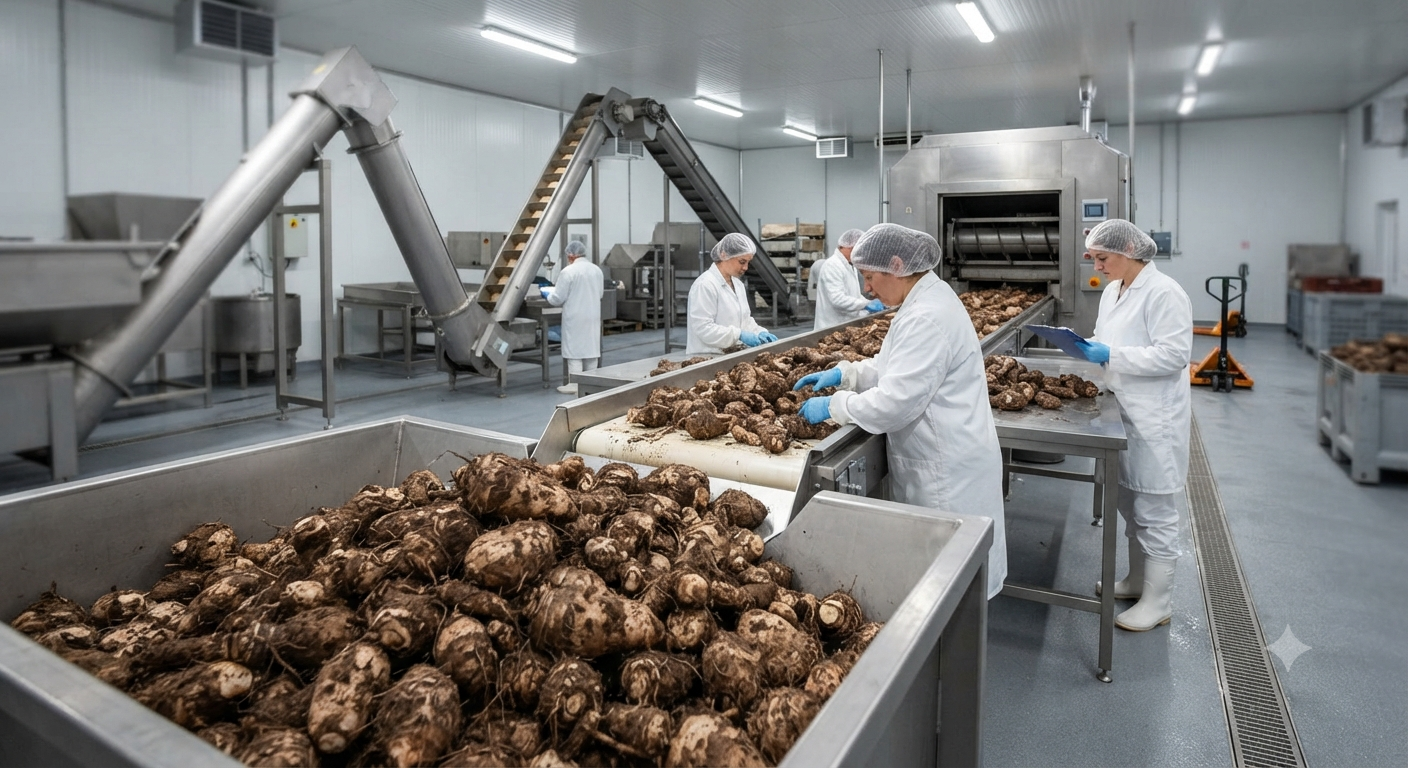
Cleaning and slicing freshly harvested konjac tubers.
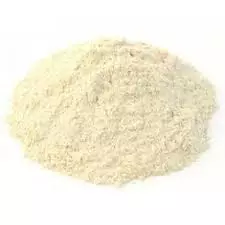
Drying and milling to produce crude konjac flour.
Purification to remove starch, proteins, pigments and other naturally occurring impurities.
Milling and classification to achieve the required particle size and specification.
Each processing stage influences viscosity, colour, purity and overall product performance.
Konjac Flour vs. Purified Glucomannan
One of the most common sourcing mistakes is treating konjac flour and purified glucomannan as interchangeable ingredients.
While both originate from the same plant, they serve different commercial purposes.
Konjac flour generally:
Contains lower glucomannan concentration.
Includes more naturally occurring starch and fibre components.
Offers a lower-cost option for certain food applications.
Purified konjac glucomannan typically provides:
Higher glucomannan content.
Improved viscosity and water-binding performance.
Better colour consistency.
More predictable functionality in premium food formulations.
For manufacturers developing functional beverages, dietary supplements or specialised reduced-calorie foods, purified glucomannan often delivers more consistent formulation performance.
Procurement Considerations for Global Buyers
Because production remains concentrated in Hubei Province, procurement planning should extend beyond product pricing.
Buyers should evaluate:
Harvest conditions during the growing season.
Processing capacity at supplier facilities.
Glucomannan purity specifications.
Viscosity grades and particle size distribution.
Moisture content and microbiological quality.
Food safety certifications and traceability documentation.
These factors help ensure the selected ingredient meets formulation requirements while supporting consistent manufacturing performance.
Supply Chain Risks and Opportunities
The geographic concentration of konjac cultivation provides economies of scale but also creates supply chain considerations.
Procurement teams should monitor:
Weather conditions affecting Hubei harvests.
Agricultural production volumes.
Export logistics from China.
Processing capacity expansion.
International demand from functional food manufacturers.
At the same time, China's mature processing industry continues to offer advantages through established expertise, efficient purification technology and reliable export capability.
For many buyers, developing long-term supplier relationships helps improve supply continuity and reduce procurement risk.
What Buyers Should Do Now
Konjac glucomannan has evolved from a niche hydrocolloid into an important functional ingredient for modern food formulation. Its combination of dietary fibre, excellent water-binding capacity and versatile thickening performance supports growing demand across reduced-calorie foods, functional beverages and nutritional supplements.
For procurement professionals, successful sourcing depends on understanding more than the agricultural origin of the ingredient. Knowledge of Hubei's production cycle, purification processes and the distinction between conventional konjac flour and purified glucomannan enables better supplier qualification and more accurate product selection.
As consumer demand for fibre-rich and healthier food products continues expanding, manufacturers that establish reliable sourcing strategies for high-quality konjac glucomannan will be well positioned to support future product innovation while maintaining consistent ingredient quality.