Lithium and Battery-Chemical Supply Diversification Moves Beyond China-Centric Routes
Lithium and Battery-Chemical Supply Diversification Moves Beyond China-Centric Routes
The global battery industry continues to pursue supply-chain diversification away from heavy concentration in China, driven by policy incentives, customer localization requirements and geopolitical risk management. New mining projects, refining investments and cathode-material initiatives in Australia, North America, Europe and selected Asian countries are gradually expanding the map of available lithium chemicals and battery materials. Progress is real, but uneven: upstream resource development is outpacing the build-out of midstream processing and precursor capacity outside China, leaving many “diversified” supply chains still dependent on Chinese conversion steps.
China retains a dominant share of global lithium chemical processing and the large majority of cathode active material capacity. That midstream concentration means that even lithium mined in Australia or South America frequently travels to China for conversion into battery-grade carbonate or hydroxide before re-export. Similar patterns apply to many specialty battery chemicals and precursors. Diversification strategies that stop at the mine gate therefore deliver only partial risk reduction.
Midstream Bottleneck and Emerging Non-China Capacity
Policy frameworks such as the US Inflation Reduction Act and European critical-raw-materials initiatives have accelerated announcements of non-Chinese refining, hydroxide and cathode-material projects. Australia has begun adding domestic midstream capability, while Korea and Japan remain important alternative sources for certain advanced materials. North American and European projects are advancing, yet timelines from final investment decision to qualified commercial output remain measured in years, and capital and technical hurdles are substantial.
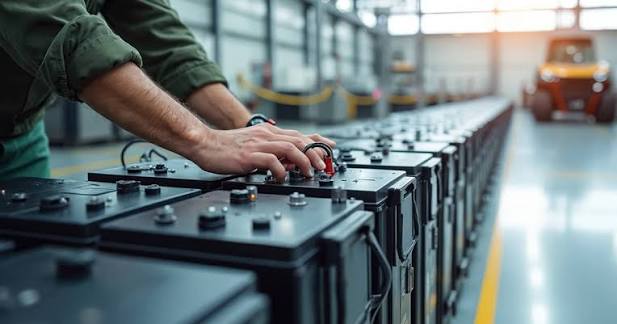
The practical result for battery and cathode producers is a two-track market. Volumes that can meet strict local-content or foreign-entity-of-concern rules command strategic attention and, in some cases, preferential offtake terms. Concurrently, the broader market still relies on the scale, cost position and established quality systems of the existing China-centric midstream. Until non-Chinese conversion capacity reaches meaningful scale and achieves consistent qualification, diversification will remain incomplete.
Implications for Buyers and Supply-Chain Planners
For automotive OEMs, cell manufacturers and battery-chemical buyers, the evolving map requires more granular origin tracking and longer qualification pipelines. Contracts increasingly specify not only the source of the raw lithium but also the location of conversion and precursor production. Dual or multi-origin strategies are becoming standard for critical grades, even when they raise complexity and cost. Inventory and logistics planning must accommodate longer or less flexible routes as new regional hubs come online.
Specialty chemical suppliers serving the battery chain face parallel pressure to demonstrate non-Chinese or multi-regional manufacturing options for electrolytes, additives, binders and related materials. Those able to offer verified alternative origins or clear roadmaps to localized production are better positioned in customer sustainability and resilience scorecards.
Lithium and battery-chemical supply diversification is moving beyond purely China-centric routes, but the decisive constraint remains midstream processing capacity outside China. Until that bottleneck eases, genuine regional resilience will continue to lag the pace of policy ambition and upstream project announcements. Buyers who map their exposure at each conversion step—and qualify alternative sources early—will navigate the transition with fewer disruptions.
Beet Pulp
Found this useful?