NEOM Green Hydrogen Reaches 90% Completion While US Blue Hydrogen Retreats
NEOM Green Hydrogen Reaches 90% Completion While US Blue Hydrogen Retreats
Saudi Arabia’s NEOM Green Hydrogen project is moving into its final stages just as several major U.S. hydrogen investments face cancellations and economic pressure. The contrast highlights a growing divide in the global hydrogen market: large-scale renewable hydrogen projects with secured financing and long-term offtake are progressing, while some U.S. blue-hydrogen projects are being reconsidered because of weaker economics, policy uncertainty, and slower demand.
NEOM Project Reaches the Final Stretch
The NEOM Green Hydrogen Company (NGHC), a joint venture between NEOM, ACWA Power, and Air Products, reported 90% overall construction completion in March 2026 across the hydrogen facility, renewable-energy assets, and transmission infrastructure. By June, the project had moved into final completion and commissioning, with energization already underway.
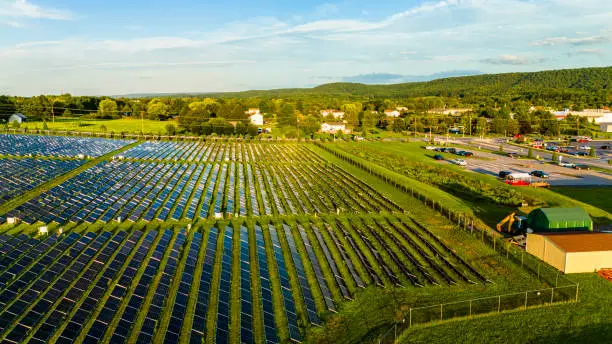
The project is being developed at Oxagon in Saudi Arabia and combines approximately 4 GW of renewable power from solar and wind with large-scale electrolysis. Once operational, it is designed to produce up to 600 tonnes of carbon-free hydrogen per day, which will be converted into as much as 1.2 million tonnes of green ammonia annually for export.
The project also benefits from strong commercial backing. Air Products is the exclusive offtaker under a 30-year agreement, while the project secured billions of dollars in non-recourse financing. Recent financing disclosures put total investment at approximately $8.5 billion.
U.S. Blue Hydrogen Faces a Different Reality
The U.S. hydrogen market is showing a more cautious trajectory, particularly for projects based on natural gas with carbon capture. In June 2026, Air Products announced that it would abandon its Louisiana Clean Energy Complex, a proposed blue-hydrogen and ammonia facility that would have produced around 1,700 tonnes of hydrogen per day using natural gas reforming and carbon capture. The company expects project-related charges of up to $2.9 billion.
Air Products said the Louisiana project's expected financial returns did not meet its investment criteria. It also discontinued a zero-carbon liquid hydrogen project in Arizona and other smaller clean-energy projects, citing challenging commercial conditions and project-specific economics.
The setbacks are part of a broader deterioration in the near-term outlook for some U.S. blue-hydrogen investments. The combination of high capital requirements, uncertain customer demand, carbon-capture costs, and changing policy incentives has made it harder for developers to justify large projects.
Policy Is Changing the Investment Equation
U.S. policy is also becoming less supportive of long-duration clean-hydrogen investment. The federal 45V clean hydrogen production credit remains available under current rules, but legislation enacted in 2025 eliminates the credit for facilities beginning construction after 2027.
Blue hydrogen can qualify for 45V depending on its lifecycle emissions, while carbon capture projects can also rely on separate incentives such as the 45Q carbon-storage credit. However, developers still have to demonstrate that project economics work without excessive dependence on uncertain future demand or policy support.
Why NEOM Has an Advantage
NEOM's model differs from many U.S. projects because the project was structured around several elements from the beginning: abundant renewable resources, dedicated power infrastructure, large-scale production, project financing, and a long-term offtake agreement.
The green ammonia output also provides an important commercial advantage. Instead of requiring an immediate global hydrogen pipeline or specialized hydrogen shipping infrastructure, the project can convert hydrogen into ammonia, which is easier to transport using established maritime infrastructure. Air Products has also finalized a marketing and distribution arrangement with Yara for renewable ammonia that is not used within its own hydrogen network.
Implications for Global Hydrogen Markets
The contrasting trajectories of NEOM and U.S. blue-hydrogen projects suggest that the next phase of the hydrogen industry may be determined less by technology alone and more by project economics, financing structures, offtake certainty, and access to low-cost energy.
For Saudi Arabia, successful commissioning of NEOM would strengthen its position as a major exporter of green ammonia and demonstrate that large-scale renewable hydrogen production can move beyond the demonstration stage.
For U.S. developers, the retreat from projects such as Louisiana does not mean blue hydrogen is disappearing. Rather, it indicates that projects without sufficiently strong economics or customer commitments may struggle to reach final investment decisions.
Outlook
NEOM's progress provides a notable counterpoint to the recent retrenchment in parts of the U.S. hydrogen market. With construction substantially advanced, commissioning underway, and a long-term offtake structure in place, the Saudi project has a clearer path toward commercial production.
The bigger question is whether NEOM can demonstrate competitive delivered costs for green ammonia once it reaches international markets. If it succeeds, the project could strengthen Saudi Arabia's role in global low-carbon ammonia supply while putting additional pressure on higher-cost hydrogen projects elsewhere.
The emerging hydrogen divide is therefore not simply green versus blue. It is increasingly about which projects can combine low-cost energy, committed buyers, reliable infrastructure, financing, and credible execution into a commercially viable business.

Borax Decahydrate (Technical Grade) - Argentina
Found this useful?