NIOSH Chemical Safety Resources: IDLH Values, Safety Cards and What Buyers Should Know
Chlorine becomes immediately dangerous to life or health at just 10 parts per million in air, while ammonia carries a threshold of 300 parts per million before reaching that same danger level. These specific numbers come from NIOSH's Immediately Dangerous to Life or Health value system, one of several free chemical safety resources the agency maintains for anyone handling industrial chemicals at work.
For chemical buyers, importers and facility safety teams, these NIOSH resources offer a genuinely useful, no cost way to check a substance's real hazard profile before it ever reaches a warehouse floor.
What NIOSH Actually Does on Chemical Safety
The National Institute for Occupational Safety and Health has focused on the safe use of workplace chemicals since its founding in 1970. Its chemical-related research spans toxicity studies, occupational epidemiology, methods for measuring chemical exposure in real work environments, engineering controls and personal protective equipment research, and formal risk assessment work.
This research feeds directly into a set of practical tools that facilities, importers and safety professionals can use without any subscription or licensing cost.
The Pocket Guide Covers Nearly 700 Chemicals
The NIOSH Pocket Guide to Chemical Hazards remains one of the most widely used references for recognizing and controlling workplace chemical hazards. It includes information and recommendations for approximately 700 individual chemicals, giving safety teams a fast reference point for common industrial substances.
How IDLH Values Actually Work
IDLH values, short for Immediately Dangerous to Life or Health, characterize high risk exposure concentrations and conditions. These values were first developed in the mid-1970s specifically to inform respirator selection criteria, and they serve two distinct purposes: ensuring a worker can escape a contaminated environment if respiratory protection equipment fails, and marking the concentration above which only the most reliable breathing apparatus should be used.
The current IDLH list draws from two different generations of methodology. Some values still rely on the original 1994 revised criteria, while others reflect newer methodology introduced in NIOSH Current Intelligence Bulletin 66, published in 2014. When a chemical shows more than one listed value, the entry based on the 2014 methodology should be treated as current NIOSH policy.
A few examples illustrate the range these values cover:
Hydrogen sulfide carries an IDLH of 100 parts per million.
Formaldehyde sits at 20 parts per million.
Sulfuric acid carries a value of 15 milligrams per cubic meter.
Phosgene, notably toxic even at low concentrations, sits at just 2 parts per million.
Sodium hydroxide carries a value of 10 milligrams per cubic meter.
NIOSH continues re-evaluating older IDLH values using its 2014 criteria, meaning this list itself remains a genuinely living document rather than a fixed historical reference.

Skin Exposure Gets Its Own Dedicated Resource
Beyond airborne exposure, NIOSH maintains Skin Notation Profiles, a resource specifically built to help identify hazards associated with skin contact rather than inhalation. Many industrial chemicals pose meaningfully different risk depending on the exposure route, and this resource fills a gap that a purely inhalation focused reference like IDLH values cannot address on its own.
International Chemical Safety Cards Cover 1,700 Substances
For a broader, globally recognized reference, NIOSH participates actively in developing International Chemical Safety Cards, commonly known as ICSCs. More than 1,700 of these cards are currently available, translated into English, Spanish and 13 additional languages.
An international group of scientists from institutions focused on occupational safety and health draft and peer review every card. NIOSH helped initiate this effort originally and continues participating in the scientific review process today. For companies trading chemicals across borders, this multilingual coverage is particularly useful since it gives workers and safety professionals in different countries access to consistent hazard information regardless of local language.
Occupational Exposure Banding Fills the Gaps
Not every chemical has a formally established occupational exposure limit. NIOSH's Occupational Exposure Banding Process exists specifically to address that gap, allowing safety professionals to quickly and accurately assign chemicals lacking a formal limit into specific hazard categories, or bands, based on the best available scientific information.
This process matters particularly for newer or less common industrial chemicals that have not yet accumulated enough toxicological study to support a formal exposure limit, giving management a scientifically grounded way to make interim safety decisions rather than operating without any guidance at all.
Databases That Support Deeper Research
NIOSH also maintains supporting databases useful for more detailed chemical safety research. The Engineering Controls Database catalogs technology specifically aimed at controlling chemical hazards in the workplace, while the NIOSHTIC-2 bibliographic database offers a searchable archive of occupational safety and health publications, documents and grant reports connected to NIOSH funded work.
Why This Connects to EPA's Chemical Safety Work Too
NIOSH does not operate entirely in isolation from environmental regulation either. The Frank R. Lautenberg Chemical Safety for the 21st Century Act requires EPA to evaluate workplace chemical exposures alongside environmental exposures, and NIOSH works directly with EPA to supply information on occupational chemical uses, exposure patterns and risk assessment methods.
This cross agency collaboration means workplace safety data and environmental regulatory data increasingly inform each other, rather than existing as two entirely separate silos of chemical information.
Practical Ways Buyers Can Use These Resources
Chemical buyers and facility safety teams can put these NIOSH tools to direct, practical use without needing specialized toxicology training.
Check the IDLH value for any new or unfamiliar chemical entering a facility before finalizing storage and handling procedures.
Cross reference the relevant International Chemical Safety Card when working with multilingual teams or overseas suppliers, since consistent hazard information matters across language barriers.
Consult Skin Notation Profiles specifically for chemicals with significant dermal contact risk, rather than relying only on inhalation focused data.
Use the Occupational Exposure Banding process when sourcing newer specialty chemicals that lack an established formal exposure limit.
The Bottom Line for Procurement Teams
Free, scientifically grounded chemical safety data is available directly from NIOSH for hundreds of substances, covering everything from acute inhalation risk to skin contact hazards and multilingual safety communication. Building a habit of checking these resources before finalizing sourcing decisions on unfamiliar or higher risk chemicals costs nothing and can meaningfully reduce workplace safety risk down the line.
Ready to source chemicals from verified global suppliers? Explore competitive offers on our platform today.
Reference Link:
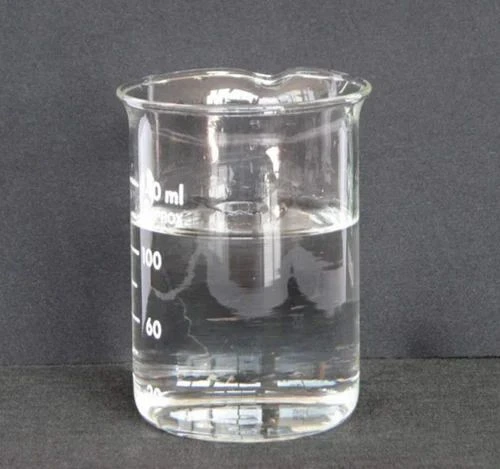
Phosphoric Acid (85%) (E338)
Found this useful?