The global fertilizer market is once again facing a familiar problem: too much supply concentrated in too few places.
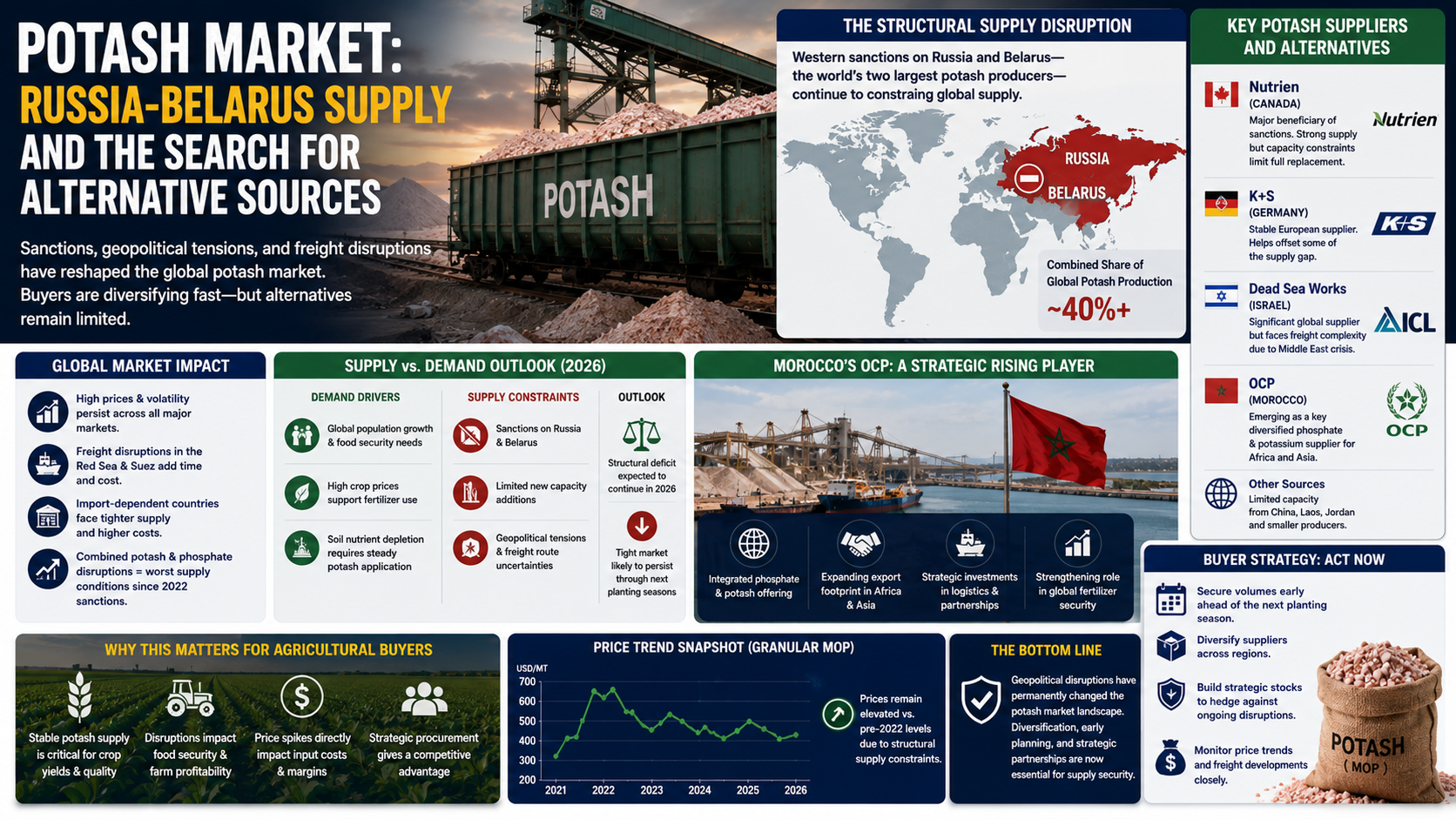
For years, Russia and Belarus have dominated global potash production, together accounting for a major share of supply entering international agricultural markets. But in 2026, Western sanctions continue to keep significant Russian and Belarusian volumes constrained, forcing fertilizer buyers worldwide to rethink sourcing strategies and prepare for another season of supply uncertainty.
What began as a geopolitical disruption in 2022 has now evolved into a structural supply challenge, and agricultural procurement teams across Asia and other import-dependent regions are being forced to adapt quickly.
The biggest challenge facing the potash market remains simple: replacing lost Russian and Belarusian supply is far harder than expected.
Major producers such as Nutrien in Canada and K+S in Germany have benefited from the supply gap and expanded their market importance. However, even increased production from these suppliers has not been sufficient to fully replace the volumes affected by sanctions.
At the same time, new geopolitical complications have added further pressure.
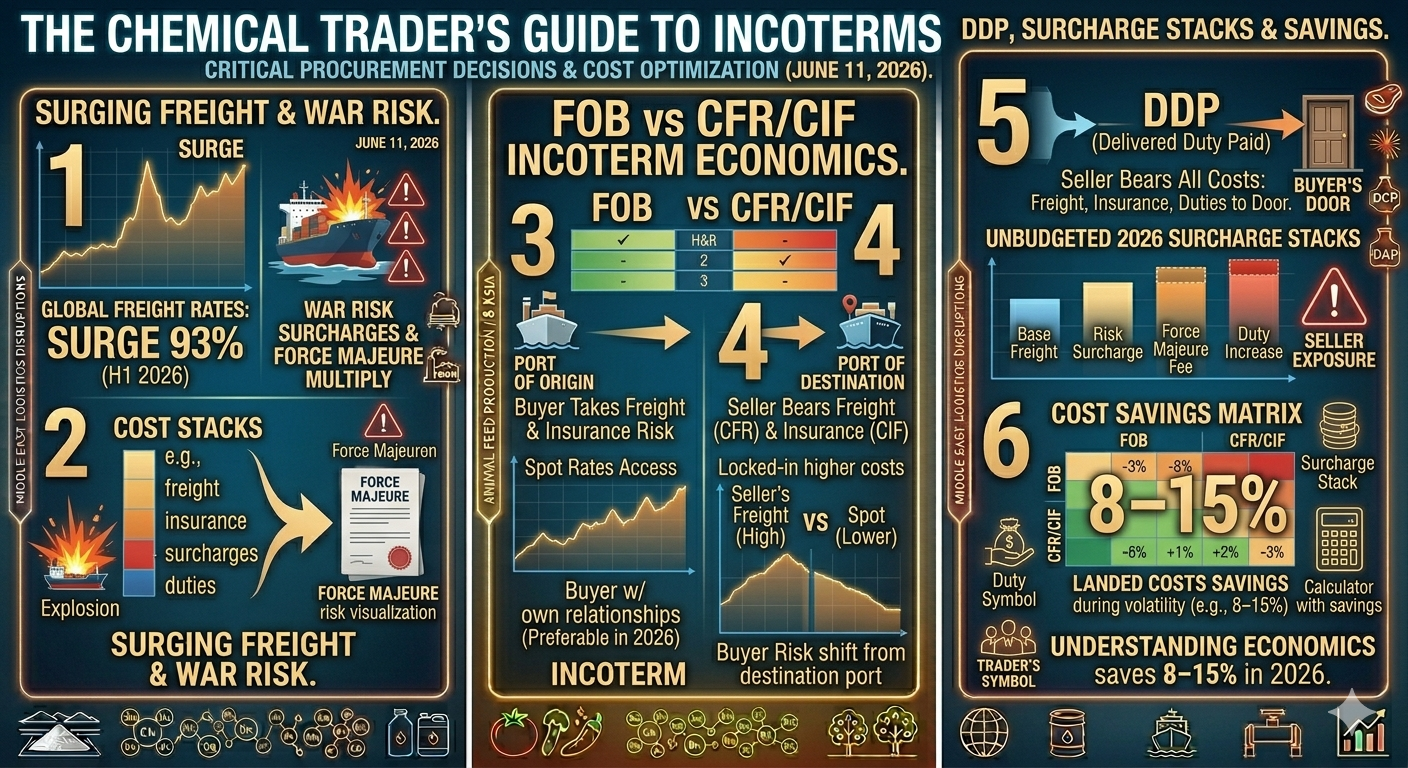
The Middle East crisis has created fresh freight challenges affecting Israeli potash exports from Dead Sea Works, another important supplier within the global market. While production itself remains significant, shipping uncertainty has added another layer of complexity for buyers already dealing with constrained supply availability.
This has pushed procurement teams to look more aggressively toward alternative sourcing origins.
One country gaining increasing attention is Morocco, where OCP is emerging as a strategically important supplier not only for phosphate products but increasingly as part of broader fertilizer diversification strategies for African and Asian markets.
The urgency is growing because the disruption is no longer limited to potash alone.
Global fertilizer buyers are now facing simultaneous pressure in both potassium and phosphate supply chains, creating one of the most severe procurement environments since sanctions first disrupted the market in 2022.
As a result, strategic stockpiling discussions are intensifying across South Asia and Southeast Asia, where import dependence remains high and agricultural production planning cannot afford supply shortages ahead of upcoming planting seasons.
Key market signals buyers should closely monitor include:
Ongoing sanctions affecting Russian and Belarusian exports
Production capacity increases from Nutrien and K+S
Freight conditions impacting Israeli potash shipments
Morocco’s expanding role through OCP supply diversification
Stockpiling activity across Asian agricultural markets
Combined phosphate and potash supply disruptions heading into the next planting cycle
For procurement teams, the lesson is becoming increasingly clear.
The fertilizer market is no longer dealing with temporary disruption but with structural geopolitical shifts affecting supply availability for multiple critical nutrients at the same time.
Buyers waiting for a return to pre-2022 market stability may be waiting far longer than expected.
In the current environment, supply security is becoming just as important as price — and strategic sourcing decisions made today may determine procurement success for the next planting season.
Looking for fertilizer market intelligence or alternative sourcing options? Monitoring diversified supply origins has become critical as potash and phosphate markets remain under sustained geopolitical pressure.