Precipitated Calcium Carbonate: Production and Industrial Applications
Precipitated Calcium Carbonate: Production and Industrial Applications
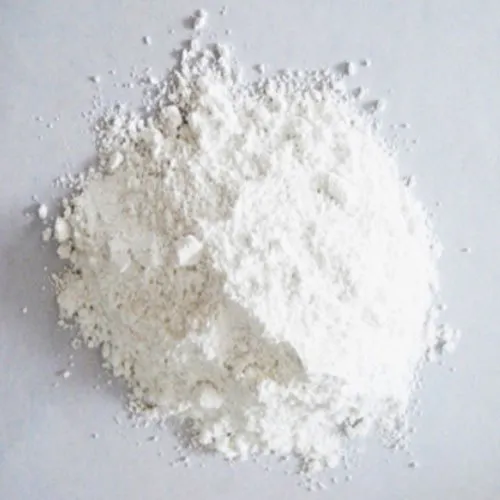
Precipitated Calcium Carbonate (PCC) is an important industrial mineral widely used in paper manufacturing, plastics, rubber, paints, coatings, adhesives, pharmaceuticals, and other applications. Known for its high purity, controlled particle size, and adjustable crystal structure, PCC offers manufacturers greater flexibility in developing products with specific physical and performance characteristics.
Unlike Ground Calcium Carbonate (GCC), which is produced by mechanically grinding natural limestone, PCC is manufactured through a controlled chemical precipitation process. This production method allows manufacturers to control particle morphology, brightness, surface area, and particle-size distribution according to the requirements of different industries.
As demand for high-performance fillers and functional additives continues across manufacturing sectors, PCC remains an important material for improving product quality, processing efficiency, and formulation performance.
What Is Precipitated Calcium Carbonate (PCC)?
Precipitated Calcium Carbonate is a synthetically produced form of calcium carbonate with the chemical formula CaCO₃. It is generally manufactured by reacting calcium hydroxide with carbon dioxide under controlled conditions to form fine calcium carbonate particles.
The controlled precipitation process allows manufacturers to produce different PCC grades with specific characteristics, including:
High chemical purity and whiteness.
Controlled particle size and distribution.
Different crystal structures and morphologies.
High surface area and controlled porosity.
Consistent physical and chemical properties.
Compatibility with different industrial formulations.
PCC is available in several crystal forms, including calcite, aragonite, and vaterite. Each structure has different physical characteristics, making it suitable for particular manufacturing applications.
PCC vs. Ground Calcium Carbonate (GCC)
Although PCC and GCC share the same chemical composition, their production methods and physical properties differ.
Property | PCC | GCC |
|---|---|---|
Production method | Chemical precipitation | Mechanical grinding |
Raw material | Lime and carbon dioxide | Natural limestone, chalk or marble |
Particle characteristics | Precisely controlled | Determined largely by grinding |
Purity | Generally higher and controllable | Depends on natural deposits and processing |
Crystal morphology | Can be engineered | Inherited from natural mineral structure |
Main advantage | Customised performance | Natural mineral availability and processing economics |
The choice between PCC and GCC depends on product specifications, processing requirements, and manufacturing costs.
How Is Precipitated Calcium Carbonate Produced?
The most common industrial production method is the carbonation process. It involves converting limestone into quicklime, preparing hydrated lime, and introducing carbon dioxide to produce calcium carbonate.
1. Limestone Calcination
The production process begins with high-quality limestone, primarily composed of calcium carbonate. The limestone is heated in a lime kiln at high temperatures, generally around 900–1,000°C, to produce quicklime and carbon dioxide.
The chemical reaction is:
CaCO₃ → CaO + CO₂
The resulting calcium oxide, commonly known as quicklime, is used in the next production stage. The released carbon dioxide can also be collected, purified, and reused during carbonation.
2. Slaking or Hydration
Quicklime is mixed with water in a controlled process to produce calcium hydroxide, also known as hydrated lime or slaked lime.
The reaction is:
CaO + H₂O → Ca(OH)₂
This reaction releases heat and produces a calcium hydroxide suspension commonly called milk of lime.
The suspension is then processed to remove impurities and unwanted particles. Proper preparation is important because the quality of the hydrated lime directly influences the characteristics of the final PCC product.
3. Carbonation and Precipitation
In the carbonation stage, purified carbon dioxide is introduced into the calcium hydroxide suspension under controlled operating conditions.
The reaction produces calcium carbonate particles and water:
Ca(OH)₂ + CO₂ → CaCO₃ + H₂O
The precipitation conditions determine important product characteristics, including crystal structure, particle size, brightness, and surface area.
Manufacturers regulate temperature, carbon dioxide flow rate, concentration, pH, agitation, and reaction time to obtain the required PCC grade.
4. Filtration and Washing
After precipitation, the calcium carbonate suspension undergoes filtration to separate solid PCC particles from the remaining liquid.
The material is washed to remove soluble impurities and unwanted residues. This stage helps achieve the required purity and product specifications.
5. Drying, Milling, and Packaging
The filtered PCC is dried using suitable industrial drying equipment. Depending on the required application, it may undergo additional milling, classification, surface treatment, or particle-size adjustment.
The final product can be supplied as a dry powder or aqueous slurry. Packaging and storage conditions depend on the grade and intended industrial use.
Major Industrial Applications of Precipitated Calcium Carbonate
PCC is used across multiple industries because its particle characteristics can be adjusted to improve the performance of finished products. Its role extends beyond serving as an inexpensive filler, as it can also influence opacity, brightness, viscosity, strength, and processing behaviour.
1. Paper and Pulp Industry
The paper industry is one of the major consumers of precipitated calcium carbonate. PCC is used as a filler and coating pigment in paper production.
Its controlled particle size and optical properties help improve:
Paper brightness and whiteness.
Opacity and printing quality.
Surface smoothness and finishing.
Ink absorption and print performance.
Paper formulation efficiency.
PCC can also help manufacturers optimise paper quality while reducing dependence on more expensive raw materials.
2. Plastics and Polymer Manufacturing
In the plastics industry, PCC is incorporated into polymer formulations to improve physical properties and processing performance.
It is used in products such as PVC pipes, plastic films, cables, packaging materials, and injection-moulded components.
Depending on its particle size, surface treatment, and compatibility with the polymer, PCC can contribute to improved dimensional stability, stiffness, surface finish, and impact performance.
Surface-treated PCC grades are particularly useful where better dispersion and compatibility with polymer matrices are required.
3. Rubber and Tyre Manufacturing
PCC is widely used as a reinforcing and functional filler in rubber formulations.
Applications include tyres, rubber footwear, hoses, conveyor belts, seals, and other moulded rubber components.
Its properties can help improve tensile strength, tear resistance, hardness, surface finish, and processing characteristics, depending on the rubber formulation and PCC grade.
Fine-particle and surface-treated PCC products are particularly relevant for applications requiring improved filler dispersion.
4. Paints, Coatings, and Inks
In paints and coatings, PCC functions as an extender and performance-enhancing additive.
It can contribute to opacity, brightness, surface finish, rheology, and coating stability. Its particle characteristics also influence the formulation and application behaviour of paints.
In printing inks, PCC can help control viscosity, improve consistency, and support specific surface and printing requirements.
5. Adhesives and Sealants
PCC is an important functional filler in adhesives and sealant formulations.
It can help control viscosity, improve consistency, reduce formulation costs, and influence mechanical properties.
Surface-modified PCC grades are used in selected applications where compatibility with organic binders and improved dispersion are important.
Common applications include construction sealants, silicone-based formulations, industrial adhesives, and joint-filling compounds.
6. Pharmaceutical and Personal Care Industry
High-purity PCC grades are used in selected pharmaceutical and personal care formulations.
Applications include:
Toothpaste as a mild abrasive and polishing agent.
Calcium supplements and pharmaceutical preparations.
Cosmetic powders and selected skincare products.
Formulation fillers and functional excipients.
These applications require appropriate purity, particle characteristics, and compliance with relevant pharmaceutical, food, or cosmetic standards.
Factors Influencing PCC Quality and Performance
The performance of precipitated calcium carbonate depends on several production and formulation parameters. Manufacturers must maintain consistent process conditions to produce grades that meet customer specifications.
Particle Size Distribution: Particle size affects dispersion, surface finish, opacity, and mechanical performance in different formulations.
Crystal Morphology: Calcite, aragonite, and vaterite structures offer different physical characteristics and functional properties.
Brightness and Whiteness: These characteristics are particularly important in paper, paints, coatings, and personal care products.
Specific Surface Area: Surface area influences interactions with polymers, resins, binders, and other formulation ingredients.
Chemical Purity: Impurities can affect product appearance, stability, and suitability for specialised applications.
Surface Treatment: Coating PCC particles with suitable surface-modifying agents can improve compatibility and dispersion in plastics, rubber, and other organic formulations.
Sustainability and Innovation in PCC Manufacturing
Sustainability is becoming an important consideration in industrial mineral production. PCC manufacturing offers opportunities to utilise carbon dioxide as a process input during carbonation, while certain production facilities can integrate recovered CO₂ from industrial operations.
Another area of development involves producing PCC from calcium-rich industrial by-products and waste materials. Research and industrial technologies are exploring ways to recover calcium from suitable residues and convert it into valuable calcium carbonate products.
These approaches may help reduce raw material consumption, improve resource efficiency, and support industrial waste valorisation.
However, the environmental benefits depend on the source of calcium, energy requirements, CO₂ origin, transportation, and the overall production process. Using carbon dioxide in PCC production does not automatically make the process carbon-neutral or permanently store all the carbon.
Market Opportunities and Future Demand for PCC
The demand for precipitated calcium carbonate is supported by its applications in packaging, paper, plastics, rubber, construction materials, paints, and specialty formulations.
Manufacturers are increasingly interested in customised PCC grades that offer improved dispersion, consistent particle characteristics, and application-specific performance.
Developments in surface modification, controlled crystallisation, waste-derived raw materials, and process optimisation are creating opportunities for PCC producers to serve more specialised industrial markets.
For chemical manufacturers and industrial buyers, selecting the right PCC grade requires consideration of purity, particle size, morphology, surface treatment, and compatibility with the final formulation. These factors will continue to influence product development and procurement decisions across the global chemical and materials industries.
Source Links
1. European Commission – Large Volume Inorganic Chemicals BREF
PCC production process, properties and industrial applications
2. Austrian Environment Agency – PCC Production
Calcium Carbonate (Feed Grade)
Found this useful?