Private Equity's Record 47.6% Deal Share Ranks Among 2026's Defining M&A Statistics
Private equity has become one of the defining forces in chemicals M&A in 2026.
Private equity transactions reportedly represented 47.6% of year-to-date chemicals deal volume, the highest share recorded by Capstone Partners since it began tracking the sector.
That means financial sponsors are no longer a secondary source of transaction activity. They are responsible for nearly half of all chemicals M&A deals tracked so far this year.
The statistic also helps explain two other important developments in chemicals M&A: the rise of platform acquisitions and the increasing focus on specialty businesses capable of supporting repeat consolidation.
The 47.6% Benchmark
The headline figure is striking:
Private equity accounted for 47.6% of year-to-date chemicals M&A deal volume in 2026.
According to the supplied Capstone Partners benchmark, that is the highest share in its tracking history.
In practical terms, nearly one out of every two chemicals M&A transactions is now involving a private-equity buyer.
That represents a major shift in the structure of the market.
Why Private Equity's Share Matters
The identity of the buyer matters because financial sponsors typically approach acquisitions differently from strategic chemical companies.
A strategic buyer may acquire an asset primarily to:
Add capacity
Gain technology
Expand a product portfolio
Enter a new market
Capture operating synergies
Private equity investors generally have a broader value-creation framework.
They may pursue:
EBITDA growth
Margin improvement
Procurement savings
Add-on acquisitions
Geographic expansion
Professionalization
Multiple expansion
Eventual resale
This can create a different trajectory for acquired chemical and ingredient businesses.
Nearly Half the Market Is Financially Driven
A 47.6% share means that chemicals M&A should increasingly be analyzed through a financial-sponsor lens.
This matters because private equity firms often have significant capital available for follow-on acquisitions.
A sponsor may acquire one company today and then pursue several additional acquisitions over the following years.
That creates a cycle:
Platform acquisition → bolt-ons → operational improvement → larger platform → exit
This model can accelerate consolidation in fragmented specialty markets.
The Connection to Platform Acquisitions
The record private-equity share is particularly important alongside the record 19.5% platform-acquisition share.
These two statistics reinforce each other.
Private equity investors are natural users of platform strategies because they can:
Acquire an initial platform.
Add smaller competitors.
Combine procurement.
Consolidate manufacturing.
Expand geographically.
Improve EBITDA.
Sell the enlarged platform.
The result can be substantially greater consolidation than the original acquisition suggests.
Why Specialty Chemicals Are Attractive
Private equity tends to favor businesses where operational improvements and consolidation can create measurable value.
Specialty chemical businesses can fit this model particularly well.
Attractive characteristics include:
High customer retention
Technical differentiation
Specialized manufacturing
Long qualification cycles
Regulatory barriers
Strong margins
Fragmented competition
Opportunities for bolt-on acquisitions
These characteristics can create multiple avenues for value creation.
Food Ingredients Fit the Same Model
The private-equity strategy has direct relevance to food ingredients.
Many ingredient markets contain numerous regional or specialized producers, distributors, and formulation businesses.
A sponsor can potentially create a platform by combining complementary assets across:
Food ingredients
Nutrition
Pharmaceutical ingredients
Personal care ingredients
Specialty chemicals
The resulting portfolio can have broader customer coverage and greater purchasing scale than any individual acquired business.
Food Ingredients to Monitor
The platform model is particularly relevant to:
Citric Acid
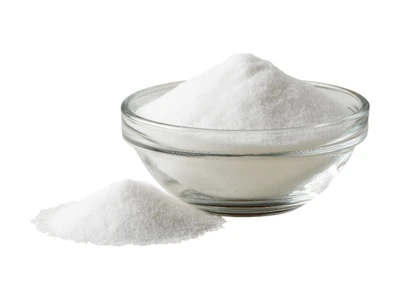
Citric Acid Anhydrous (E330)
Glycerin
Sorbitol
Propylene Glycol
Xanthan Gum
Sodium Benzoate
These products can sit within broader ingredient portfolios where scale, regulatory expertise, distribution, and technical support create opportunities for consolidation.
Private Equity's Procurement Playbook
Once multiple businesses are brought under common ownership, procurement can become a major source of value creation.
Sponsors may seek to aggregate purchasing of:
Raw materials
Packaging
Freight
Energy
Warehousing
Maintenance
Contract manufacturing
Laboratory services
For suppliers, this can produce a significant change in negotiating dynamics.
A customer that previously represented several small accounts may suddenly become one large centralized purchasing organization.
What This Means for Suppliers
Private-equity ownership can create both opportunities and risks.
Potential Opportunities
Larger consolidated orders
Multi-site contracts
Expanded geographic relationships
New product introductions
Cross-selling opportunities
Potential Risks
Aggressive cost negotiations
Supplier rationalization
Longer qualification processes
Consolidated purchasing
Pressure to improve payment or logistics terms
Suppliers should therefore identify when a major customer enters a private-equity-backed platform.
What This Means for Procurement Teams
Buyers should also pay attention to PE ownership.
A private-equity-backed supplier may pursue rapid growth through acquisitions, which can alter:
Capacity
Product portfolios
Manufacturing locations
Quality systems
Regulatory registrations
Approved suppliers
Lead times
The ownership structure can therefore provide an early signal of future corporate activity.
Private Equity and Valuation Multiples
The record PE share also connects to rising chemical M&A valuations.
Private-equity investors need a credible path to generate returns.
That makes the relationship between:
Purchase multiple
EBITDA growth
Leverage
Synergies
Exit multiple
particularly important.
If chemical acquisition multiples are already elevated, sponsors may need to rely more heavily on operational improvements and add-on acquisitions to achieve target returns.
A Simple Value-Creation Framework
Consider a hypothetical specialty ingredient company with:
$50 million EBITDA
At an 9.0x purchase multiple:
Enterprise value = $450 million
If a private-equity owner grows EBITDA to $75 million through organic growth, procurement savings, and acquisitions, the same 9.0x multiple would imply:
Enterprise value = $675 million
The value increase comes from EBITDA growth, rather than relying on multiple expansion.
That is one reason platform strategies can be attractive in specialty markets.
The Consolidation Multiplier
Private equity's influence can extend beyond the original transaction.
Imagine a sponsor acquires a $50 million EBITDA platform.
It then acquires three smaller competitors.
If the combined businesses reach $100 million EBITDA after synergies, the original platform has effectively doubled in operating scale.
That means the first transaction becomes the foundation for a much larger consolidation story.
This is why simply counting acquisitions can underestimate the eventual market impact of private-equity activity.
Competitive Intelligence Framework
To assess PE activity in chemicals, track:
1. PE Deal Share
Is the 47.6% figure sustained?
2. Platform Creation
How many PE transactions establish new platforms?
3. Bolt-On Frequency
How quickly do sponsors add businesses?
4. Sector Focus
Which chemical subsectors are attracting sponsors?
5. Valuation
Are PE buyers paying premiums for specialty assets?
6. Exit Activity
Are sponsors returning assets to strategic buyers or other financial investors?
7. Supplier Effects
Are portfolio companies consolidating their vendor bases?

Why the Record Matters
A record private-equity share does not necessarily mean that private equity is bullish on every part of the chemical industry.
It may instead indicate that financial sponsors are being highly selective.
Capital can concentrate in assets with:
Defensible margins
Attractive end markets
Consolidation potential
Strong cash generation
Operational improvement opportunities
That distinction matters.
A record PE share can coexist with weak conditions in commodity chemicals.
In fact, difficult market conditions may encourage sponsors to target businesses where operational restructuring or consolidation can create value.
Implications for Food Ingredient Markets
The food ingredient sector should watch this trend closely.
Private-equity investment can accelerate consolidation across fragmented ingredient categories, potentially creating larger suppliers with:
Wider product portfolios
Larger manufacturing footprints
Greater purchasing power
More sophisticated logistics
Broader technical capabilities
At the same time, consolidation can reduce the number of independent suppliers available to buyers.
That makes supplier diversification increasingly important.
Looking Ahead
Private equity's 47.6% share of 2026 chemicals deal volume is one of the clearest indicators that financial sponsors are reshaping the sector's M&A landscape.
Combined with the record platform-acquisition share, the statistic points toward a market increasingly organized around platform creation, repeated bolt-ons, and operational value creation.
For specialty chemicals and food ingredients, this could accelerate consolidation over the next several years.
The key question is no longer simply whether private equity is active in chemicals.
It is:
Which chemical and ingredient businesses are being selected as platforms for the next wave of consolidation?
That question will matter for investors, competitors, suppliers, and procurement teams alike.
Key Takeaways
Private equity represented 47.6% of year-to-date chemicals M&A deal volume in 2026.
The figure is reportedly the highest in Capstone Partners' tracking history.
Nearly half of sector transactions therefore involve financial sponsors.
PE ownership is closely connected to platform-plus-bolt-on consolidation strategies.
Specialty chemical and ingredient businesses are attractive where they offer defensible margins and consolidation opportunities.
Private-equity-backed platforms can aggregate procurement and increase supplier negotiating power.
Food ingredient suppliers should monitor PE-backed consolidation for changes in customer ownership and purchasing strategy.
Procurement teams should track PE acquisitions as potential early indicators of supplier consolidation.
The combination of record PE participation and record platform activity suggests a potentially significant new phase of chemicals-sector consolidation.
Found this useful?