Ranking 2026's Insolvency-Driven Chemical Asset Sales: Vynova Joins the List
Insolvency-driven transactions are becoming an increasingly important indicator of stress in Europe's chemical industry.
Vynova's Wilhelmshaven asset sale process to Westlake adds another data point to a growing list of distressed chemical transactions in 2026.
Unlike conventional M&A, where a seller typically chooses when and how to monetize an asset, insolvency-driven sales are often shaped by financial distress, liquidity constraints, restructuring requirements, or creditor pressure.
That makes them particularly useful for tracking the underlying health of European chemical manufacturing.
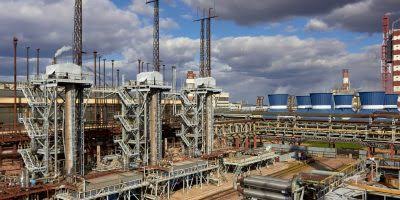
Why Vynova's Sale Matters
The Vynova Wilhelmshaven transaction is significant because it combines three themes currently affecting European chemicals:
Financial pressure
Asset restructuring
Industrial consolidation
An insolvency-driven sale can allow a stronger buyer to acquire strategically useful production assets while the distressed owner is unable to continue operating them independently.
For the buyer, this can create an opportunity to obtain:
Manufacturing capacity
Customer relationships
Product portfolios
Infrastructure
Skilled workforce
Strategic geographic positions
Potentially at a valuation below what a comparable healthy asset might command.
Distressed M&A vs. Conventional M&A
The distinction is important.
Conventional M&A | Distressed / Insolvency Sale |
|---|---|
Seller initiates process | Financial distress triggers process |
Negotiation over strategic value | Liquidity and creditor considerations matter |
Seller has greater timing flexibility | Timing can be constrained |
Valuation often reflects growth potential | Valuation may reflect asset recovery value |
Buyer competes for strategic fit | Buyer can exploit restructuring opportunity |
This makes distressed transactions particularly valuable for competitive intelligence.
What Distressed Sales Reveal
A single insolvency does not prove that an entire sector is failing.
But a growing number of insolvency-driven transactions can reveal structural weaknesses that are difficult to see in ordinary earnings data.
Watch for concentration around:
High-energy-cost regions
Commodity chemicals
Older production assets
Highly leveraged businesses
Capacity-constrained markets
Products facing Chinese overcapacity
Businesses exposed to weak European demand
The more these characteristics overlap, the stronger the potential distress signal.
Europe's Chemical Cost Problem
European chemical producers continue to face a difficult combination of:
High energy costs
Weak industrial demand
Regulatory burdens
Carbon-related costs
Aging infrastructure
Global overcapacity
These pressures are particularly difficult for commodity-oriented facilities with limited pricing power.
A facility may remain technically competitive while still becoming financially unattractive if its cost position deteriorates relative to producers in lower-cost regions.
Why Germany and Northwestern Europe Matter
The Wilhelmshaven transaction is especially relevant to the broader European manufacturing discussion.
Germany and neighboring industrial regions have historically benefited from:
Integrated chemical clusters
Large industrial customers
Skilled labor
Extensive logistics infrastructure
Deep supplier networks
But these advantages can be undermined when energy and regulatory costs rise faster than competitors' costs.
That creates a difficult strategic question:
Does the facility remain economically viable under European cost conditions?
Distressed M&A can sometimes provide the answer before public capacity announcements do.
The Buyer Can See Opportunity Where the Seller Sees Distress
Westlake's interest illustrates an important feature of distressed chemical M&A.
An asset can be financially problematic for its existing owner while still being strategically attractive to another operator.
A buyer with:
Lower operating costs
Existing regional infrastructure
Complementary products
Procurement synergies
Better capacity utilization
may be able to make the same facility economically viable.
This means distressed sales do not necessarily imply that the physical asset itself is obsolete.
Sometimes the problem is ownership economics rather than industrial capability.
A Useful Distress-M&A Framework
For competitive intelligence, evaluate each distressed chemical transaction across five dimensions.
1. Cause of Distress
Was the problem caused by:
Energy costs?
Debt?
Demand weakness?
Overcapacity?
Regulatory pressure?
Poor execution?
2. Asset Quality
Does the facility have:
Modern technology?
Strategic location?
Integrated feedstocks?
Long-term customers?
Specialized products?
3. Buyer Profile
Is the buyer:
A strategic competitor?
A private-equity sponsor?
An industry consolidator?
A foreign entrant?
4. Purchase Price
Was the asset acquired at a significant discount to replacement cost or historical valuation?
5. Post-Deal Strategy
Will the buyer:
Restart capacity?
Invest in modernization?
Integrate the site?
Rationalize production?
Expand output?
Why Distressed Deals Can Accelerate Consolidation
In a healthy market, weak producers can continue operating because financing remains available.
In a distressed market, that flexibility disappears.
The result can be:
Financial distress → insolvency → asset sale → stronger owner → industry consolidation
This can remove marginal capacity from the market or transfer it to operators with lower costs.
In some cases, that process can eventually improve industry economics by reducing excess supply.
Implications for European Chemical Supply
Distressed asset sales can have mixed consequences for buyers.
Potentially Positive
If uncompetitive capacity is permanently removed:
Supply tightens
Pricing may improve
Industry utilization can recover
Potentially Negative
If a stronger competitor acquires the facility and keeps it operating:
Market concentration increases
Independent supply options decline
Customer negotiating leverage may weaken
Procurement teams therefore need to distinguish between capacity closure and capacity transfer.
Food Ingredient Read-Through
Although Vynova is not primarily a food ingredient business, the same financial dynamics can affect specialty ingredient producers.
Food ingredient manufacturing can also face:
Energy-intensive processing
Regulatory costs
Labor expenses
Logistics costs
Feedstock volatility
Fragmented customer demand
As chemical-sector distress spreads, specialty ingredient producers with high European operating costs could eventually face similar restructuring pressures.
Products to Monitor
For procurement intelligence, monitor European supply conditions for:
Citric Acid
Glycerin

Crude Glycerine 80% Min Soya Based
Sorbitol
Propylene Glycol
Xanthan Gum
Sodium Benzoate
The key question is not whether each product is directly affected by a particular insolvency.
It is whether broader European consolidation is reducing the number of independent suppliers available to food and specialty-ingredient buyers.
Supplier Diversification Becomes More Important
Distressed M&A can change a supplier market quickly.
A customer may move from:
Five independent suppliers
to:
Three suppliers after two acquisitions
without any obvious change in the product itself.
Procurement teams should therefore maintain:
Secondary suppliers
Alternative geographic sources
Validated specifications
Regulatory documentation
Backup logistics routes
Current capacity intelligence
This becomes particularly important when the acquired asset is strategically important to a specific product category.
Distress as a Leading Indicator
One of the most useful aspects of insolvency-driven M&A is its potential role as a leading indicator.
Traditional sector indicators such as:
Production volumes
EBITDA
Capacity utilization
Trade flows
often describe what has already happened.
Distressed transactions can reveal where financial pressure is becoming severe enough to force structural change.
If the number of insolvency-driven chemical sales continues rising, it could indicate that Europe's competitiveness problems are moving from margin compression into ownership restructuring.
What to Track Through 2026–2027
Monitor:
Distressed Deal Count
Are insolvency-driven transactions accelerating?
Geographic Concentration
Are Germany and Northwestern Europe disproportionately represented?
Product Concentration
Are commodity chemicals more exposed than specialties?
Buyer Type
Are strategic buyers dominating distressed assets?
Capacity Outcomes
Are plants closing or being restarted?
Pricing
Do distressed sales precede changes in regional chemical prices?
Employment
Are restructuring processes resulting in permanent workforce reductions?
These indicators can help separate temporary financial problems from structural industrial decline.
The Strategic M&A Angle
For buyers, distressed assets can offer unusually attractive entry points.
But low purchase prices do not automatically mean attractive investments.
The buyer must still determine:
Can this facility generate acceptable returns under normalized European operating costs?
A €1 acquisition can become expensive if the buyer inherits:
High energy consumption
Environmental liabilities
Maintenance requirements
Labor obligations
Regulatory remediation
Low utilization
The real value therefore lies in turnaround potential, not simply purchase price.
Looking Ahead
Vynova Wilhelmshaven's insolvency-driven sale process to Westlake belongs on the 2026 chemicals M&A watchlist because it illustrates the intersection of financial distress, European industrial competitiveness, and consolidation.
The most important signal is not the individual transaction.
It is whether Vynova joins a sufficiently large group of distressed chemical assets to demonstrate a broader shift in European ownership structures.
If that happens, 2026 could prove to be a transition year in which financial stress increasingly forces weaker chemical assets into the hands of stronger operators.
For procurement teams, investors, and competitors, the critical intelligence question is:
How many of Europe's distressed chemical assets will be closed—and how many will simply change owners?
That distinction will determine whether today's distress ultimately means less European capacity or simply more concentrated European capacity.
Key Takeaways
Vynova Wilhelmshaven's insolvency-driven sale to Westlake adds to the 2026 distressed-chemical-asset watchlist.
Distressed transactions provide a useful indicator of financial pressure in European chemicals.
High energy costs, weak demand, regulation, and global overcapacity can increase pressure on European assets.
A distressed sale does not necessarily mean a plant will close.
Strategic buyers may acquire troubled assets because they can operate them more efficiently than the previous owner.
Procurement teams should distinguish between capacity closure and capacity transfer.
Increasing distressed M&A could signal a shift from simple earnings weakness toward structural ownership consolidation.
Food ingredient buyers should monitor these trends because broader chemical consolidation can affect supplier diversity, logistics, and manufacturing economics.
Found this useful?