Ranking Shinsung Materials' UV Filter Patent Against Global Sun Care Ingredient IP Activity
Shinsung Materials' newly granted Korean patent for water-soluble UV filter stabilization technology adds another important data point to the rapidly evolving intellectual-property landscape surrounding sun care and personal care ingredients.
The company's technology focuses on improving the formulation performance of Terephthalylidene Dicamphor Sulfonic Acid (TDSA), a water-soluble UV-A filter. Shinsung Materials has developed a neutralized powder form designed to maintain UV-A protection and water solubility while improving formulation stability, handling, storage and transportation.
The development is significant because competition in the sun care ingredient market is increasingly moving beyond basic UV protection toward photostability, formulation compatibility, transparency, sustainability and processing efficiency.
Why Sun Care Ingredient IP Matters
Intellectual property has become an increasingly important competitive tool in the cosmetic-ingredient industry.
Ingredient manufacturers are competing not only on the identity of an active ingredient, but also on how that ingredient can be:
Stabilized
Processed
Transported
Incorporated into formulations
Combined with other ingredients
Used at different concentrations
Adapted to clean-beauty requirements
For cosmetic manufacturers, these differences can translate directly into formulation flexibility and product-development advantages.
A patent covering a production or stabilization process can therefore create a meaningful commercial barrier even when the underlying ingredient itself is already known.
Shinsung Materials' Technology Focus
The central technology involves TDSA, a water-soluble UV-A filter.
Conventional TDSA offers strong UV protection and water solubility, but Shinsung Materials identified practical challenges involving formulation convenience, storage stability and transportation efficiency.
Its newer neutralized powder-type TDSA is designed to address those limitations.
The company says the technology maintains high UV-A protection efficiency and water solubility while improving ease of use and formulation stability.
That combination is commercially relevant because formulators increasingly need ingredients that perform consistently throughout manufacturing, storage and final-product use.
Ranking the Technology's Competitive Value
The Shinsung Materials development can be viewed across several dimensions.
1. UV-A Performance — High
Maintaining UV-A protection while changing the physical form of the ingredient is central to the technology.
The objective is not simply to create another sunscreen ingredient, but to improve the practicality of an existing UV-filter platform.
2. Formulation Convenience — High
A powder format can provide cosmetic manufacturers with greater flexibility during production.
Improved handling can simplify incorporation into different formulations and reduce some of the challenges associated with liquid or less convenient ingredient forms.
3. Storage Stability — High
Improved stability can help manufacturers manage inventory over longer periods while reducing concerns around ingredient degradation or handling conditions.
4. Transportation Efficiency — Potentially High
Moving a more convenient solid ingredient can improve logistics compared with less concentrated or more difficult-to-handle forms.
That becomes increasingly relevant as cosmetic companies globalize their manufacturing and supplier networks.
5. IP Protection — Strategically Important
The patent adds a layer of protection around Shinsung Materials' technology and supports the company's broader strategy of establishing technological barriers in cosmetic ingredients.
The company has also said it is pursuing granted and pending patents related to oil-thickener production technologies.
The Bigger Shift in Sun Care IP
The Shinsung Materials patent is part of a broader change in how the personal-care ingredient industry approaches innovation.
Historically, sunscreen innovation often focused on:
New UV absorbers
Higher SPF
Broader UVA/UVB coverage
Improved skin compatibility
Increasingly, innovation is also focused on delivery systems and formulation performance.
That includes technologies designed to improve:
Photostability
Water dispersibility
Transparency
Sensory properties
Compatibility with other actives
Ingredient stability
Manufacturing efficiency
This shift creates opportunities for ingredient suppliers to differentiate themselves without necessarily inventing an entirely new sunscreen molecule.
Photostability Is a Major Competitive Issue
UV filters are exposed to intense light during use.
That makes photostability particularly important.
An ingredient that loses performance rapidly under UV exposure can reduce the consistency of sun protection.
Older UV-protection patents also demonstrate how long the industry has been working on the problem of UV-filter stability and formulation performance. For example, earlier patented approaches combined micronized organic UV absorbers with additional formulation components to improve sunscreen performance.
The continued emergence of new stabilization technologies shows that the technical challenge remains commercially important.
Phosphoric Acid (85%) (E338)
Water Solubility Creates Additional Formulation Opportunities
Water-soluble UV filters can offer advantages for formulators developing lighter and more water-compatible products.
Shinsung Materials specifically highlights TDSA's water solubility as a core performance characteristic.
The company's newer powder technology attempts to preserve that characteristic while making the ingredient easier to formulate and handle.
This combination could be particularly relevant to:
Sun serums
Lightweight sunscreens
Hybrid skincare products
Water-based formulations
Multifunctional personal-care products
Sun Serums Are an Important Growth Area
The traditional sunscreen market has increasingly expanded beyond conventional creams and lotions.
Consumers now encounter UV protection in:
Sun serums
Moisturizers
Makeup
Facial essences
Hybrid skincare products
Spray products
Shinsung Materials specifically identifies sunscreens, sun serums and hybrid skincare products as potential formulation applications for its improved TDSA technology.
That broadens the commercial relevance of formulation-friendly UV ingredients.
The Competitive Landscape Is Broader Than Organic UV Filters
The global sun care ingredient IP landscape includes several technology categories.
Organic UV Filter Technologies
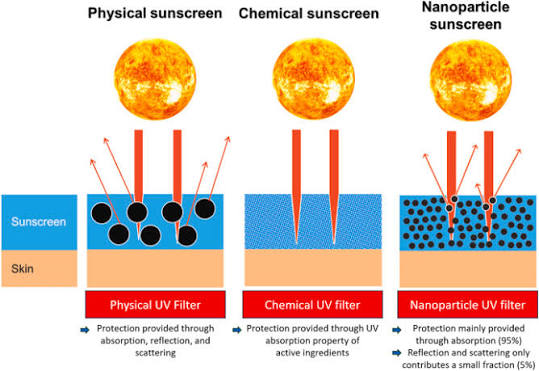
These focus on chemical absorbers designed to absorb specific UV wavelengths.
Mineral UV Technologies
Zinc oxide and titanium dioxide remain major areas of innovation, particularly around transparency and particle engineering.
For example, Solésence announced a Korean patent covering high-transparency zinc oxide technology designed to provide UV blocking while improving cosmetic appearance.
Encapsulation Technologies
Encapsulation can improve dispersion, stability, sensory characteristics and compatibility.
Delivery Systems
These technologies attempt to control how active ingredients behave within the final formulation.
Stabilization Technologies
These focus on maintaining ingredient performance during processing, storage and exposure to light.
Shinsung Materials' development fits primarily within the stabilization and formulation-performance category.
Why Mineral Sunscreen IP Is Also Relevant
The comparison with zinc oxide demonstrates how competitive the IP landscape has become.
Solésence's Korean patent focuses on high-transparency zinc oxide with enhanced UV-blocking performance and covers multiple cosmetic formats, including creams, lotions, sprays, gels, sticks and powders.
This illustrates a broader trend:
The competitive advantage increasingly comes from how an ingredient performs inside a finished product, not simply from the ingredient's chemical identity.
That is highly relevant to Shinsung Materials' strategy.
The Importance of Physical Form
One of the more interesting elements of the Shinsung Materials technology is the emphasis on physical form.
Turning an ingredient into a more convenient powder can affect:
Handling
Dosing
Mixing
Storage
Transportation
Manufacturing consistency
For ingredient manufacturers, physical-form innovation can therefore become an important IP strategy.
It allows companies to build differentiation around the processing and delivery of an ingredient, even when competing products use the same underlying active.
Clean Beauty Adds Another Layer
Sun care innovation is also being shaped by clean-beauty trends.
Shinsung Materials is developing its UV-filter technology alongside other personal-care ingredients positioned around sustainability and clean beauty.
The company has introduced COSMOS-certified oil thickeners including Dextrin Palmitate and Stearoyl Inulin, while continuing to develop technologies intended to improve ingredient quality, stability and production efficiency.
This suggests that the company's strategy is broader than UV filters alone.
It is building an ingredient portfolio around several formulation problems.
Patent Strategy Is Becoming a Portfolio Strategy
The Shinsung Materials case also demonstrates why companies increasingly need multiple layers of IP protection.
A strong ingredient platform may eventually require protection around:
Composition
Manufacturing process
Stabilization
Physical form
Application
Formulation
Production efficiency
This creates a broader competitive moat.
Instead of relying on a single ingredient patent, manufacturers can develop an interconnected portfolio of technology rights.
Ranking Shinsung Materials Against Broader Sun Care IP Themes
1. Formulation Stability
Strong strategic relevance
The company's TDSA technology directly addresses formulation and handling challenges.
2. Water-Soluble UV Protection
High commercial relevance
Maintaining water solubility while improving physical handling gives the technology a differentiated positioning.
3. Photostability
Critical technical category
UV-filter stability remains an important area of sunscreen formulation research.
4. Mineral UV Transparency
Major competing technology
Zinc oxide platforms such as the technology patented by Solésence demonstrate strong competing innovation around transparency and cosmetic elegance.
5. Encapsulation and Delivery
Fast-developing category
Ingredient suppliers continue to explore ways of improving dispersion, compatibility and sensory performance.
What This Means for Cosmetic Manufacturers
For cosmetic companies, ingredient IP increasingly affects supplier selection.
A patented ingredient technology can provide access to:
Better formulation stability
Improved product consistency
More flexible manufacturing
Differentiated marketing claims
New product formats
Potentially better supply-chain efficiency
However, manufacturers also need to consider freedom-to-operate issues when adopting patented technologies.
A supplier's patent can create differentiation, but it can also affect licensing and sourcing decisions.
What Ingredient Buyers Should Watch
Procurement teams evaluating UV-filter suppliers should look beyond price.
Important questions include:
Is the ingredient patented?
In which countries is protection granted?
Is the patent still active?
Does the patent cover the ingredient or manufacturing process?
Are alternative technologies available?
Can the supplier provide consistent global supply?
Does the ingredient have relevant certifications?
Is the material suitable for the intended formulation?
These considerations can become increasingly important as cosmetic companies expand internationally.
Global Patent Coverage Matters
A Korean patent provides meaningful protection in the Korean market, but global commercial value depends partly on the company's broader patent strategy.
For multinational ingredient suppliers, protection across major cosmetic markets can be particularly important.
Relevant jurisdictions can include:
South Korea
United States
European Union markets
Japan
China
Other major personal-care manufacturing hubs
The broader the enforceable IP footprint, the greater the potential competitive value of the technology.
The Technology Also Has a Supply-Chain Dimension
Ingredient innovation is increasingly connected to logistics.
A more stable, easier-to-transport ingredient can potentially reduce operational complexity for manufacturers purchasing from overseas suppliers.
That matters because cosmetic ingredient supply chains are becoming more global.
Manufacturers increasingly source specialized ingredients from:
South Korea
Japan
China
Europe
The United States
Other Asian production centers
Technologies that improve storage and transportation characteristics can therefore provide value beyond the formulation laboratory.
Why This Matters for Global Sun Care Competition
The sun care market is increasingly competitive, and brands are looking for ingredients that can combine:
performance + stability + sensory quality + sustainability + formulation flexibility.
Ingredient manufacturers that can solve several of these problems simultaneously have an opportunity to differentiate themselves.
Shinsung Materials' TDSA development is a useful example of that strategy.
Looking Ahead
Shinsung Materials' new Korean patent provides a useful intelligence point for tracking the evolution of sun care ingredient IP.
The technology does not represent simply another UV filter.
Its significance lies in the attempt to improve the practical usability of a water-soluble UV-A filter while preserving its protection performance and water solubility.
That places the development within a broader industry trend toward formulation-oriented innovation.
As personal-care companies demand ingredients that are easier to process, more stable, globally transportable and compatible with modern product formats, intellectual property around ingredient technology is likely to become increasingly valuable.
For ingredient suppliers, the competitive race is moving beyond discovering new molecules.
It is increasingly about making existing and emerging technologies work better in real-world formulations.
Key Takeaways
Shinsung Materials' Korean patent adds to the growing IP activity surrounding sun care ingredients.
The technology focuses on improving the usability and stability of water-soluble TDSA, a UV-A filter.
The neutralized powder format is designed to improve formulation convenience, storage stability and transportation efficiency.
Sun care innovation is increasingly focused on formulation performance rather than UV protection alone.
Mineral sunscreen technologies, including high-transparency zinc oxide, represent an important competing IP category.
Patent portfolios can provide ingredient manufacturers with differentiation beyond basic chemical composition.
Buyers should evaluate IP coverage, certifications, formulation performance and supply reliability when selecting specialty ingredients.
The broader trend suggests that stabilization, delivery and processing technologies will remain important areas of personal-care ingredient innovation.
Found this useful?