Ranking Simon-Kucher's Estimate: Three-Quarters of Energy-Intensive German Firms Migrating Investment
Germany's energy-intensive industries are facing a growing strategic question: how much investment can remain economically viable at home when energy costs, regulation and infrastructure pressures continue to influence industrial decisions?
A Simon-Kucher study highlights the scale of this challenge, showing that energy considerations are increasingly shaping investment and location decisions. The consultancy found that 95% of surveyed companies rank energy prices among the top factors in site selection, while its broader research points to increasing pressure on companies to reconsider where future investment should be placed.
For chemical producers, metals companies, glass manufacturers and other energy-intensive businesses, this makes investment location an increasingly important competitive variable.
Energy Cost Has Become a Location Decision
For decades, Germany's industrial advantage rested on factors such as:
Skilled labor
Engineering expertise
Infrastructure
Export access
Established supplier networks
Strong industrial clusters
But the economics are changing.
Energy prices now play a much larger role in determining where companies build new capacity.
For energy-intensive chemical production, electricity and gas can represent a major portion of operating costs, meaning that a structurally higher-cost location can become difficult to justify for new investment.
Why Investment Migration Matters
Moving investment abroad does not necessarily mean companies are abandoning Germany.
A company may maintain:
Existing German production
while directing:
New capacity and future growth investment abroad.
This distinction is important.
The immediate impact may therefore appear not as mass plant closures, but as Germany receiving a smaller share of future industrial capital expenditure.
Over time, that can affect employment, supplier ecosystems and the competitiveness of domestic manufacturing.
Chemicals Are Particularly Exposed
The chemical industry is among the sectors most sensitive to energy economics.
Energy is required for:
Steam generation
Heating
Electrolysis
Distillation
Compression
Refrigeration
Chemical synthesis
High energy costs can therefore influence the economics of entire production chains.
This is especially important for commodity chemicals, where products can be traded internationally and customers may have multiple sourcing options.
The Investment Question Is Bigger Than Energy Prices
Simon-Kucher's research identifies several factors influencing industrial location decisions.
These include:
Energy prices
Grid access
Renewable-energy availability
Political conditions
Regulation
Supply-chain resilience
Government incentives
The study found that energy prices ranked as a top site-selection factor for 95% of surveyed companies, while access to renewable power is increasingly becoming a competitive differentiator.
This means Germany's challenge is not simply reducing electricity prices.
It also needs to provide reliable, scalable and competitively priced energy infrastructure.
The United States and Other Regions Become More Attractive
Companies evaluating future investment increasingly have alternatives.
North America can offer:
Competitive energy
Large domestic markets
Access to natural gas
Investment incentives
Expanding industrial infrastructure
The Middle East offers significant feedstock advantages for petrochemical production.
Parts of Asia provide:
Lower manufacturing costs
Growing demand
Expanding chemical capacity
Large industrial ecosystems
This creates a global competition for the next generation of chemical investment.
Germany Still Has Major Industrial Advantages
The investment-migration story should not be interpreted as Germany becoming irrelevant to chemicals.
The country retains:
Highly developed chemical clusters
Research capabilities
Specialized engineering
Skilled workers
Major industrial customers
Established logistics networks
Germany's energy-intensive industries have also recently benefited from stronger foreign demand, with the German government reporting higher output and foreign sales in several energy-intensive sectors during 2026.
The issue is therefore more nuanced:
Germany remains important, but new investment increasingly has to justify its economics.
Existing Assets Are Different From New Projects
An operating chemical plant has already absorbed enormous amounts of capital.
Closing it can be expensive and disruptive.
A new project faces a different calculation.
Management can ask:
Where should the next €500 million be invested?
If another region offers lower energy costs, better incentives or faster permitting, the new facility may be built there rather than in Germany.
That is how industrial migration can occur gradually without immediate mass closures.
Foreign Investment Is Already Increasing in Importance
German companies have long maintained substantial overseas investment.
Bundesbank data show that German enterprises continued increasing their foreign direct investment stocks, with the value of Germany's international investment position reaching approximately €2.3 trillion at the end of 2025.
The question is increasingly where incremental investment goes.
Germany's companies are not simply choosing between Germany and nowhere.
They are choosing between Germany and a growing list of competitive international locations.
Investment Migration Does Not Always Mean the U.S.
The United States has traditionally been a major destination for German corporate investment.
But recent data demonstrate that the direction can change quickly.
German companies' direct investment in the United States fell to €4.3 billion in the first half of 2026, almost two-thirds below the previous year's level, according to Reuters calculations based on German central-bank data.
This highlights an important point:
Investment migration is not necessarily a one-way movement toward one country.
Companies continuously compare energy, trade, political and regulatory conditions across multiple regions.
Renewable Energy Could Change the Equation
Germany's renewable-energy expansion could eventually become a competitive advantage.
Access to:
Wind power
Solar power
Corporate PPAs
On-site generation
Energy storage
could help energy-intensive companies reduce exposure to fossil-fuel volatility.
Simon-Kucher identifies renewable-energy access as an increasingly important differentiator for industrial site selection.
The challenge is ensuring that renewable power is available at the scale, reliability and price required by industrial facilities.
Government Policy Is Becoming Critical
Germany is responding to competitiveness concerns through policy measures.
The federal government's 2026 economic report includes an industrial electricity-price initiative intended to reduce electricity costs for eligible energy- and trade-intensive companies and help prevent relocation to countries with lower costs and weaker climate standards.
Such measures could influence future investment decisions.
But companies will ultimately evaluate the full economic package rather than electricity prices alone.
What This Means for Chemical Supply Chains
Investment migration could gradually reshape European chemical supply chains.
If new capacity increasingly develops outside Germany, European buyers may become more dependent on:
Imports
Regional distribution
Cross-border logistics
Alternative suppliers
International feedstocks
This could increase the importance of inventory management and supplier diversification.
Procurement Teams Should Watch Capacity Location
Chemical procurement professionals should monitor where suppliers are investing—not simply where they currently manufacture.
Important questions include:
Where is new capacity being built?
Which plants are being expanded?
Which facilities are being closed?
Where are companies shifting capital expenditure?
Which regions are gaining production capacity?
These indicators can provide an early warning of future changes in supply availability.
The Risk of Industrial "Investment Hollowing"
One of the longer-term risks is not necessarily a sudden industrial collapse.
It is investment hollowing.
This occurs when companies maintain existing facilities but consistently place new investment elsewhere.
Over several years, this can result in:
Aging domestic assets
Slower capacity growth
Reduced industrial employment
Weaker supplier ecosystems
Greater import dependence
Lower domestic investment
The effect can therefore become significant even without widespread immediate plant closures.
What Investors Should Watch
Investors assessing German chemical companies should monitor:
Capital Expenditure
Where is new money being invested?
Energy Costs
Can German facilities remain globally competitive?
Plant Utilization
Are domestic assets operating efficiently?
Asset Sales
Are companies reducing their German footprint?
Foreign Expansion
Which regions are receiving new capacity?
Government Support
Are policy measures changing investment economics?
Looking Ahead
The Simon-Kucher findings provide one of the clearest signals that energy economics are becoming inseparable from industrial location strategy.
Germany still possesses enormous chemical-industry advantages, but companies are increasingly evaluating those advantages against energy costs, regulatory requirements, infrastructure and international investment incentives.
For chemical manufacturers, this means the location of future capacity could become just as important as the performance of existing plants.
For procurement teams, it means supplier-location intelligence deserves greater attention.
And for policymakers, the challenge is broader than keeping today's factories open.
The more important question is:
Where will the next generation of German industrial investment actually be built?
If energy-intensive companies increasingly place new capital outside Germany, the consequences could extend well beyond individual chemical plants—affecting regional supply chains, employment, imports and Europe's broader industrial competitiveness.
Key Takeaways
Energy prices are becoming a central factor in industrial investment decisions.
Simon-Kucher's research found 95% of surveyed companies rank energy prices among the top site-selection factors.
Investment migration does not necessarily mean immediate plant closures; companies can keep existing assets while placing new capacity abroad.
Chemical producers are particularly exposed because many processes require large amounts of energy.
Renewable-energy availability is becoming an increasingly important competitive factor.
Germany retains strong chemical clusters, infrastructure and engineering capabilities.
Foreign investment remains an important part of German corporate strategy, with overseas investment stocks continuing to expand.
Procurement teams should track where suppliers are placing future capacity, not just existing production.
The longer-term risk is investment hollowing rather than sudden industrial abandonment.
Germany's ability to attract the next wave of energy-intensive investment will depend on energy costs, infrastructure, regulation and policy support.
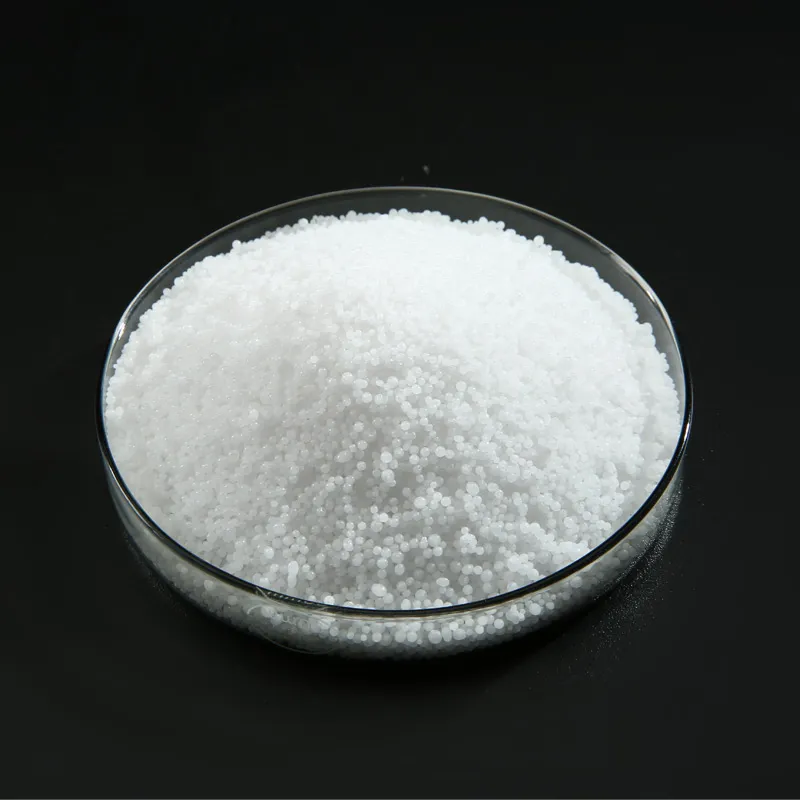
Caustic Soda Pearls - China
Found this useful?