
Regulatory Requirements and Best Practices for Global Buyers
Every hazardous chemical shipment needs a safety data sheet, and the rules behind that document keep changing. OSHA aligned its Hazard Communication Standard with the seventh revision of the Globally Harmonized System in a rule published May 20, 2024. The agency then extended its compliance dates by four months in January 2026.
The next employer deadline lands on November 20, 2026, only 16 days from now. Requirements for chemical safety data sheets are also tightening in Europe, where the CLP revision is reshaping how suppliers classify and communicate hazards.
Traders, importers and procurement managers sit between producers and end users. A weak SDS becomes their problem too. This guide explains what regulators require and how to keep your documents compliant.
What a Safety Data Sheet Must Contain
A safety data sheet explains the hazards of a substance or mixture and how to handle, store and dispose of it safely. GHS provides harmonized hazard definitions, label criteria and a 16-section format for SDSs. Most major markets now use that structure.
The 16-Section Structure
Both the US and the EU use 16 headings, but they apply them differently. The EU requires every section and subsection. In the US, OSHA requires sections 1 to 11 and 16. Suppliers shipping to both markets should complete all 16 sections to avoid rejected documents.
Sections That Matter Most to Buyers
Section 1: Supplier identity and emergency contact details. A missing emergency number is a red flag.
Section 2: Hazard classification and label elements. In the EU, the SDS classification must match the CLP label exactly.
Section 3: Composition and ingredients. Check that concentrations fit the grade you ordered.
Section 14: Transport information. Freight forwarders rely on it for UN numbers and packing groups.
Section 16: Revision date and change history. ECHA guidance recommends identifying what changed in each revision.
OSHA Hazard Communication Rules and the November 2026 Deadline
The 2024 rule updates the standard without rebuilding it. Changes include revised criteria for classifying certain health and physical hazards. The rule also incorporated several letters of interpretation OSHA issued since the last update.
Downstream users, distributors and wholesalers can keep relying on the SDSs and labels manufacturers provide. That does not remove the duty to keep current copies on file and train workers.
The Four Extended Dates
OSHA moved each compliance date by four months in a rule published January 15, 2026. The agency wanted time to publish guidance materials. The current schedule runs as follows:
May 19, 2026: manufacturers, importers and distributors evaluating substances (moved from January 19, 2026).
November 20, 2026: employers update workplace labels, written programs and training for substances (moved from July 20, 2026).
November 19, 2027: manufacturers, importers and distributors evaluating mixtures (moved from July 19, 2027).
May 19, 2028: employers complete the same updates for mixtures (moved from January 19, 2028).
Until those dates pass, regulated parties may follow the 2012 version of the standard, the 2024 version or both. Expect both formats in your files for now.
EU Requirements Under REACH and CLP
Annex II of REACH sets out what information belongs under each of the 16 SDS headings. Commission Regulation (EU) 2020/878 amended that annex. Suppliers must follow it for every sheet they place on the EU market.
Buyers checking EU-origin sheets should confirm three points:
The sheet carries a date, plus revision details where relevant.
Substances registered above 10 tonnes a year include an exposure scenario annex.
The hazard classification matches the product label.
The CLP revision adds more change. Regulation (EU) 2024/2865 is the most comprehensive amendment to CLP so far, focused on digitalisation, online commerce and administrative simplification. One compliance calendar warns that supplier SDS updates will arrive in large numbers.

EU Requirements Under REACH and CLP
Annex II of REACH sets out what information belongs under each of the 16 SDS headings. Commission Regulation (EU) 2020/878 amended that annex. Suppliers must follow it for every sheet they place on the EU market.
Buyers checking EU-origin sheets should confirm three points:
The sheet carries a date, plus revision details where relevant.
Substances registered above 10 tonnes a year include an exposure scenario annex.
The hazard classification matches the product label.
The CLP revision adds more change. Regulation (EU) 2024/2865 is the most comprehensive amendment to CLP so far, focused on digitalisation, online commerce and administrative simplification. One compliance calendar warns that supplier SDS updates will arrive in large numbers.

Common SDS Problems in International Trade
Most compliance gaps come from routine document errors, not from missing regulations. Three problems appear again and again:
Outdated sheets. A supplier reclassifies a product, but your file still holds the old version.
Mismatched classification. Section 2 does not agree with the label on the drum or bag.
Wrong language or format. The sheet does not suit the destination country's rules.
Each problem can delay customs clearance or stop a shipment at the port. A freight forwarder or inspector who spots one will hold the cargo.
Best Practices for Managing Safety Data Sheets
Build a Central Library
Keep one controlled library for every SDS in your business. Link each sheet to a product, a supplier and a purchase record.
Your SDS library needs to be reconciled against what suppliers sent after May 2026, and your chemical inventory list has to match. Run that check now, before the November deadline.
Check Revision Dates and Classification
Review Section 16 on every new sheet and compare it with the version on file. Confirm that the classification in Section 2 still matches the label.
Ask suppliers to confirm in writing whether a product was reclassified under GHS Revision 7 or the CLP changes. Record the answer next to the sheet.
What Buyers and Suppliers Should Do Before the Deadline
The November 20 date affects employers directly, so start with your own sites. Work through this list in order:
Audit your SDS library against your current chemical inventory.
Request updated sheets from suppliers that still send older formats.
Update your written hazard communication program and in-house labels.
Retrain staff on newly identified hazards for substances.
Set a reminder for the November 2027 mixtures date.
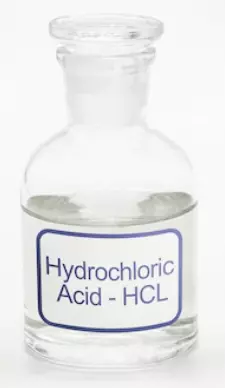
Hydrochloric Acid (33%) - India
Found this useful?