Saudi Arabia Chemical Supply Watch | Ras Tanura & SABIC Europe Analysis | ChemicalsBlog.com
Product Specific Insights
schedule5 Min Read
Saudi Arabia Country Watch: Ras Tanura Loading and the SABIC Europe Separation
terminal
prodchem
Jul 9, 2026
For procurement professionals, supplier names alone no longer provide a complete picture of supply risk.
Increasingly, companies operate multiple manufacturing regions with different ownership structures, logistics exposure and commercial priorities.
Recent developments involving Saudi Arabia's export recovery and SABIC's European restructuring illustrate why procurement teams should evaluate supply chains according to their operational geography rather than assuming every facility within a multinational company carries the same risk profile.
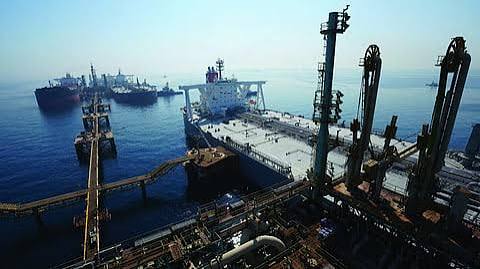
Recent operational data indicates that cargo loading activity at Ras Tanura has resumed, providing one of the clearest indications that Saudi Arabia's export logistics are stabilising following months of disruption.
For Gulf-origin chemical exports, this represents an important operational milestone because Ras Tanura remains one of the region's most significant energy and petrochemical export gateways.
The recovery supports:
Improved export reliability.
Better vessel scheduling.
Greater shipment predictability.
Increased confidence in Gulf logistics.
More stable downstream supply planning.
Although shipping conditions have improved, procurement teams should continue recognising that regional logistics remain dependent on maritime security and operational conditions.
SABIC's European Business Is Following a Different Path
While Gulf export activity improves, SABIC's European petrochemical operations are moving through a separate corporate restructuring process.
The announced transfer of these assets to new ownership creates a fundamentally different commercial environment from SABIC's Gulf manufacturing operations.
Following completion of the transaction, the two businesses will differ in several important respects:
Corporate ownership.
Capital allocation priorities.
Financial reporting.
Management structure.
Operational strategy.
Investment decision-making.
For procurement professionals, this means that a single supplier relationship increasingly represents two distinct operating models.
Geography Now Matters More Than Corporate Brand
Historically, procurement teams often assessed suppliers primarily at the corporate level.
Today's industry structure increasingly requires evaluation at the manufacturing-region level.
For example, procurement teams should separately assess:
Saudi Gulf Production
Export logistics.
Feedstock availability.
Maritime routing.
Regional manufacturing conditions.
European Operations
New ownership structure.
Manufacturing investment.
Asset optimisation.
Regional competitiveness.
This more granular approach produces a more accurate assessment of supply continuity risk.
Supply Continuity Planning Should Reflect Regional Differences
The practical implication is straightforward.
Procurement organisations sourcing products from both Gulf and European operations should avoid treating them as interchangeable sources.
Instead, each supply chain should be evaluated independently according to:
Manufacturing location.
Logistics exposure.
Commercial strategy.
Financial resilience.
Business continuity planning.
Contract structure.
This supports more robust sourcing decisions as the industry continues adapting to structural change.
Procurement Should Separate Supplier Risk by Operating Region
One of the most important lessons from recent industry restructuring is that procurement risk should increasingly be assessed at the operating-region level, not simply at the parent-company level.
For organisations purchasing from both Gulf and European manufacturing assets, supplier risk registers should distinguish between the two operations.
For example:
SABIC Gulf Operations
Current considerations include:
Improving export capability.
Recovering maritime logistics.
Continued dependence on Gulf shipping routes.
Integrated feedstock advantages.
Regional geopolitical exposure.
European Petrochemical Operations
Current considerations include:
Ownership transition.
Turnaround-focused management.
Manufacturing optimisation.
Capital investment priorities.
European energy and competitiveness challenges.
Treating these as separate sourcing environments provides a more accurate picture of operational and commercial risk.
Contract Management Should Reflect Supply Chain Differences
Regional divergence also has implications for commercial agreements.
Procurement teams should review whether contracts adequately address:
Manufacturing site identification.
Approved production locations.
Supply continuity obligations.
Alternative sourcing arrangements.
Change-of-control provisions.
Notification requirements following ownership changes.
These contractual considerations become increasingly valuable when manufacturing networks evolve through restructuring.
Ownership Changes Do Not Automatically Mean Supply Disruption
An ownership transition should not automatically be interpreted as an operational problem.
In many cases:
Existing production continues.
Product specifications remain unchanged.
Customer contracts are honoured.
Manufacturing personnel remain in place.
Regulatory approvals continue uninterrupted.
However, procurement teams should monitor how new owners approach:
Capital expenditure.
Maintenance programmes.
Capacity utilisation.
Product portfolio strategy.
Customer engagement.
These factors provide a clearer indication of long-term supplier capability than ownership changes alone.
Saudi Arabia Continues to Play a Central Role
Despite recent disruption, Saudi Arabia remains one of the world's most strategically important chemical production and export regions.
The recovery of export operations at Ras Tanura reinforces the country's importance within global supply chains for petrochemicals, polymers and industrial feedstocks.
For procurement professionals, the combination of improving logistics and integrated production infrastructure supports continued confidence in Saudi manufacturing while recognising that regional geopolitical developments should remain part of ongoing risk assessments.
Looking Ahead to H2 2026
Recent developments demonstrate that procurement professionals should increasingly evaluate suppliers based on where products are manufactured rather than solely on who owns the business. The improving operational picture at Ras Tanura supports confidence in Gulf-origin chemical exports, while the restructuring of SABIC's European petrochemical operations creates a distinct commercial entity with different ownership, strategic priorities and operational considerations. Although both businesses have historical links, they should now be assessed independently from a procurement perspective.
This separation reflects a broader trend across the global chemical industry. Portfolio optimisation, regional competitiveness and capital allocation are creating more differentiated manufacturing networks, even within the same corporate family. Supplier risk assessment therefore requires greater attention to manufacturing geography, logistics exposure and regional investment strategies rather than relying only on consolidated corporate financial performance.
The key lesson for H2 2026 is that regional supply chain intelligence has become an essential component of procurement strategy. Organisations that distinguish between Gulf manufacturing, European production and other regional operating platforms will develop more accurate supplier risk assessments, stronger business continuity plans and more resilient sourcing strategies as the global chemical industry continues its structural transformation.
Ready to source commodity and specialty chemicals from verified global suppliers with resilient international supply networks? Explore competitive offers on our platform today.